Cultivating My Inner Elephant - Chiang Mai
Chiang Mai, Thailand
This morning, a cute little girl stopped me on the beach. She pointed at my neck and said:
“I like your necklace. I like elephants.”
I bent down to let her get a closer look at my silver elephant necklace. She touched it gently with her forefinger and smiled shyly. I responded:
“I love elephants, too, they’re my favorite animals.”
Umberto knows how much I love these majestic animals. He gave the necklace to me in Chiang Mai, Thailand. I wear it often because it has a special meaning to me.
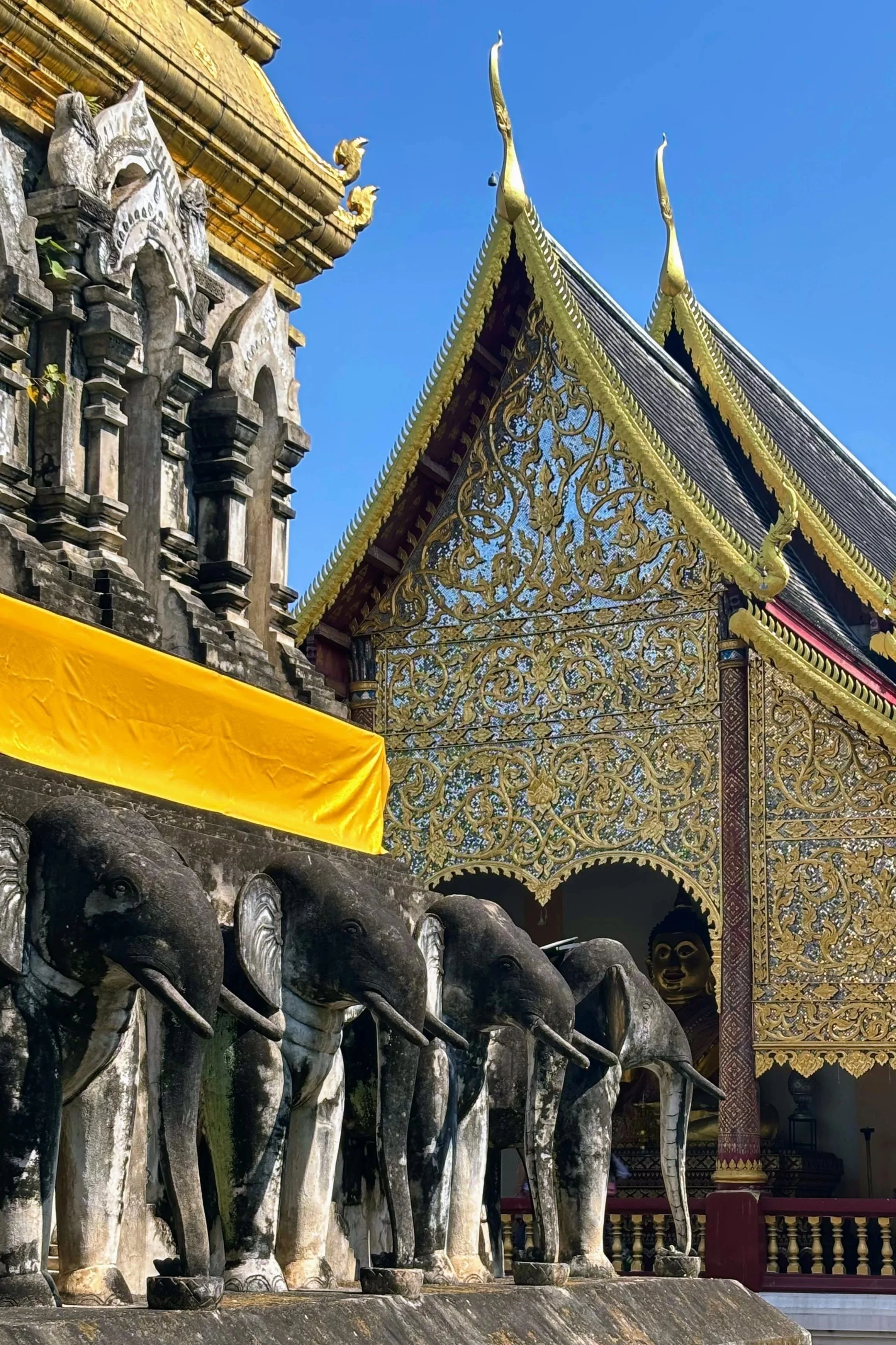
At one of the many beautiful temples we visited in Chiang Mai.
The elephant - an important Thai and Buddhist symbol
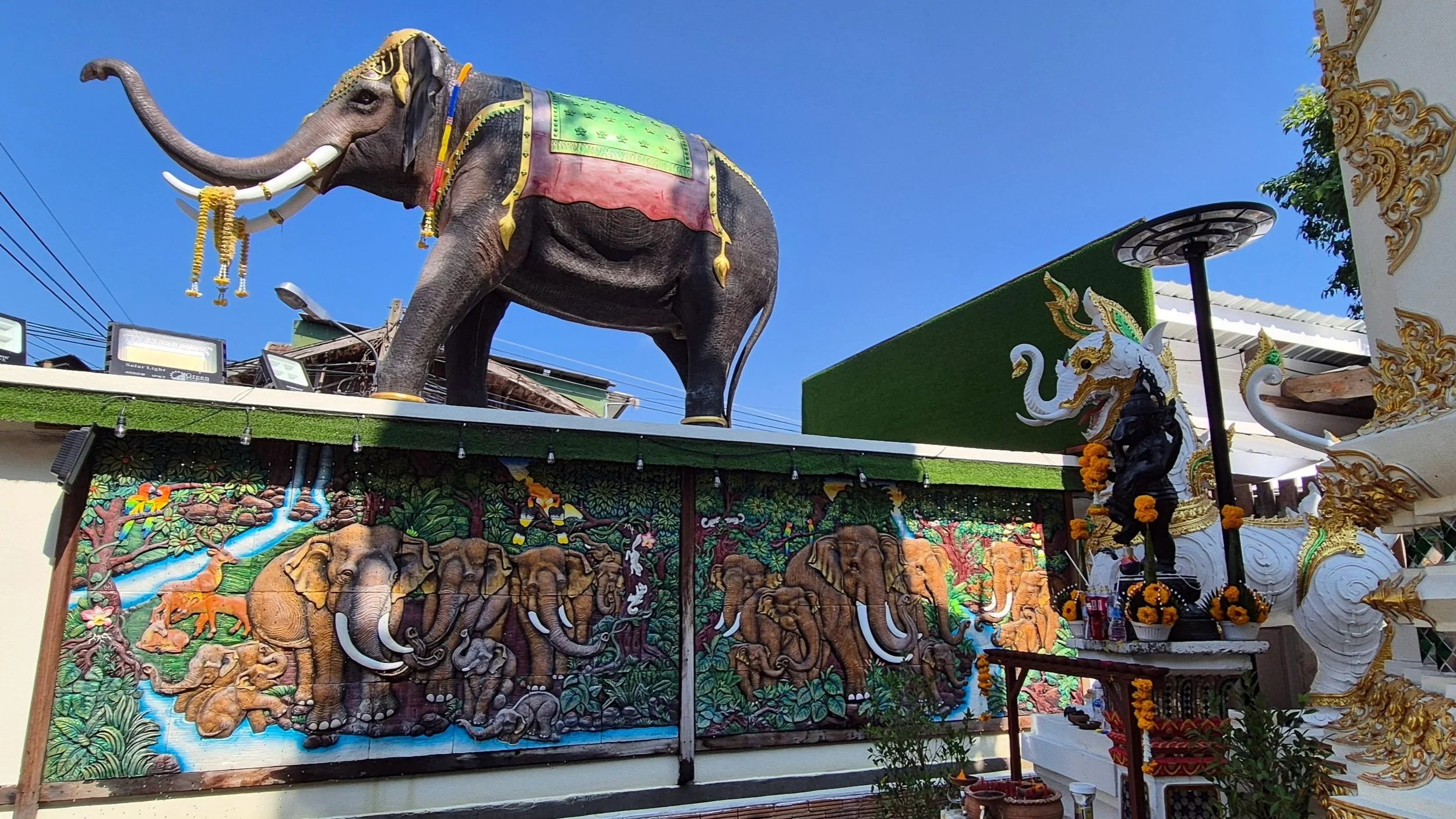
The elephant is the official national animal of Thailand and a sacred animal in Buddhism. For centuries, elephants have played an important role in Thai culture and society. They have been employed in military operations, transport, the forest industry and tourism. The elephant has been a symbol of royalty, power and religion, in particular, the revered white elephant. The animal is featured in many Thai artworks, royal palaces and temples.
Unfortunately, the Thai elephant population declined drastically in the 20th century, as deforestation and agricultural expansion destroyed much of their natural habitat. The Asian elephant was recognized as an endangered species in 1986, and Thailand continues to introduce protective legislation.
In 1989, Thailand banned commercial logging. Thousands of elephants and caretakers, who were previously working in the timber trade in the Northern mountainous forests, were left without income and food as a consequence. Many animals risked being sold to abusive tourist entertainment. Conservationists helped raise awareness of the issue, looking for more ethical alternatives. Elephant rescue centers and sanctuaries were created so that elephants could live in peace. Naturally, they have became also a major tourist attraction.

The Chiang Mai area features many elephant sanctuaries
Chiang Mai, located in the Northern Thai highlands, is Thailand’s number two city by population. That’s a fact that eludes you easily if you stay in the historic city center. We arrived from the manic beehive of Bangkok, and felt like we had landed in a parallel Universe.
The old town has the precise shape of a square, about 1.6km x 1.6km, and is surrounded by ancient brick walls and a moat. Many streets are not paved. As the city is not laid out on a grid, it's easy to get lost in the alleyways, especially at night. On the first day, we wandered around aimlessly, visiting temples. There were so many temples, hundreds of them, big and small, intricate and simple, all beautiful. The smell of incense floated in the air and we felt a bit unreal, as if time had stopped. No matter where we went, elephant symbols were everywhere.
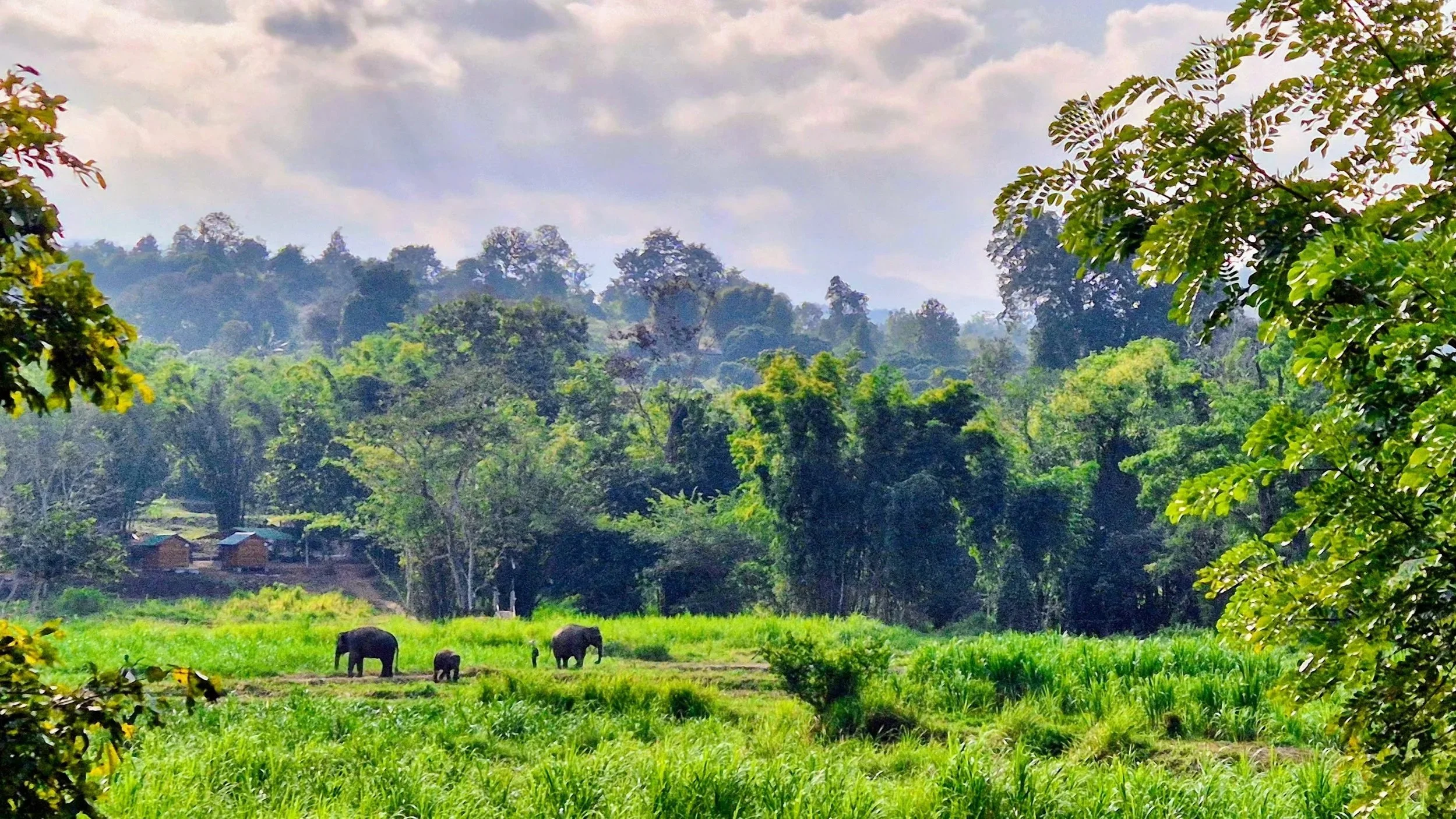
On the second day, we took a guided visit to an elephant rescue center near the city. There are dozens of rescue and rehabilitation centers in the area. When we arrived, we could see the elephants were not chained down and could roam freely in the area. They were amazing animals. So big and powerful, yet so tranquil.
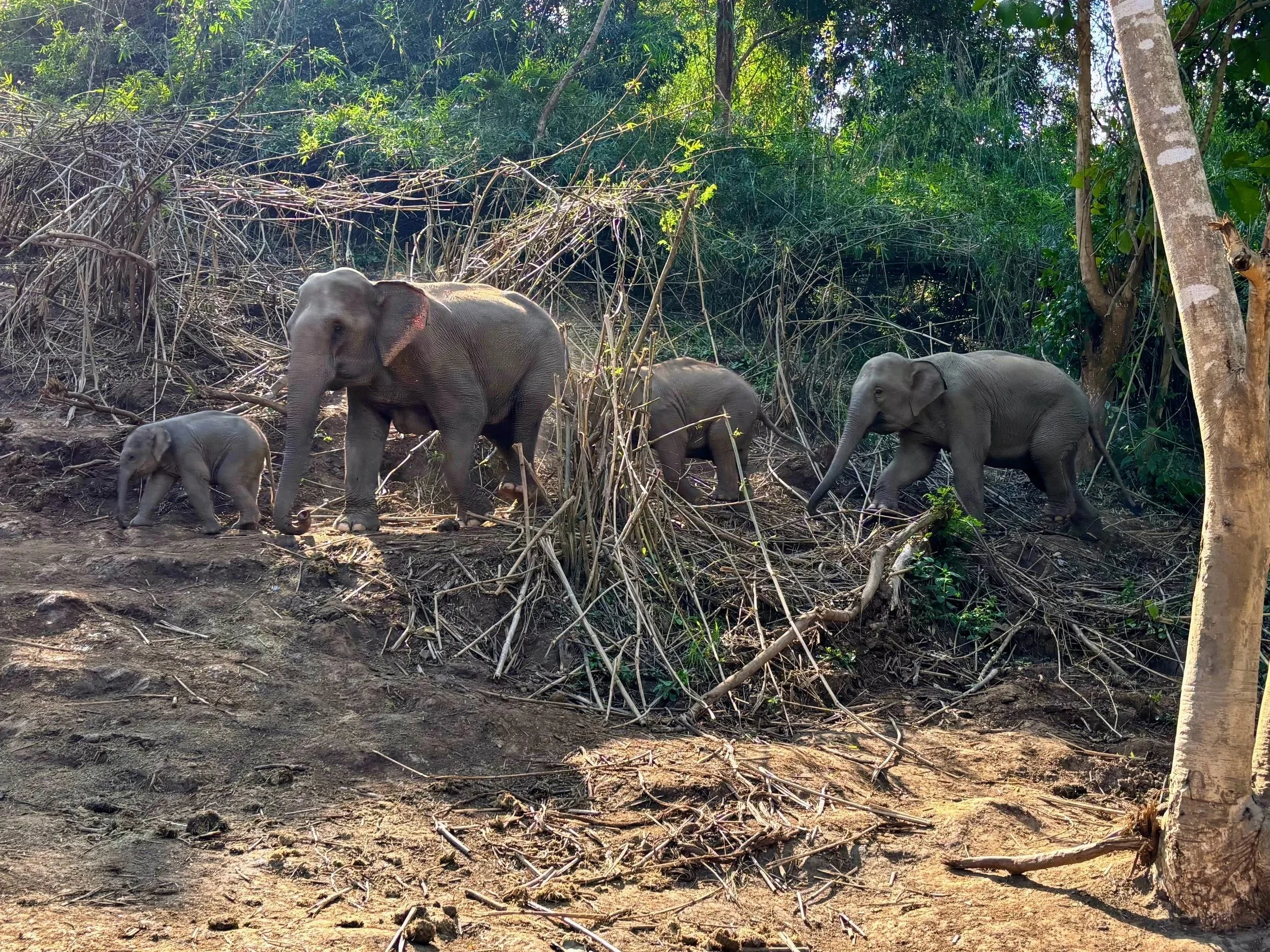
Elephants roaming in the rescue center grounds.
The center’s personnel told us a lot about elephants, their behavior and habits. Elephants are herbivores and eat around 150kg of vegetation per day, even more, depending on their size. Scientists regard them as one of the most intelligent species on earth, exhibiting advanced skills in problem solving, tool use and communication. Elephants live in highly organized social structures and display self-awareness, empathy and long-term memory. They also have a sense of humor, the caretakers told us, and like to play little pranks.
The most ethical elephant sanctuaries have an observation-only model, meaning, essentially, that they use no chaining and don’t allow riding. They also do not force the animals to have unnatural close contact with large groups of strangers. In other words, they let elephants be elephants.
I had a chat about this with our guide. Even if the situation has improved over the last twenty years, not all centers in Thailand follow the same ethical principles. These are not simple issues to resolve. Domesticated elephants cannot be released to roam free, due to the loss of their natural habitat and the lack of survival skills. The centers are therefore essential, but elephants are not cheap to maintain. Tourism, of course, provides a major source of income.
We live in the real world, and I’m not an idealist. I’m not a conservationist or scientist either, thus unable to present an expert opinion. But I still dream of a world where elephants could be elephants…
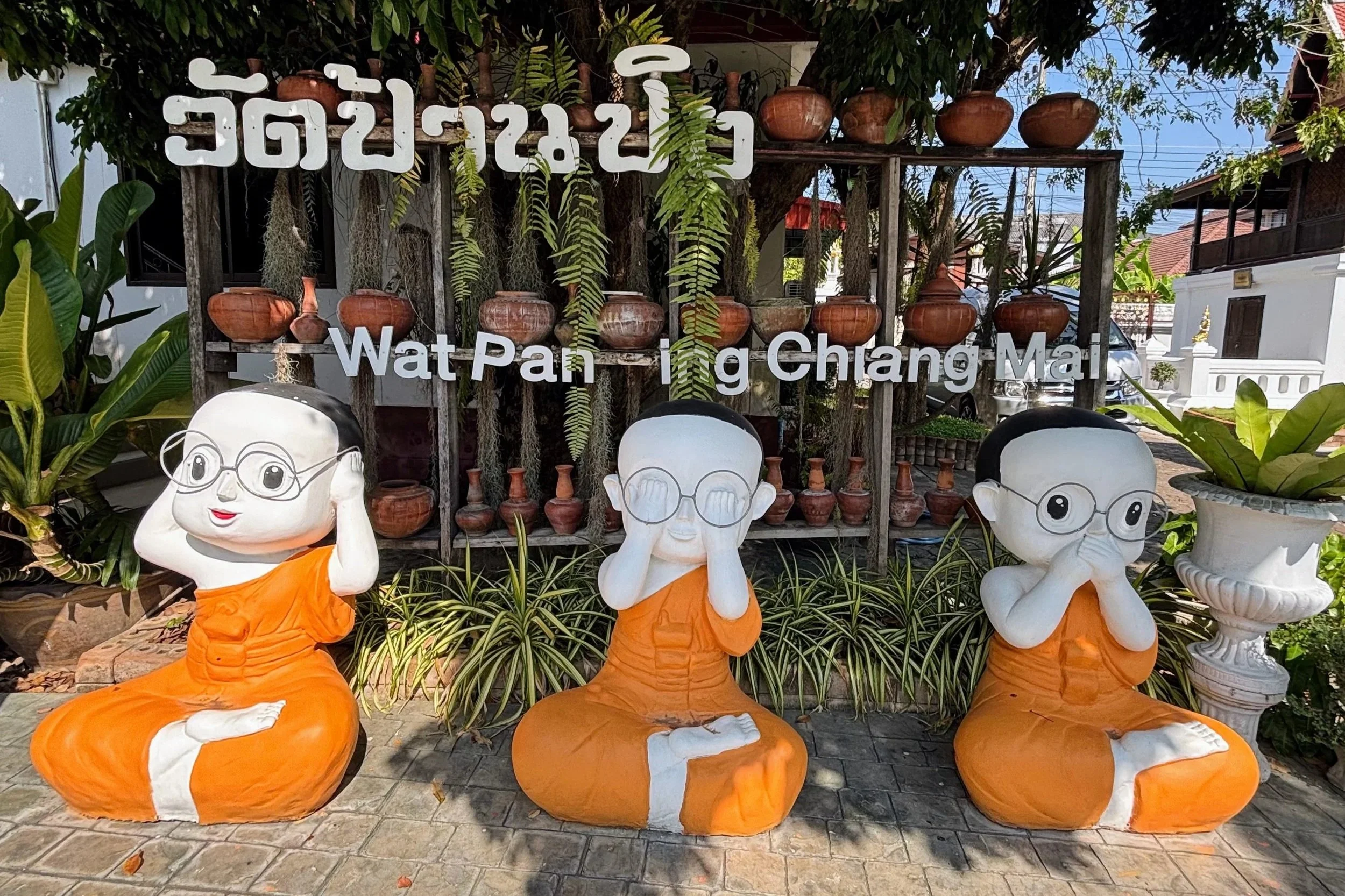
A Chiang Mai version of “see no evil, hear no evil, speak no evil”.
The elephant necklace
On our last day in Chiang Mai, we ventured out of the old town. We were curious to see the world outside the historic city walls. Walking around randomly, we discovered a buzzing neighborhood with massive markets, selling pretty much everything and anything you could imagine. They had dedicated zones for each type of merchandise - clothing, furniture, kitchenware, electronics, you name it.
Food markets covered entire blocks. We roamed around, fascinated by the endless selection of fruit and vegetables, meat, fish and seafood, and all the other produce we could not recognize. This was quite different from the charming night markets in the tourist area.
One street was packed with jewelry shops. Umberto said he wanted to buy me a gift, and started carefully examining what was on display at each shop window. After a dozen shops or so, he stopped and enthusiastically pointed at a necklace. It was a silver elephant.
That evening, back in our hotel room, he tied the necklace around my neck. It was lovely, and I wore it every day for the rest of our Asian tour. This silver elephant was a romantic gift, and a precious souvenir that reminds us of the magical days in Chiang Mai. But for me, as the weeks went by, it became more than just jewelry.
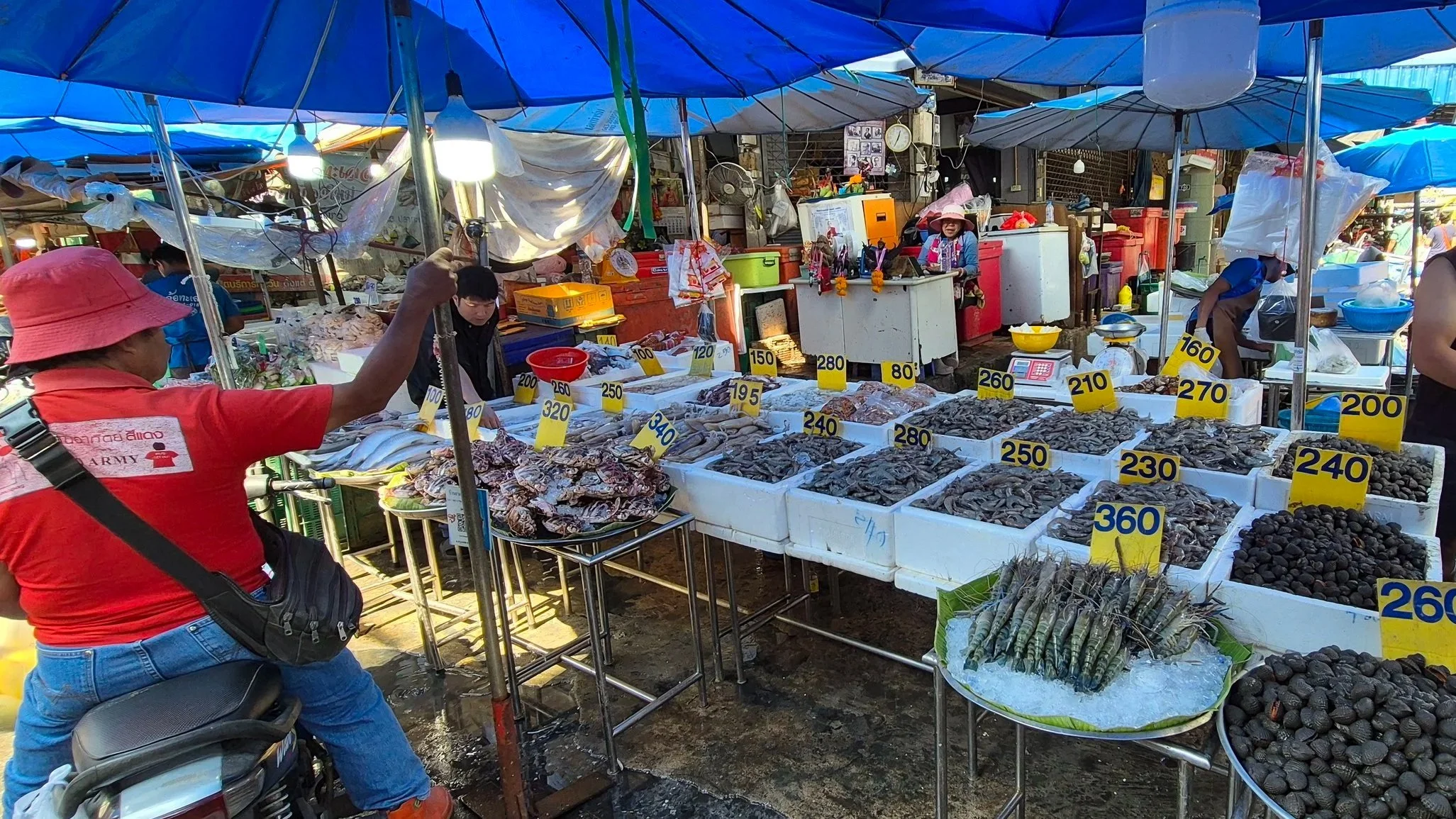
The seafood market was particularly interesting for us!
A powerful metaphor for training the mind
One evening, putting the necklace back in its case, I thought about the elephants we had seen at the rescue center. I remembered their majestic tranquility and said to myself:
“I want to start cultivating my inner elephant.”
In Buddhist practice, the elephant is associated with strength, patience and the trained mind. The white elephant is a sacred symbol of purity and spiritual awakening. I am not a Buddhist and do not follow any other discipline or religion, but consider these ideas worth exploring. I realized the inner elephant is a great metaphor for training your own mind.
Behavioral science uses the concepts of the inner elephant and rider in a different way from the Buddhist tradition. In psychology, the “elephant” represents the subconscious mind, emotional and instinctual, which needs to be controlled and motivated by the conscious mind, the rational and logical “rider”. That’s not far from what we in the Western world have been taught, and I would say the results are not impressive.
I decided to try a different perspective. The inner elephant is the mind, powerful and wandering. If untrained and wild, it can be harmful. The elephant needs to be trained, gently, not suppressed coercively. The rider is the awareness, the calm force that tells the elephant to halt and observe, see what is really going on, and not rush to react. It coaches the elephant to make better decisions, in a conscious and compassionate manner. With time and practice, the elephant can become a patient, reliable and wise companion.
I want to explain what I mean in plain words. My objective is not some supreme enlightenment, I’m not even sure what that means. Like so many of us, I’m just seeking a quieter, more peaceful mind.
So, I’ve started to put this metaphor into action in a very simple fashion: when I find myself in a stressful, aggravating or otherwise challenging situation, I try to visualize a big elephant. I attempt to slow down and observe my thoughts and emotions, rather than react immediately.
Does it work? Just like many other mental training techniques, it does, if only I remember to use it. The difficulty with these things is, we easily forget, or remember when it’s already too late. I believe the elephant metaphor can be particularly potent as it can be so easily visualized, it’s not just a string of words. That makes it easier to remember.

The elephant necklace. It’s become one of my favorite pieces of jewelry.
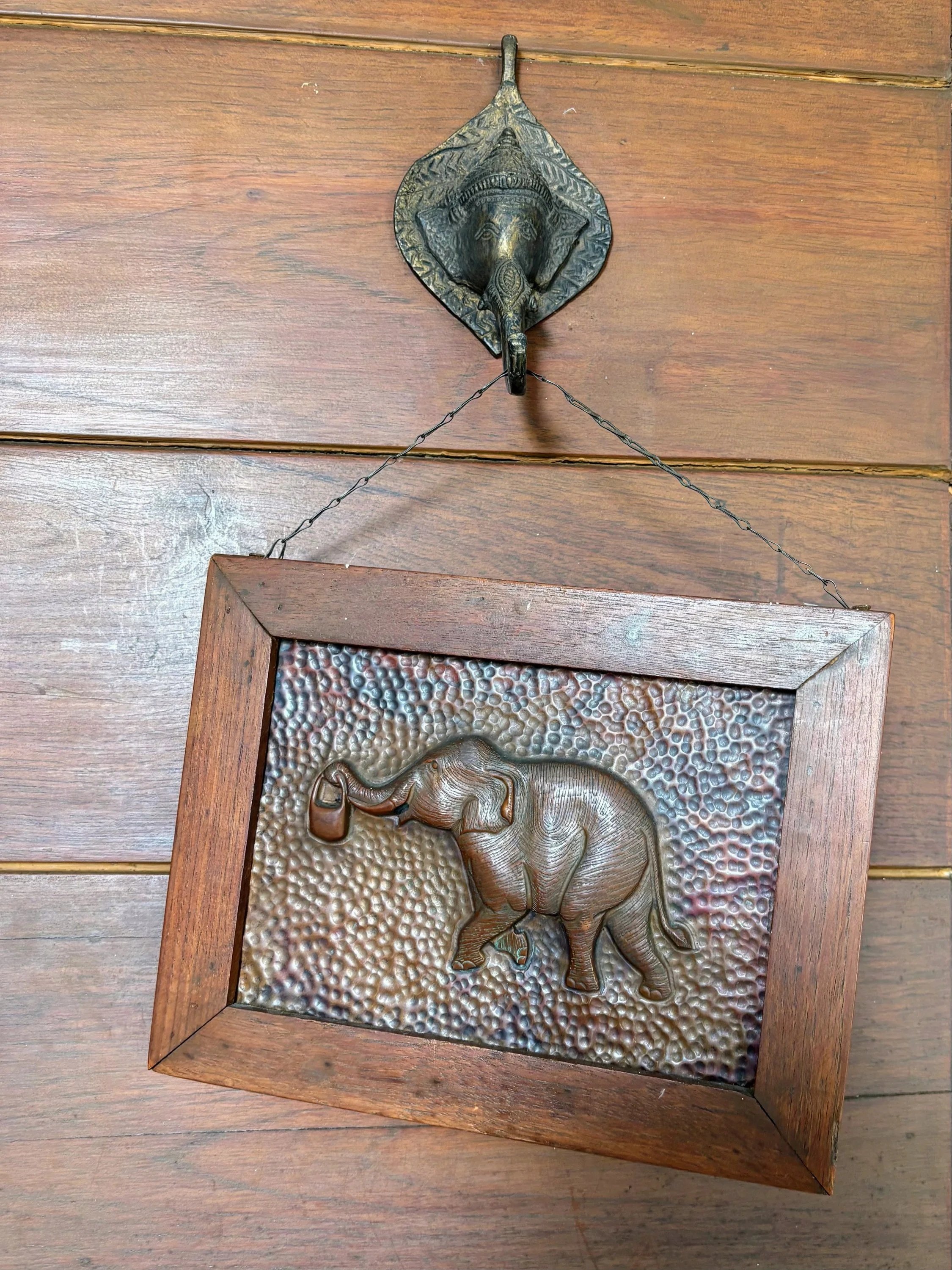
The door of our hotel room in Chiang Mai.
Let elephants be elephants
The silver necklace is hanging around my neck as I’m writing this blog post and reviewing what I’ve written. It reminds me of another important thing Chiang Mai elephants taught me.
While it’s important to train the wild inner elephant so it does not cause destruction, it is equally important not to break its spirit. Just like real animals, train it gently, respecting its nature. Don’t chain it down, don’t be cruel and kill its playfulness. If you do, the elephant will lose its most beautiful qualities: strength and loyal love.
*****
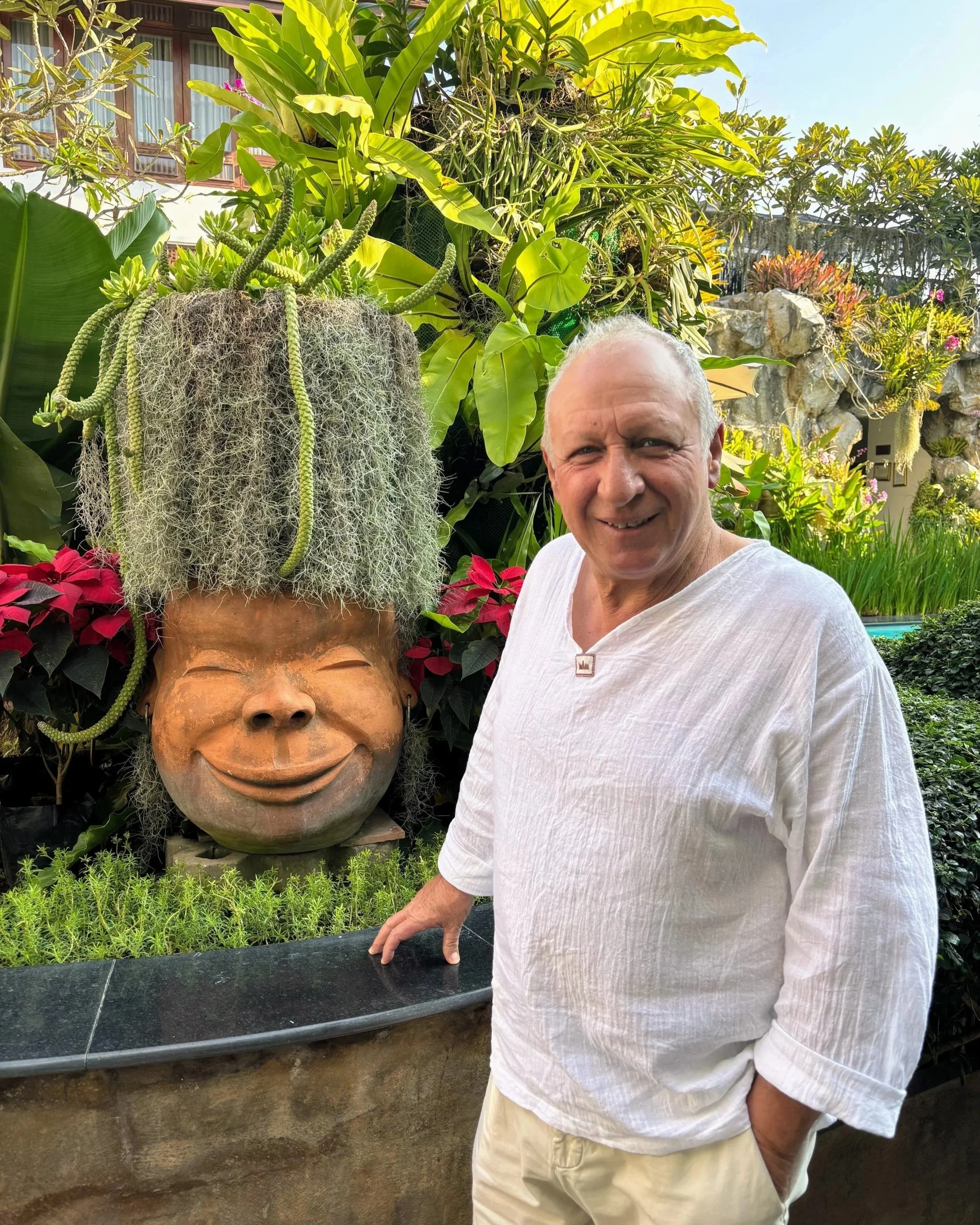
Umberto in the Kohdchasri Thani Hotel garden.
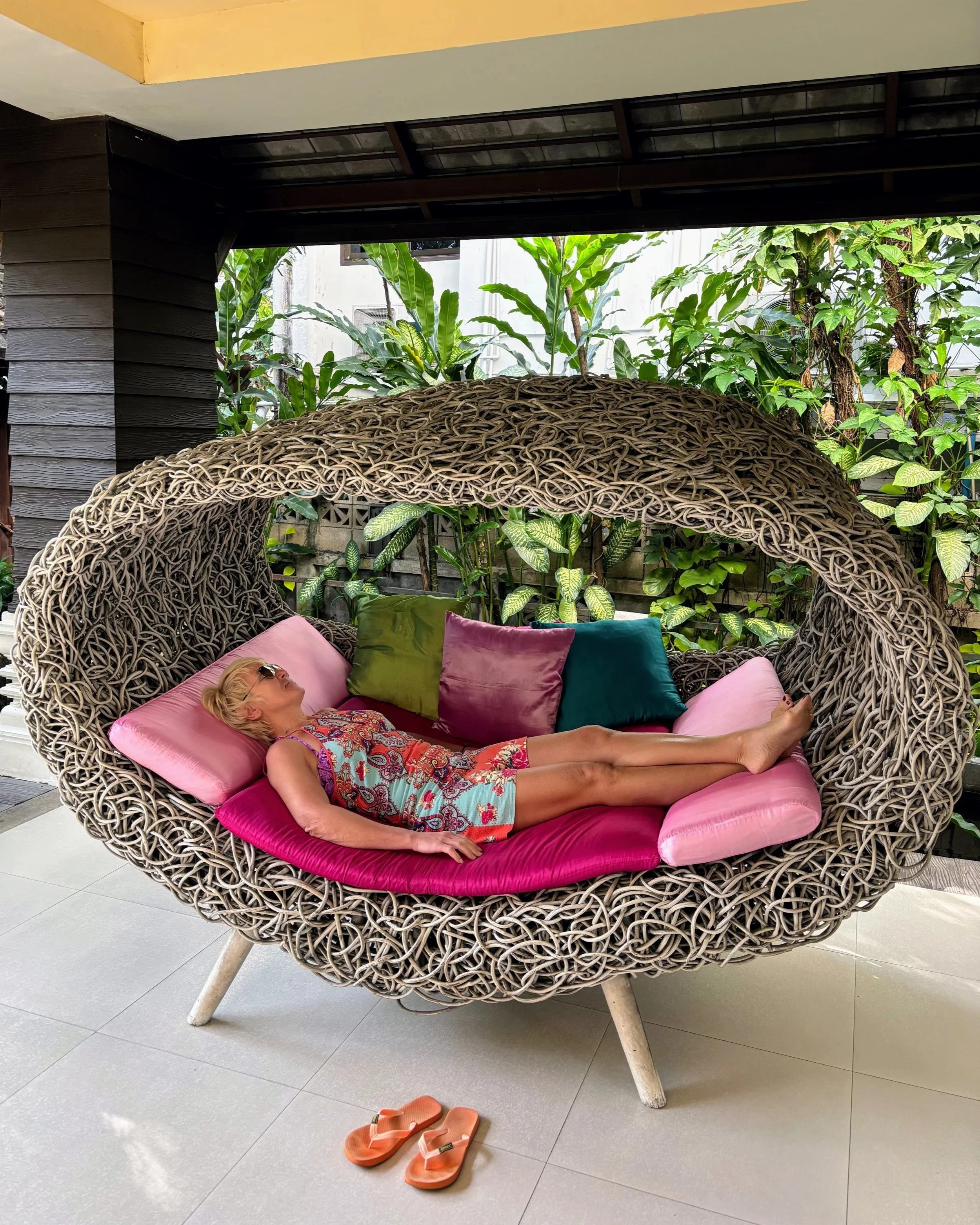
Relaxing at the hotel’s lounge area.
We stayed at the Kodchasri Thani Hotel in Chiang Mai. The hotel is a wonderful oasis in the old town, with a courtyard garden, a little pool and an airy lounge area for relaxing.
Our room was comfortable, spacious, impeccably clean and followed the traditional Thai aesthetic with dark wood furniture. We loved the breakfast served in the garden, a beautiful start to the new day. The hotel personnel was incredibly cordial and made us feel at home right from arrival. To my delight, the inhabitants also included a few friendly house cats!