Living in Multiethnic Harmony - Penang
George Town, Penang, Malaysia
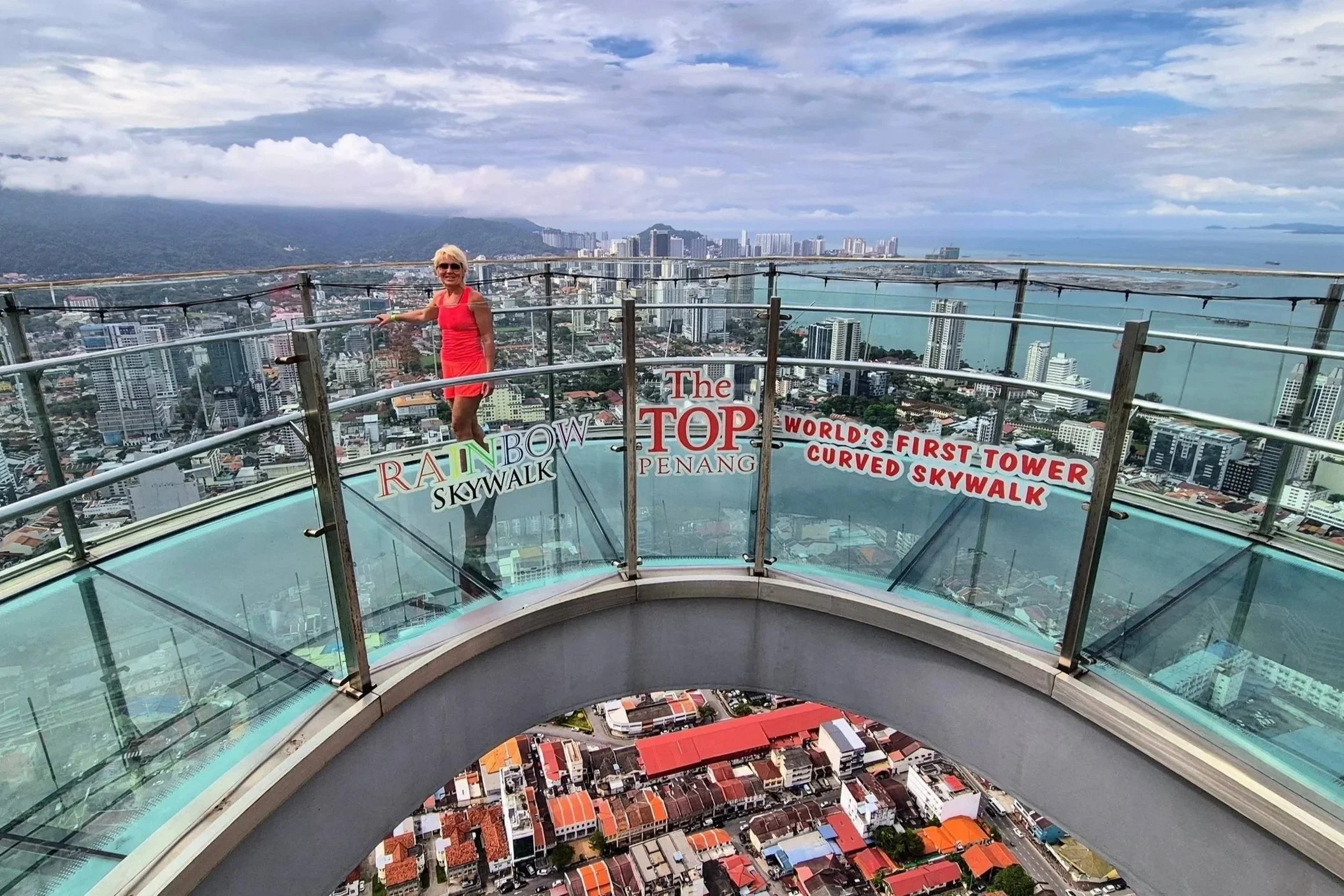
Walking on glass at 248 meters above the ground!
I had a dream last night.
Umberto and I were walking down the street somewhere, in a foreign city. The sun was shining bright, and all buildings were painted in different, bright colors. We walked past facades in British colonial style, then traditional Chinese shophouses, and a few blocks later, we felt like we had landed in India. Umberto bought crunchy samosas from a street vendor. We drank Chai Masala, spicy, sweet and delicious. The perfume of cardamom mixed with ginger tickled my nose.
We kept walking. There were red Chinese lanterns hanging across the streets everywhere. We walked past a Hindu temple, a Christian cathedral, a Mosque and a Taoist temple.
A Chinese rickshaw driver greeted us on a street corner. He was very friendly, so we hopped on his tiny little vehicle. He rode us around the colorful old town, stopping every few minutes to show us vibrant, life-like murals. Umberto took a photo of me in front of a mural with swings. I sat on the empty swing and started moving in the air, back and forth, back and forth…
That’s when I woke up. It was dark and I felt confused. It took me a while to understand that I had not become a painted figure in street art. No, I was in my own bed instead. How disappointing! The dream was so pleasant that I did not want to wake up.
It was not just a dream, though. It was also a memory.
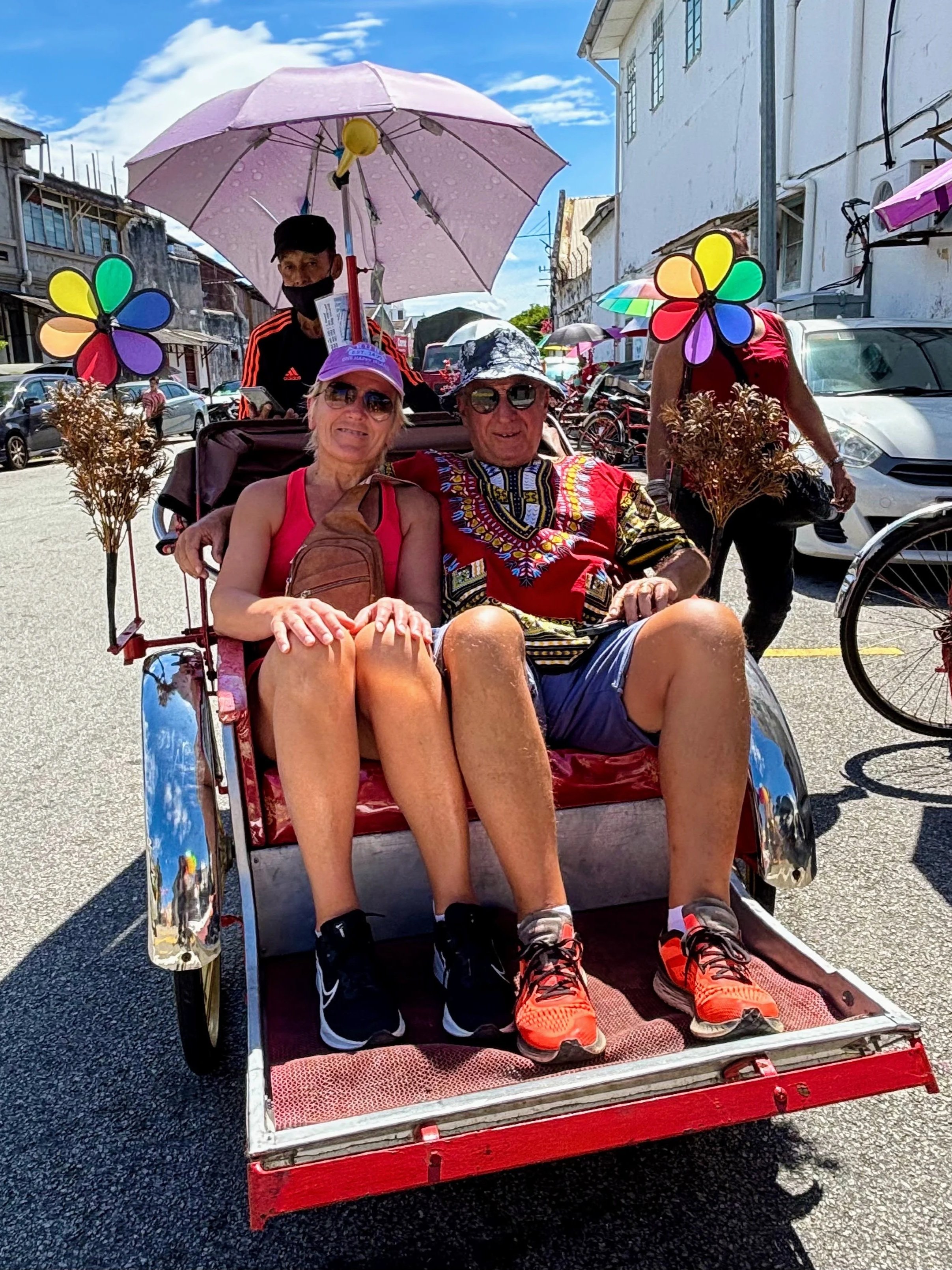

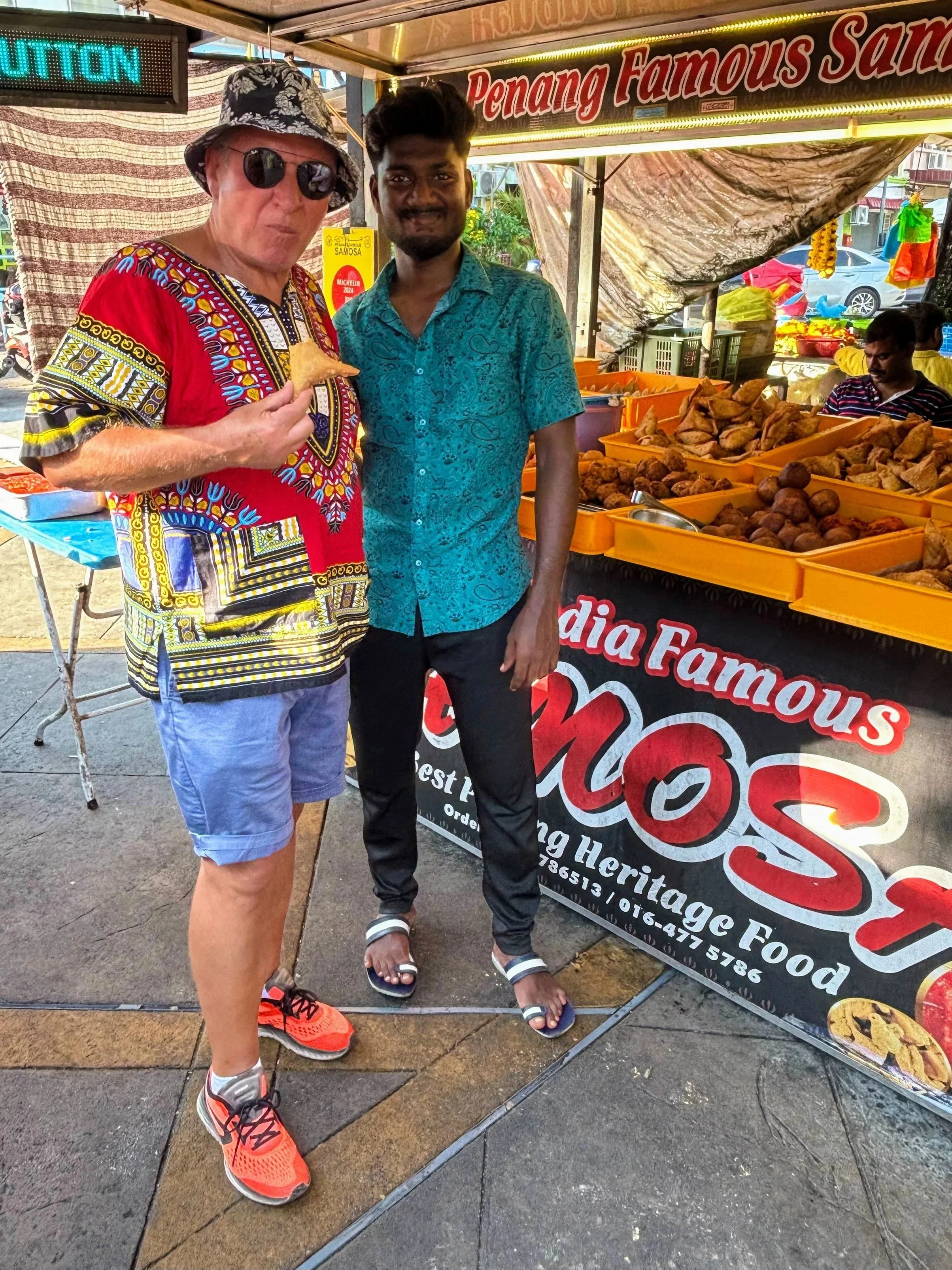
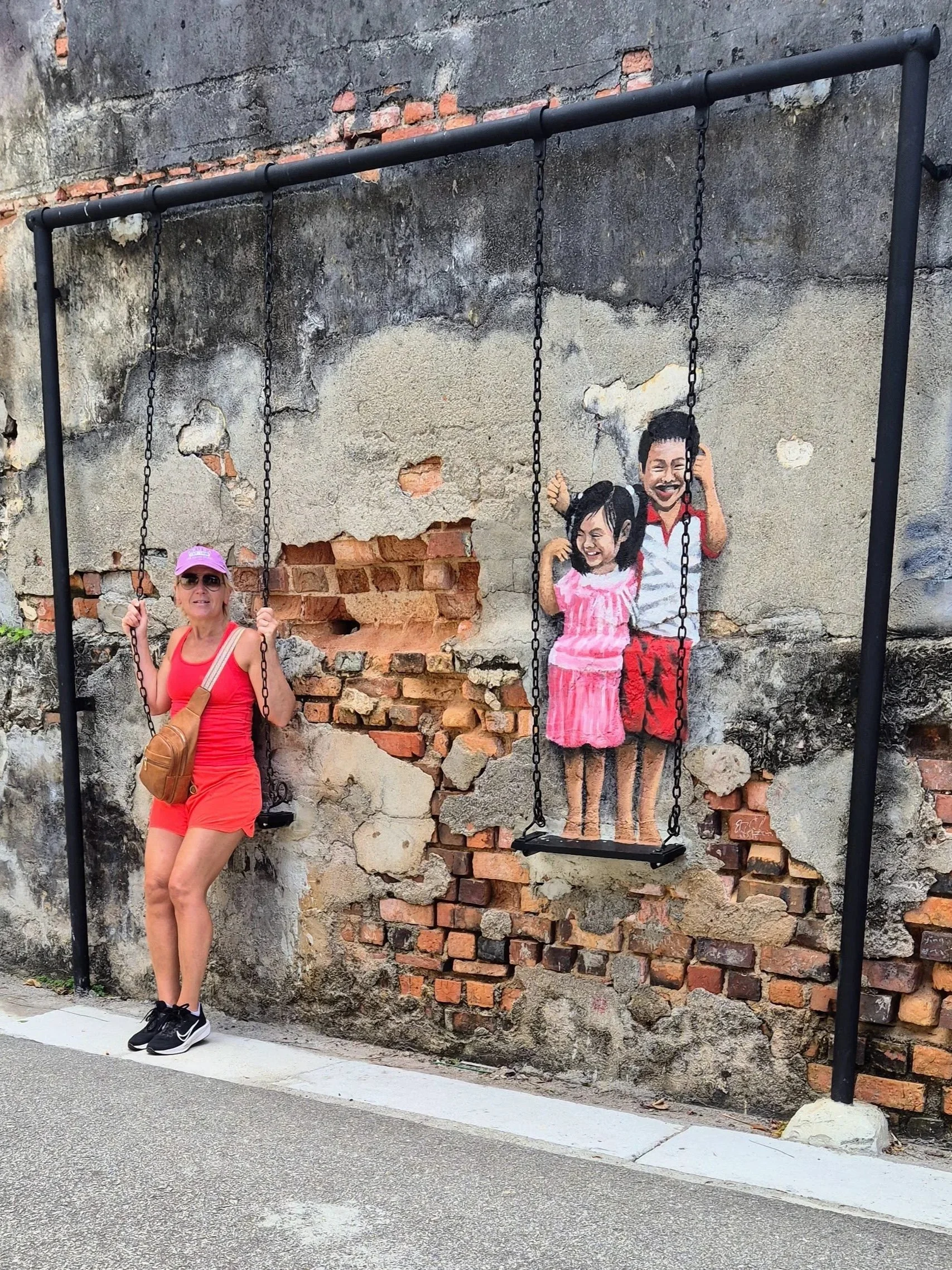
The dream was a memory from George Town, Penang.
George Town is the number two metropolitan area in Malaysia, and the capital of the state of Penang. It was founded as a trading post in 1786, and was the first British settlement in Southeast Asia. The city sits at the northeastern corner of Penang Island. Thanks to its proximity to maritime routes, it became a freeport, an important center for trading and attracted merchants from China, India and Arab countries.
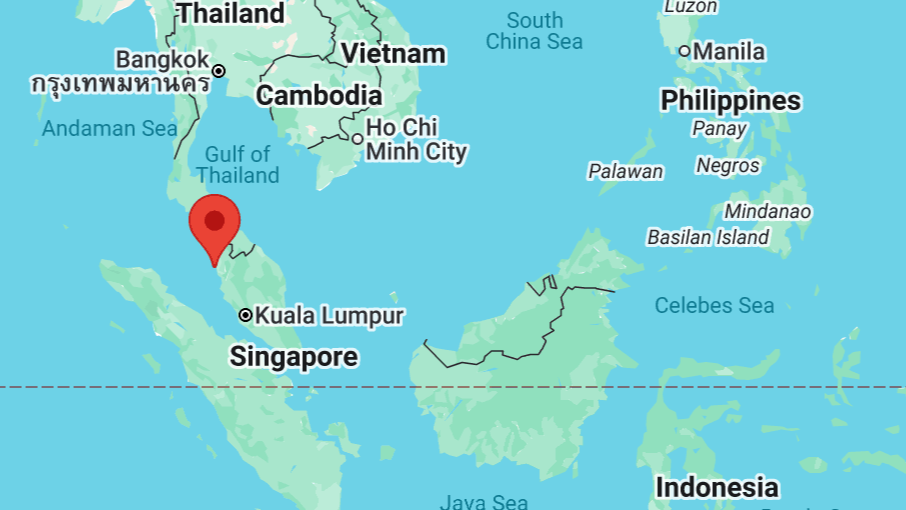
The multiethnic and multicultural heritage is still strong in Penang. Walking around George Town, you can experience it with your own senses and observe different religious and cultural communities coexist in harmony. Currently, the three major ethnic groups in the city are Chinese (approximately 51%), Bumiputera including Malay (31%) and Indian (8%), leaving around 10% to other ethnicities. This order is reversed at the national level, with Malays making up the majority.
We were absolutely enchanted by the old town! You can walk from one neighborhood to another, for example from Chinatown to Little India, and feel like you’ve traveled to a different country. You can enjoy dishes and spectacular street food from diverse traditions. Penang is known as the culinary capital of Malaysia, and it was easy for us to understand why - the food scene in George Town is exceptional. And yes, you can walk down the Street of Harmony and admire places of worship of different religions built almost next to each other.
The well-preserved colonial architecture gives the city center a unique, dream-like atmosphere. The pace of life feels slow and serene. And the famous murals turn streets into art galleries. It was therefore no surprise to us that UNESCO has named the city center of George Town a World Heritage site, for having “a unique architectural and cultural townscape”.
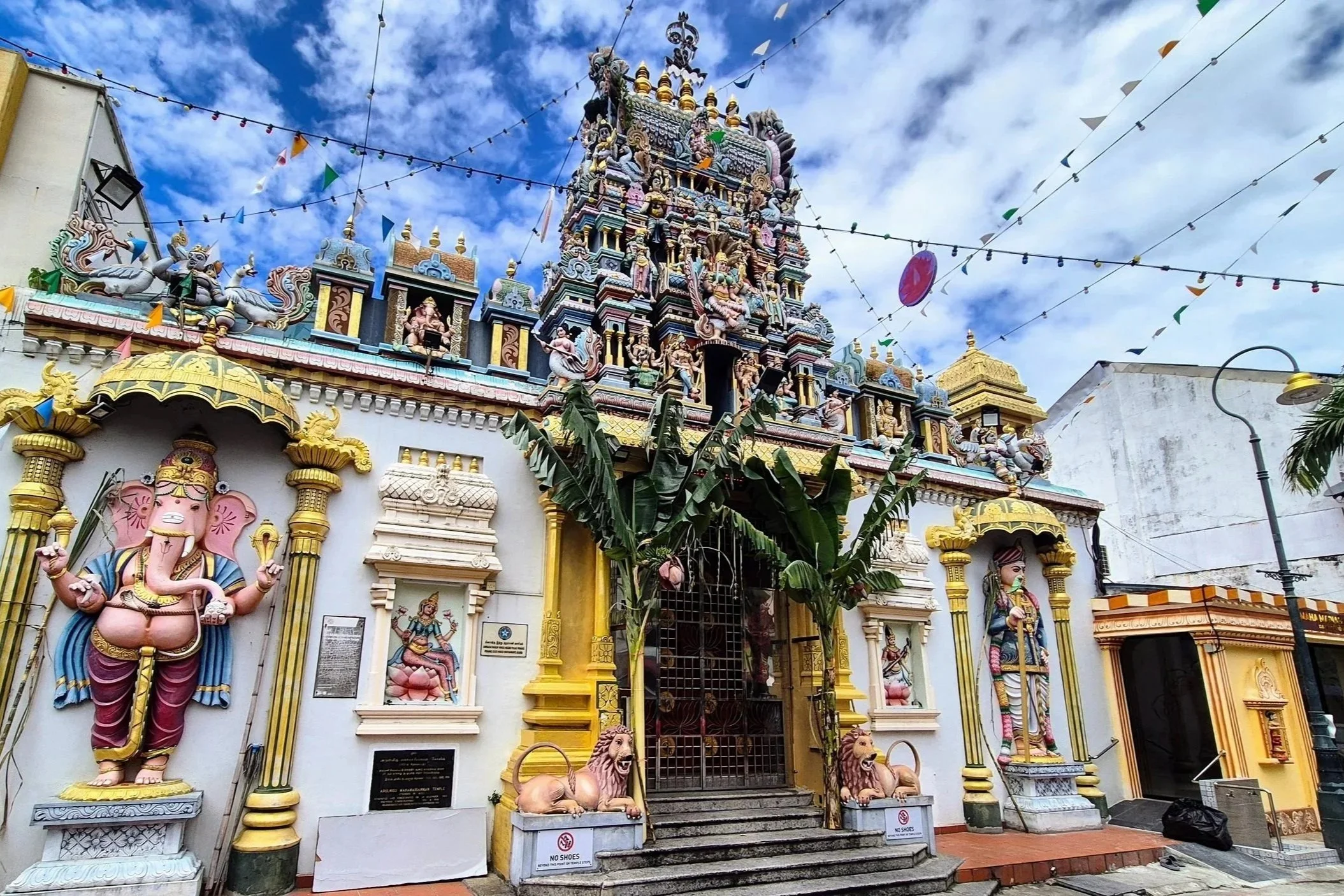
This Hindu temple was one of the most beautiful buildings to me in George Town.
Multiethnic Malaysia
When we travel to a new city, we like to attend guided walks and food tours. Walking around with a knowledgeable local person offers you a different perspective, and opens your eyes to realities that tourists cannot see by themselves. You can ask questions and get answers from a real person. And, of course, you get to enjoy the best food in town.
We joined two different tours during our time in George Town. Without them, our visit certainly would have felt incomplete and superficial, and not only in the culinary sense. In addition to taking us to the best local food haunts, our guides gave us their own views on life in Malaysia.
I was particularly curious about the practical side of living in a multicultural society. Malaysia’s official religion is Islam and religion has a big impact on the daily life of the Muslim population. I had read that the constitution gives religious freedom to everyone, but what does that mean in practical terms? For example, how about the big celebrations of other religions and cultures? Turns out, Malaysians can celebrate them all.
Our visit coincided with Chinese New Year in early 2025, and we could spot the decorations everywhere - also in non-Chinese neighborhoods. Wesak Day, which celebrates the birth, enlightenment, and passing of Gautama Buddha, is an official public holiday in Malaysia. So is Deepavali, the Hindu festival of lights. So is Christmas. And so on.
Of course, I would be naive to believe that there is a place on this earth where all ethnicities and religions live together in perfect harmony, with no inequalities, no imbalances. As much as we loved our visit, I understand that this is not the case here, either.
Malaysia gained independence in 1957. It was born a multi-ethnic nation with a complex history and baggage from colonial rule, which naturally has had long-term repercussions on Malaysian society. But, as far as I can understand, it is also a nation that strives to develop better policies to manage the diverse ethnic groups. What we experienced in Penang was a living proof of that.
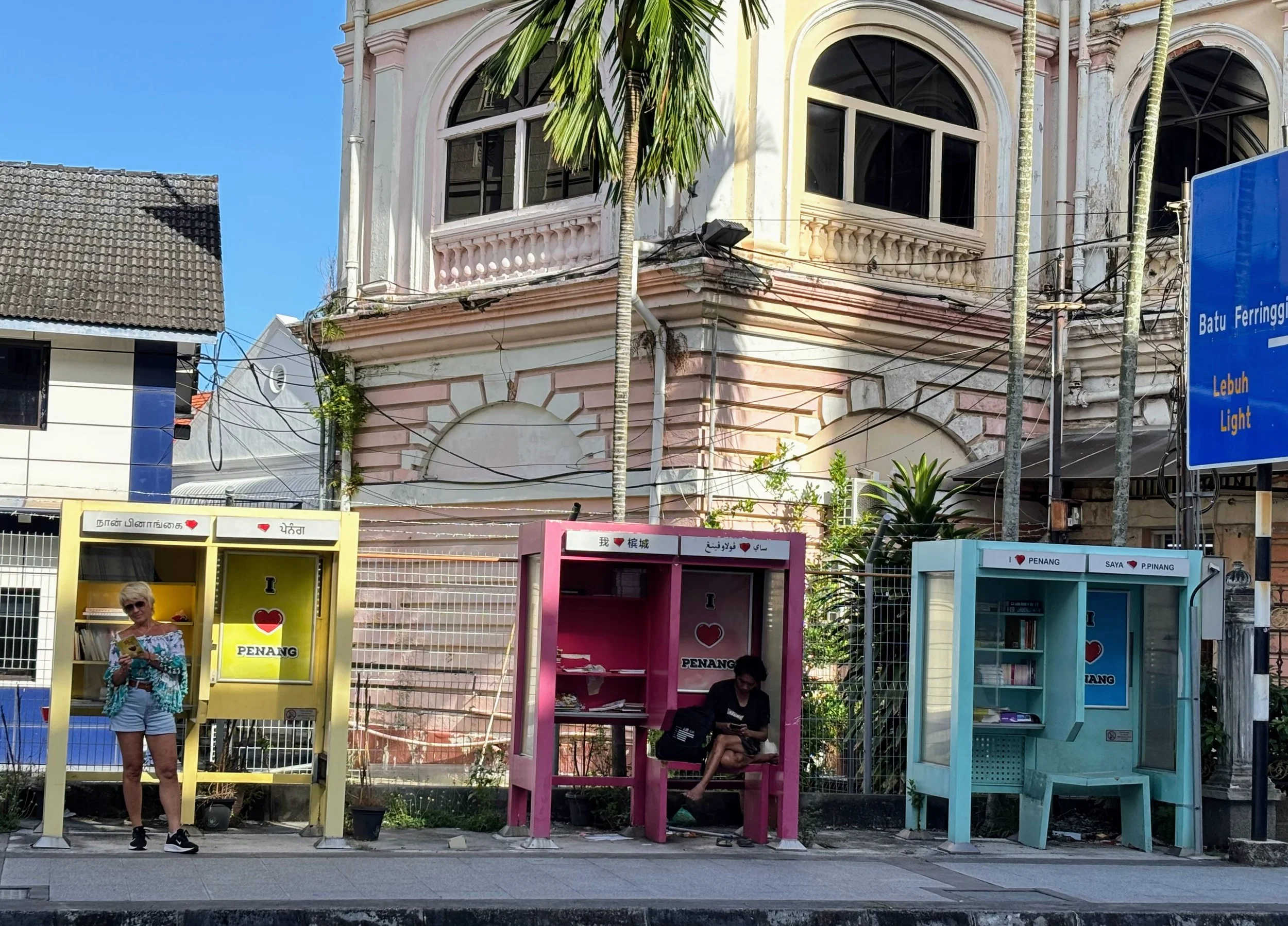
Abandoned telephone booths converted into little street libraries in George Town.
A lesson learned in Penang
I managed to fall asleep again but, unfortunately, did go back to the dream. In the morning, when I opened the shutters and light entered the bedroom, I saw what inspired the dream.
I did some ironing yesterday. Some of the shirts were still slightly damp after steaming, so I did not hang them in the closet right away. The Penang street art t-shirt was saluting me on the door handle.
Now that I think of George Town in broad daylight, what did we bring home? If I have to choose only one thing that hit home with me, it is this:
Embracing tolerance and diversity does not mean that you have to give up your own cultural identity and traditions.

The dream-inspiring t-shirt…
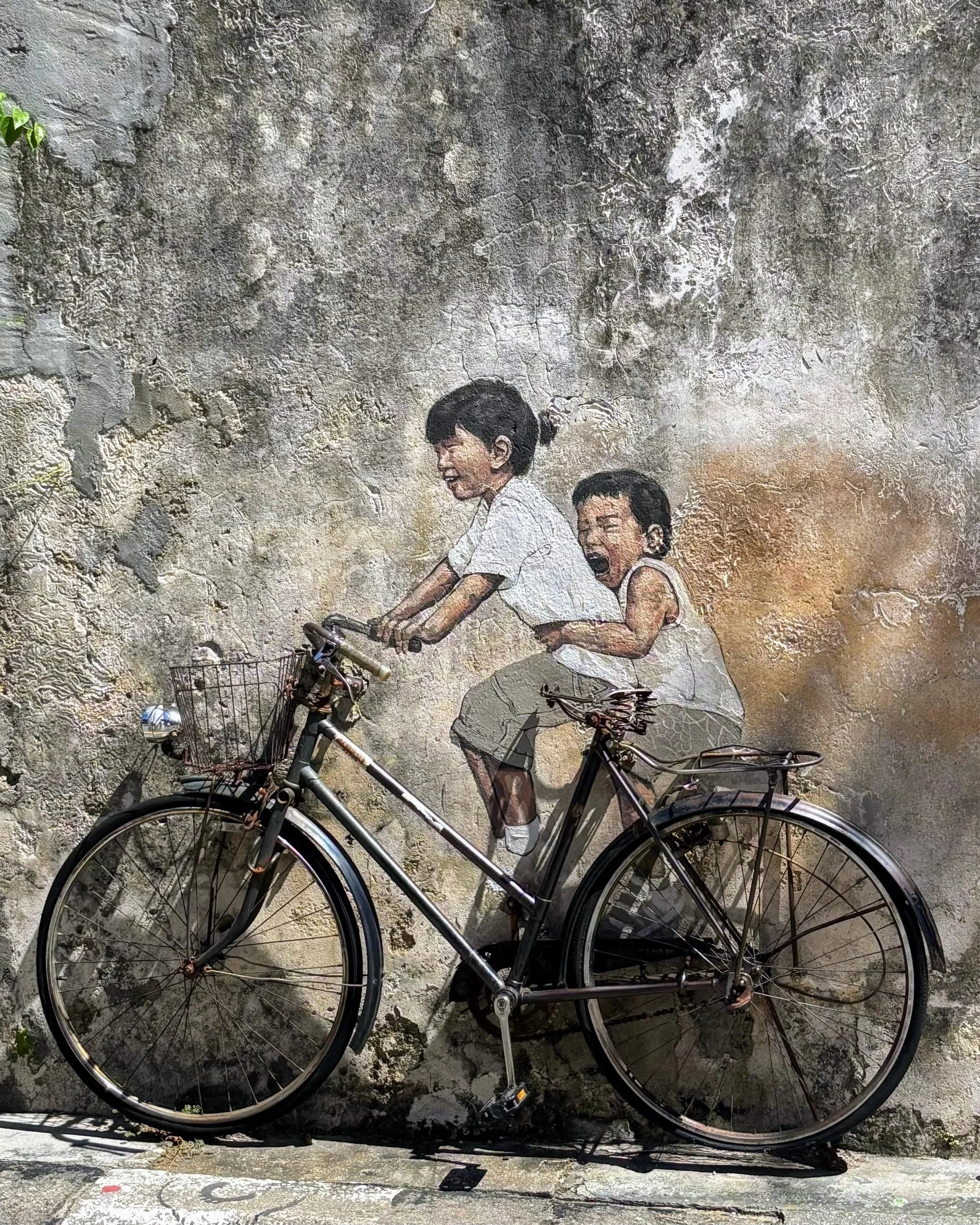
…and the original mural in George Town.
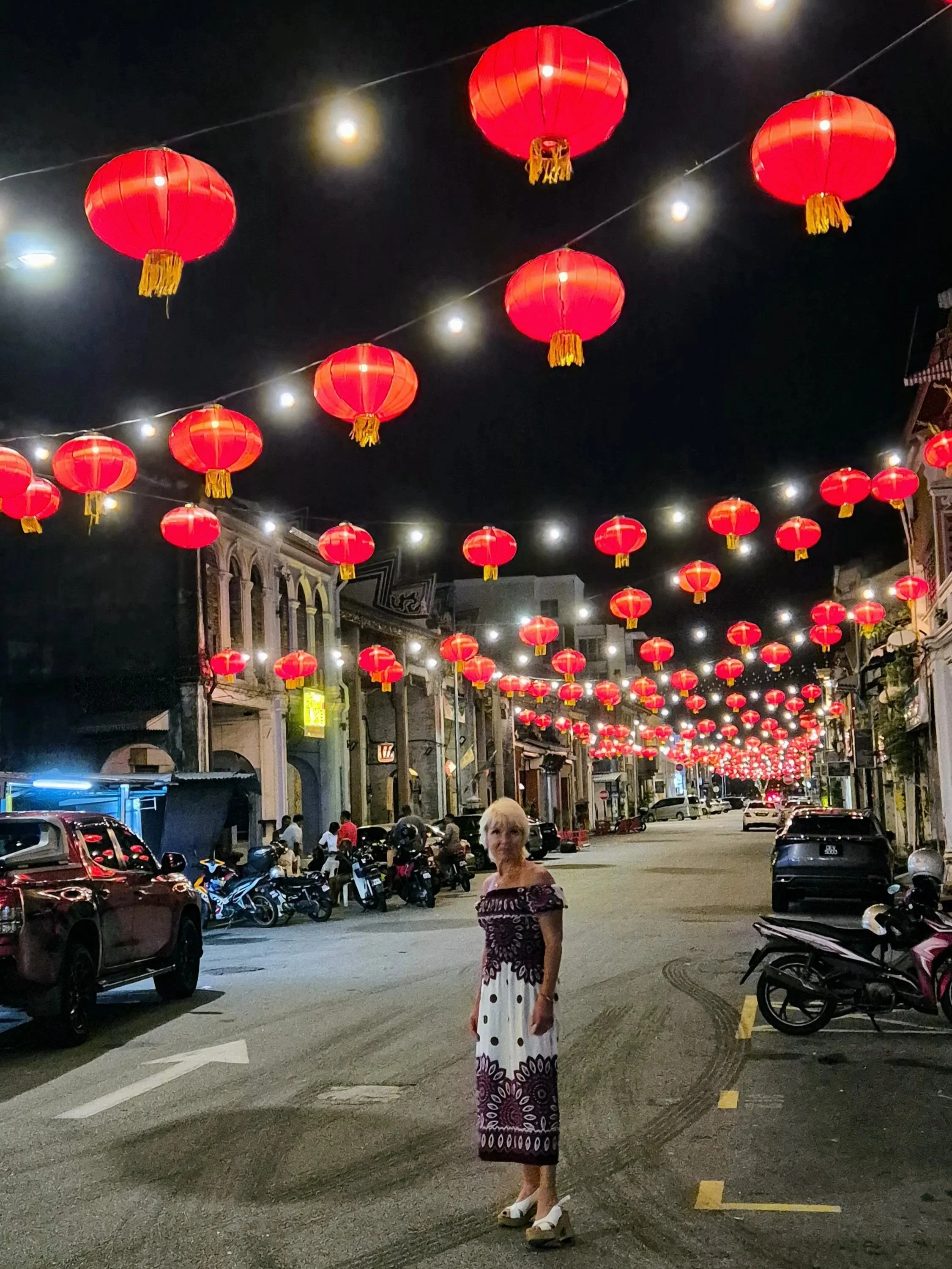
Walking back to the hotel under Chinese lanterns.
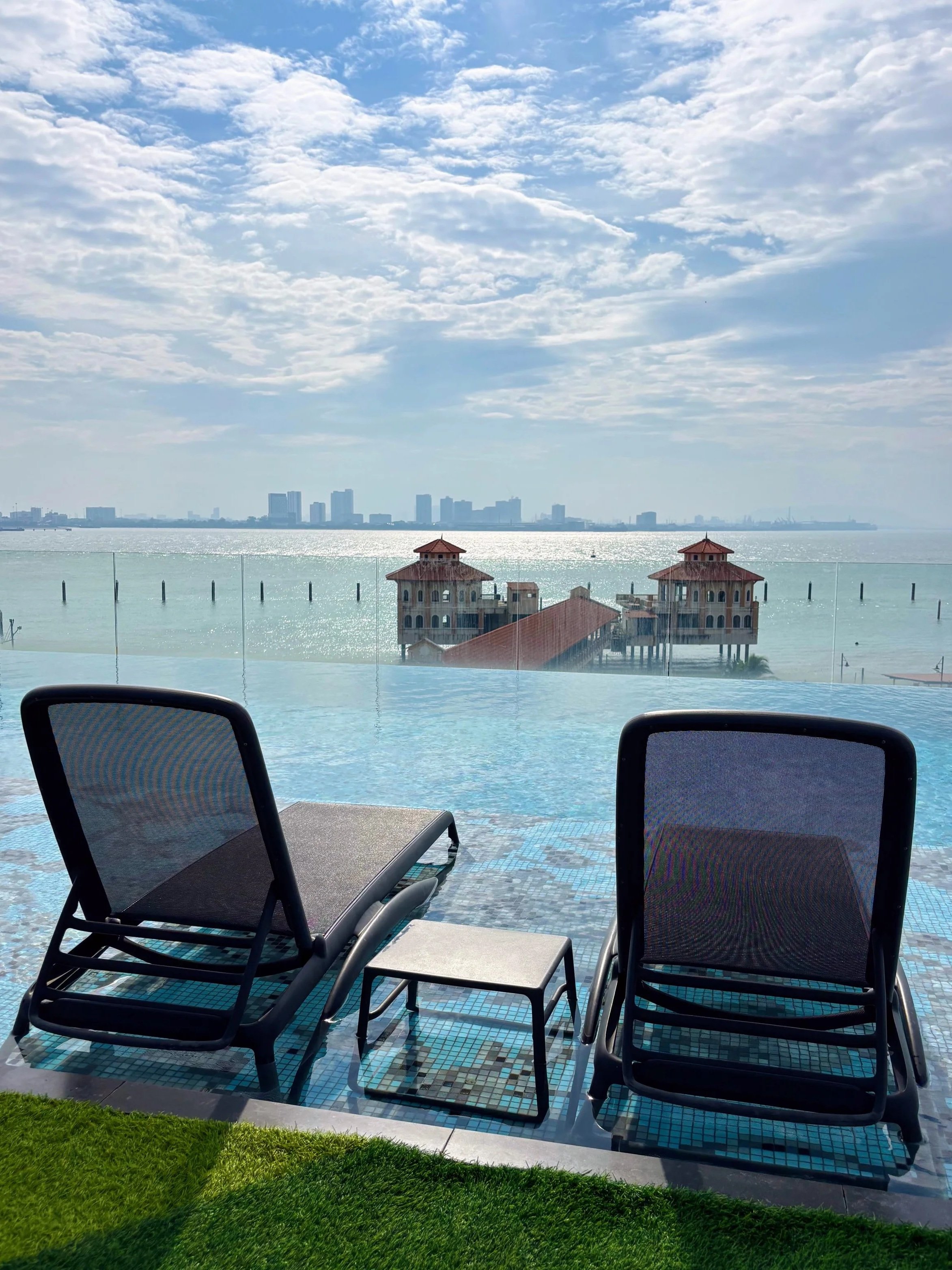
Rooftop swimming pool at the Prestige Hotel.
*****
Our George Town Favorites
We had an unforgettable stay at the Prestige Hotel, housed in a stunning, recently renovated colonial building at the heart of the old town. I adored the sophisticated interiors and - being crazy for exceptional rooftops - the swimming pool! The breakfast was in line with the exceptional service level of the establishment. There was also a compact but well-equipped and impeccably air-conditioned gym.
The Rainbow Skywalk at the TOP gives you the best view of Penang, from level 68 of the Komtar Tower. If you don’t feel like walking on glass at 248 meters above the ground (which was Umberto’s case, I had to walk alone!), there’s an observatory deck where you can get almost equally excellent panoramic views of the urban cityscape.
The Cheong Fatt Tze Mansion, a.k.a. the Blue Mansion, a 18th century Chinese courtyard house. An incredibly beautiful building, restored to its former glory, housing both a public museum and a boutique heritage hotel. Absolutely worth a visit, and very popular, so make sure to book in advance.
UNESCO Case Study of George Town: From port city to World Heritage site
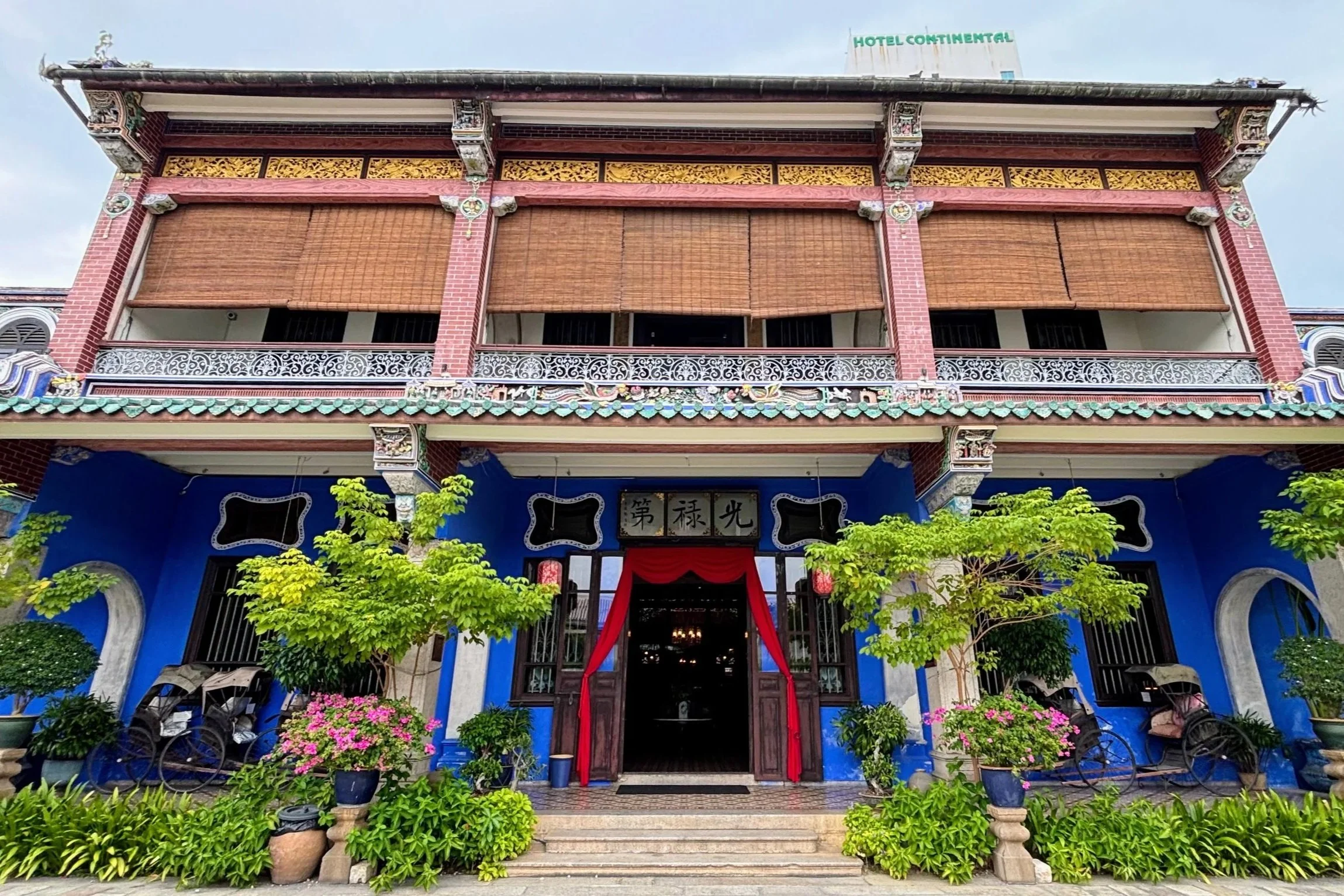
The Cheong Fatt Tze Mansion, a.k.a. the Blue Mansion. The restoration project won the UNESCO Asia-Pacific Heritage Award for Culture Heritage Conservation in 2000.