My Home Is a Person, Not a Place - Vasto Marina
Reflections under the umbrella, Vasto Marina Beach, Italy
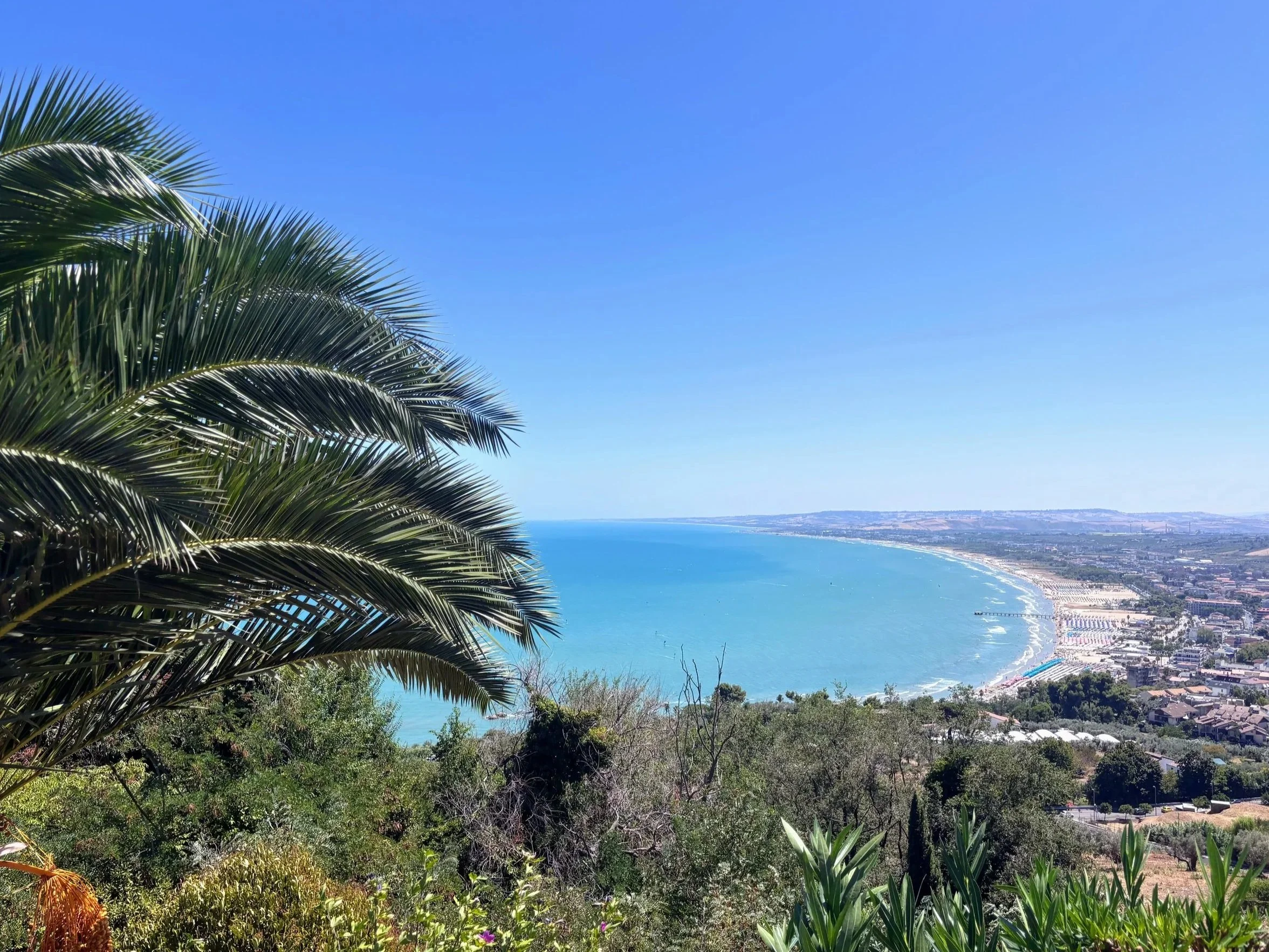
Vasto Marina Beach, seen from the historic city center.
August is the only month of the year when I prefer not to travel. There are three reasons for this. First, August is the month when most Italians go on vacation, and roads and airports tend to be congested. Second, this time of the year is particularly busy for Umberto’s business. I want to be at home so that he does not have to worry about getting a decent meal and finding a crisp ironed shirt in the closet. Third, we live in a beautiful coastal town and honestly, I would feel silly seeking sunshine elsewhere. August is therefore the month I dedicate to home living.
The beach is an essential part of my August morning routine.
Just like many other locals, we reserve an umbrella for the entire summer season at one of the beach clubs in the marina. That way, you have complete flexibility to go down there whenever you like, be it just for an hour or the entire day, or something in between, and always have a guaranteed spot. Jokingly, I say that the beach umbrella becomes our second living room in August.
I love slow summer mornings. Wake-up time is when my body tells me to get up. If Umberto is still in the house, I prepare an espresso for him. Most days he’s already gone, so I start the new day by myself, with some happy music and a big glass of water. In case the terrace flowers look dehydrated, I give them water and a few friendly words, then go and prepare my own coffee.
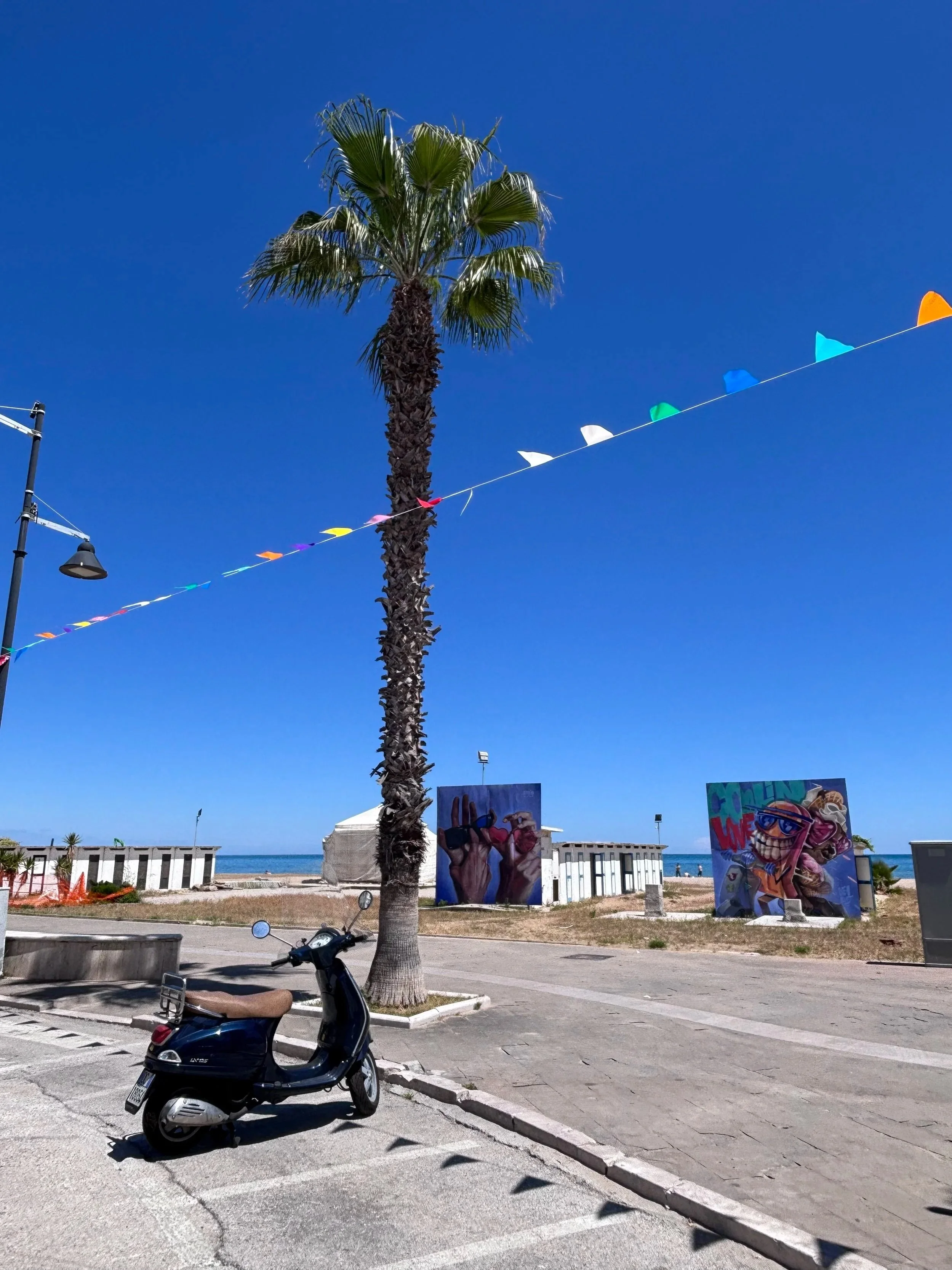
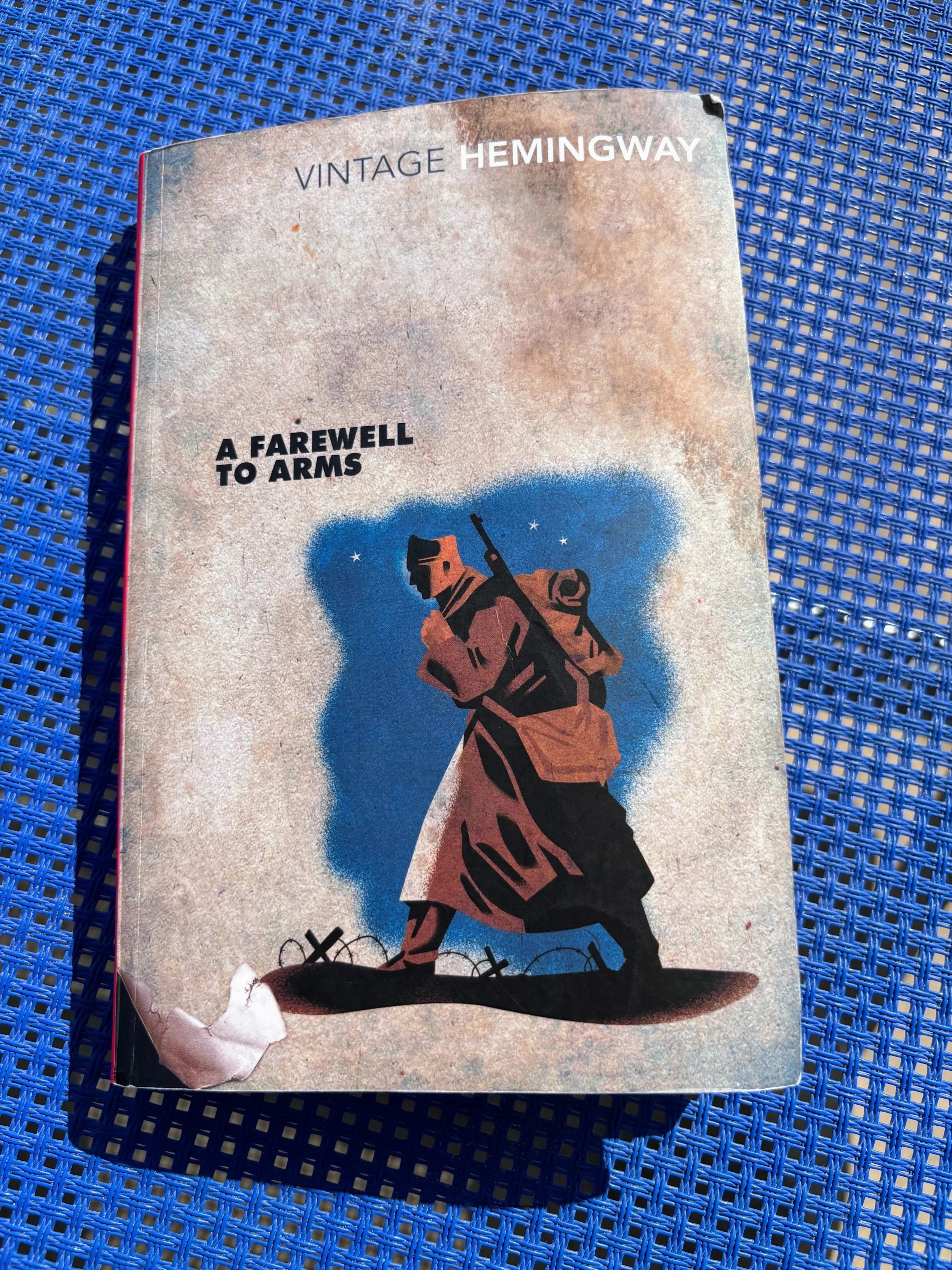
If there’s something important on the day’s to-do list, I get it done before venturing out, when my mind is still fresh. Then I grab a beach towel, a book and hop on my Vespa. Vasto Marina is just down the road and looks like an easy walk on the map. But with the intense summer heat pressing on, it’s more comfortable and healthy to use the two-wheeled extension of my body.
A frequently asked question
This morning, I wanted another espresso, one that’s made with a proper industrial-scale machine. So I made a pit stop at La Sterlina, the bar we always go to in the marina, and of course bumped into a friend of Umberto’s. That’s almost inevitable in a small town like ours, especially as my husband was born and raised here. He knows everybody and everybody knows him.
The Italian caffè ritual is quick. You stand by the counter and swallow your espresso in a small number of sips. Then you proceed to socializing which is not necessarily such a speedy affair. Umbe’s friend and I exchanged the customary greetings and niceties. Then, after complaining about the heatwave, he asked me:
“So, did you go home this summer?”
After all these years in Italy, I still get questions like this. I gave him my usual response: “I go home every night, unless I’m traveling somewhere.”
He looked at me with an incredulous smile, not sure if I was serious or joking, and said: “No, I mean your home. La casa tua. ”
The question was funny to me but I was not joking. “But I only have one home, the one here, with Umberto.”
He looked perplexed. “I mean, your own country… Norway, right?”
It was my turn to smile. I didn’t want to be cheeky so I answered nicely: “Finland. Yes, we did go with Umberto, in July.”

“Home” does not have the same meaning to everyone
A moment later, I arrived at the beach club. The sun was blazing and the sea breeze was so feeble it didn’t help much. I spread my towel on the sunbed in the shade, lay down and grabbed the book. But before opening it, I started to think about the conversation at the bar.
More specifically, I started to think about the word “home”. Casa in Italian, koti in Finnish. Simple, four-letter words but not always equally simple to comprehend, because the meaning can vary depending on the speaker’s culture and personal experience.
For many Italians, it’s incredibly important where you come from. Your hometown - and the region it’s in - form a fundamental and permanent part of your identity. Residential mobility in Italy is substantially lower than in many other Western countries, particularly in the South and smaller localities. Millions of Italians live in the same town their entire lives - and that, in consequence, is what home means to them.
At the other end of the mobility spectrum, you have Australia, the US and the Nordic countries. For their citizens, moving to other parts of the nation is commonplace, and millions of people live in several different cities during their lives. Many experience a number of moves already during their childhoods. Naturally, the concepts of “home” and “hometown” then become more fluid.
There are regional differences inside all countries but as a rule of thumb, Southern and Eastern Europe have lower residential mobility rates than the North. The easy explanation would be to say it’s all about family ties, but in reality, cultural traditions explain only part of the difference. Residential mobility rates correlate strongly with the labor market and housing conditions. For example, a higher house ownership rate tends to be correlated with lower residential mobility, and vice versa. (That’s correlation, I’m not qualified to comment on causation.)
If it sounds like I’ve researched this topic, I have. Well, just a little bit, out of curiosity. In our first months together, I discovered that Umberto had lived in Vasto all his life. I thought it was weird, so I started digging out some statistics. They’re easily accessible through the OECD and EU websites, as well as national statistics offices. Turns out, he was not the weird one in this house.
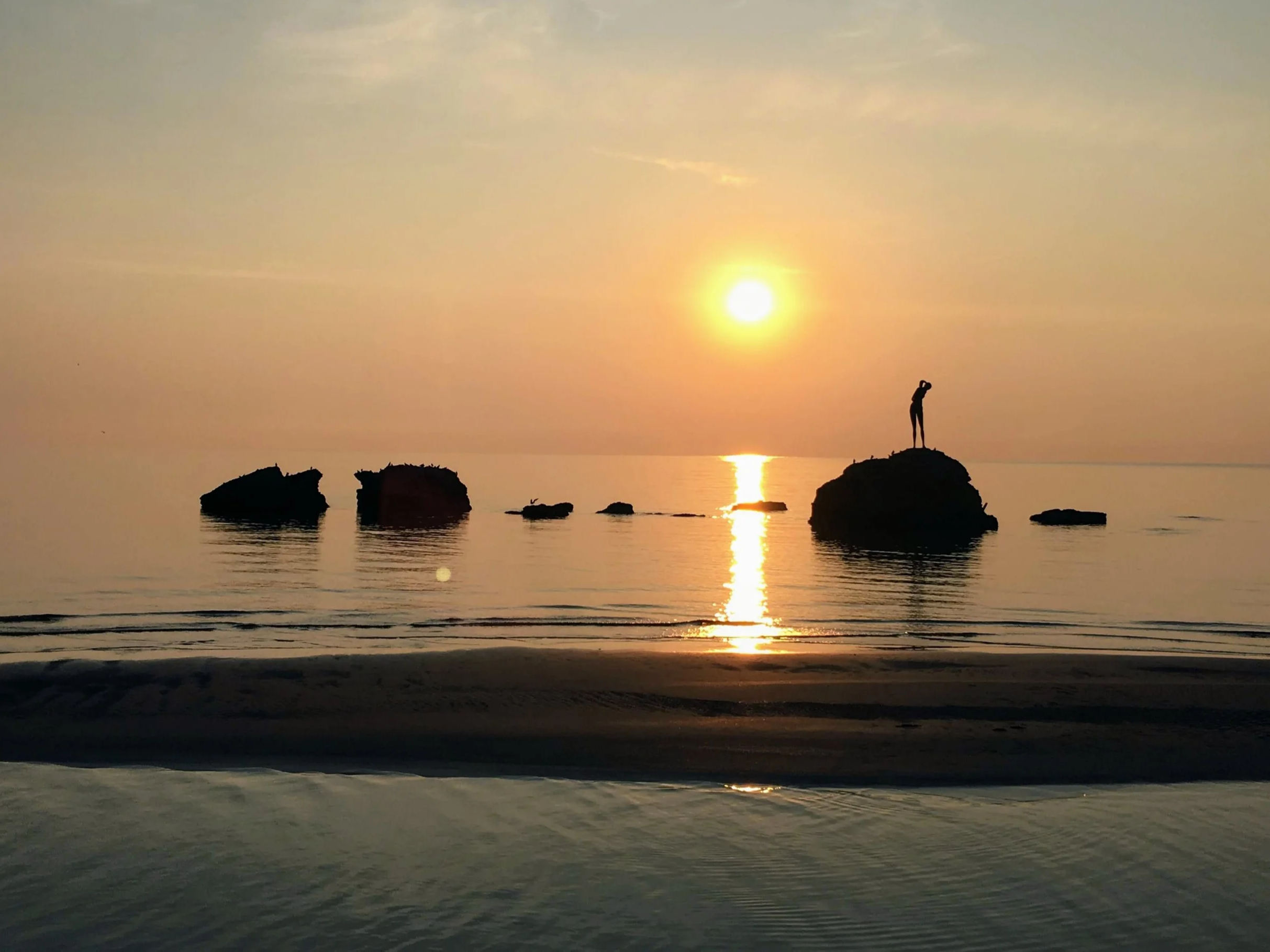
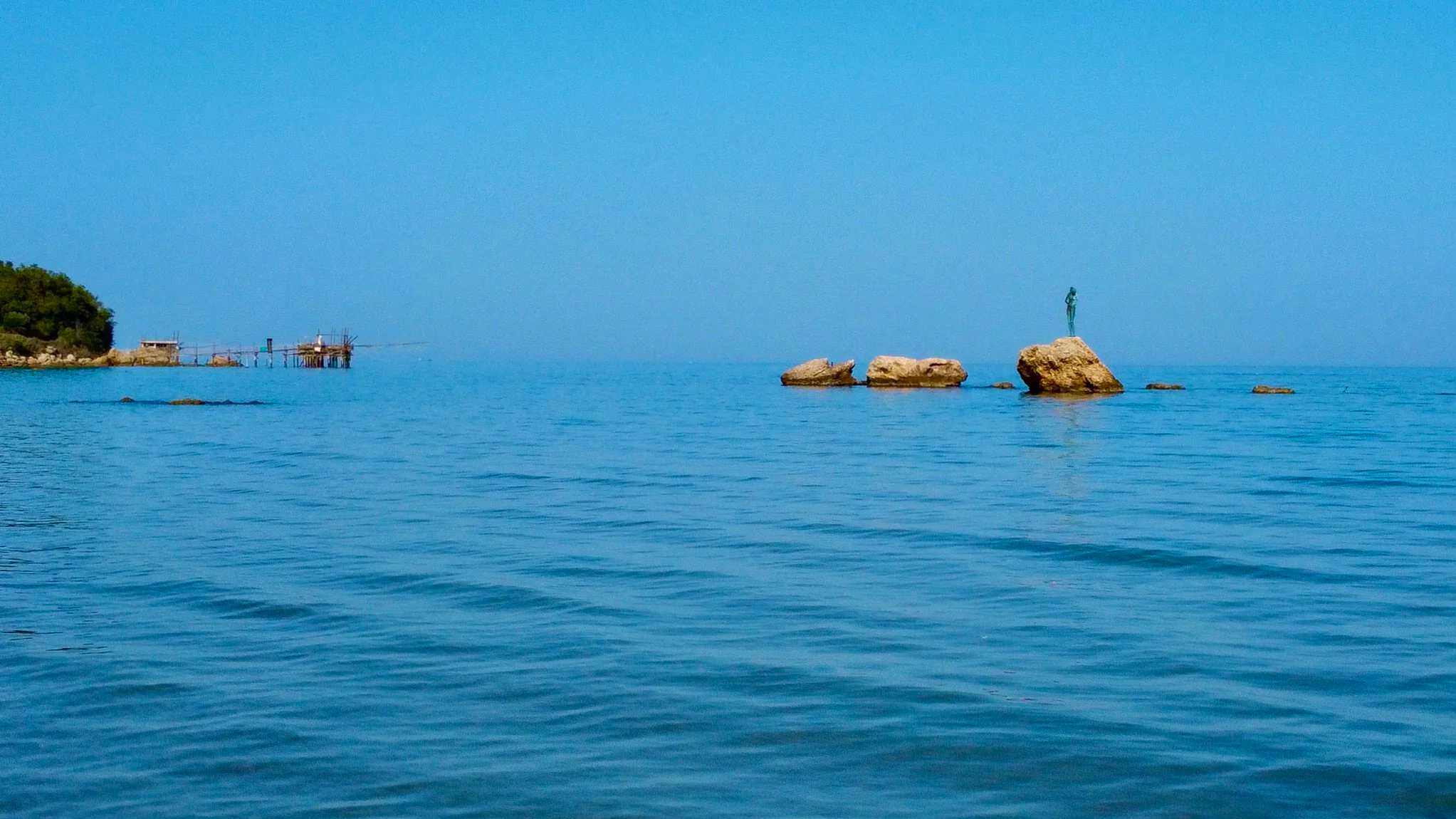
La Bagnante, the statue in Vasto Marina, is one of the symbols of our city.
So… How weird am I, exactly?
How residentially mobile have I been in my life? Very, but I wasn't able to say an exact number off the top of my head. I grabbed a pen from my beach bag, opened a blank notebook page and started listing all the houses and apartments that I’ve ever lived in. It took quite a while.
Initially, I did not even remember all of the places. Two came to my mind an hour later. One only now, writing this piece. I had to scribble additional names between the items in the original list. The current total is 27, in five different countries.
In other words: if my memory serves me right, this is the 27th place I’ve ever lived in. Out of those, half a dozen were before finishing high school and the first one, I have no memories of whatsoever. Is it no wonder, then, that “home” to me is not a childhood place?
The Finnish average is currently around 13 house moves in a lifetime. That makes Finns some of the most residentially mobile people in Europe. My number is at the higher end but by no means off the bell curve. More importantly, I don’t feel it’s a problem. On the contrary.
It’s good to be residentially mobile!
The air was so hot that just sitting under the umbrella made me sweat profusely. I tried to seek relief in the water, but to no avail. The sea was so warm that it felt like a giant bathtub. Up to my knees in the lazy Adriatic waves, I kept thinking about the list. It was slightly longer than expected, somehow I managed to surprise even myself.
Moving houses can be a pain. Changing cities can be unsettling, and moving to a new country even more so. But … change can also be so exciting and energizing. A new place, a new adventure, who knows what’s going to happen!
More than anything, I think that moving around a lot makes you flexible and adaptable. It teaches you courage, if not fearlessness, to go for new opportunities and speak to strangers. In my case, it also has made me unattached to physical places and tangible material possessions.
(If there’s a word for the exact opposite of a hoarder, that’s me. De-clutterer, maybe?)
But has this vagabond life made me feel rootless? Compared to somebody like Umberto, possibly, to a degree. But, if you’ve never had your roots growing deep in the soil of one place, you cannot know how it feels to be from somewhere. You cannot miss something you’ve never experienced.
I don’t feel rootless, I feel free.
What does “home” mean to me?
Back under the umbrella, I asked myself another question: what is it that makes me feel at home?
Reviewing the list of 26+1 places, I got hit by waves of emotions. Each item brought back memories, vivid images of a moving van, a facade, an entry door, the layout of an apartment or a house. I recalled colors, furniture, curtains, light from the windows, sounds from the street. I remembered where I used to study or work, I could see faces of friends, neighbors and colleagues.
Some places elicited beautiful memories, others made me feel a heavy clump in my stomach. Some places were happy homes, full of light, bright colors and laughter. Others were just gloomy apartments to sleep and shower in, and I couldn’t even retrieve their street names.
How about now, the place I actually do call home? I’ve never lived this long in any one place. The previous record was about six years, and that was over four decades ago. I’ve never felt at home the way I do now.
I love our apartment. I adore the space we have created with my husband, it is a beautiful home. I’m no Martha Stewart but I have become a good housekeeper. I enjoy decorating, cooking and cleaning. Most household chores are fun for me, even window-washing and ironing which I used to hate. Somehow it feels different when it’s ironing his shirts.
But would I feel this way if Umberto wasn’t in the apartment with me? Would I even be living here without him? Those were questions I did not want to think about.
It was time to pack up the beach bag and ride home to cook.
Umberto’s definition of home
Over lunch, I asked my husband: “What does the word “home” mean to you?”
Umberto responded in autopilot, without thinking, while cutting his chicken fillet: “Here. Vasto.”
That was predictable. He is vastese (uaštaréule in local dialect)through and through, and proudly from the region of Abruzzo.
“Va bene,” I responded. “So, let’s say, the apartment you lived in when we met, was that your home?”
Umberto looked at me, dismayed, and stopped the fork that was on its way to his mouth.
“No! I was alone like a stray dog back then!” he exclaimed in an animated manner.
I could not help teasing him a little bit. “So, it is not just this town, is it? That apartment was not a home whereas this one is? Why?”
He looked at me again. “Because you’re in it.”
“So, even if we were in a tiny little hut on an island in, I don’t know, Panama, would you feel at home with me?”
“Yes, I would,” he said laconically and started chewing the chicken with apparent appetite. The message of his silence was clear: enough of philosophy now, let’s eat.
I walked to the other side of the table and gave him a kiss on the cheek. He had helped me answer my own question.
Home means connection, a sense of belonging
Home, by its nature, must have a physical element. Our bodies exist in the material world and must reside somewhere. But the physical environment alone, no matter how beautiful and amazing, is not enough for us to feel at home. That feeling requires connection, a sense of belonging and safety.
For many people, that sensation comes primarily from familiarity - your hometown, where you were born and raised, the house you’ve lived in for years or even decades. For others, especially for people like me, the human connection is more dominant. Furthermore, I have met individuals for whom “home” also has a spiritual connotation.
I realized that in the end, we human beings are not that different. We may use the word “home” in different ways, but in the end, we’re after the same thing. We need to belong and feel safe. The object of that emotion can be different.
For Umberto’s friend, for example, it’s this town.
For me, it’s a person.
*****
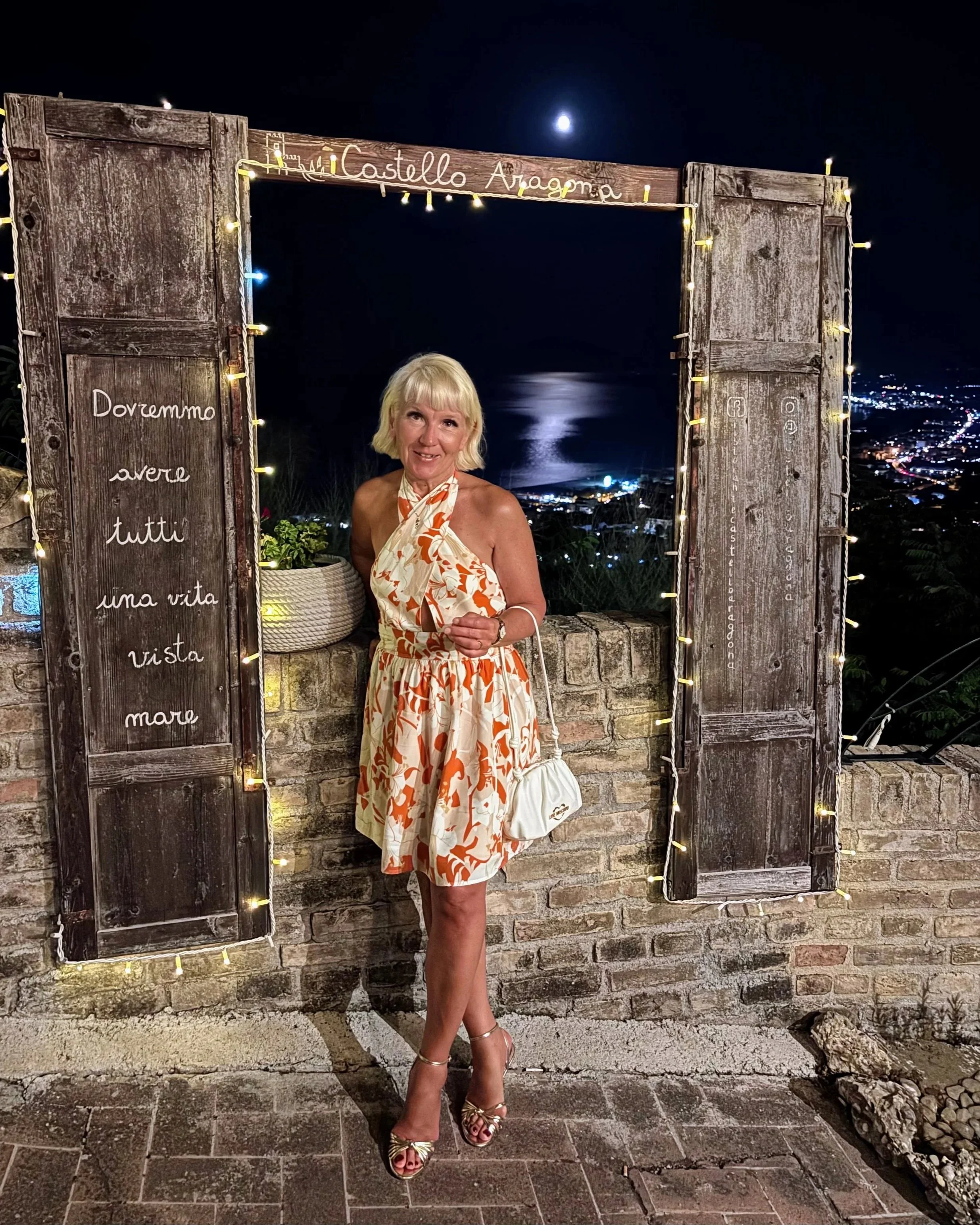
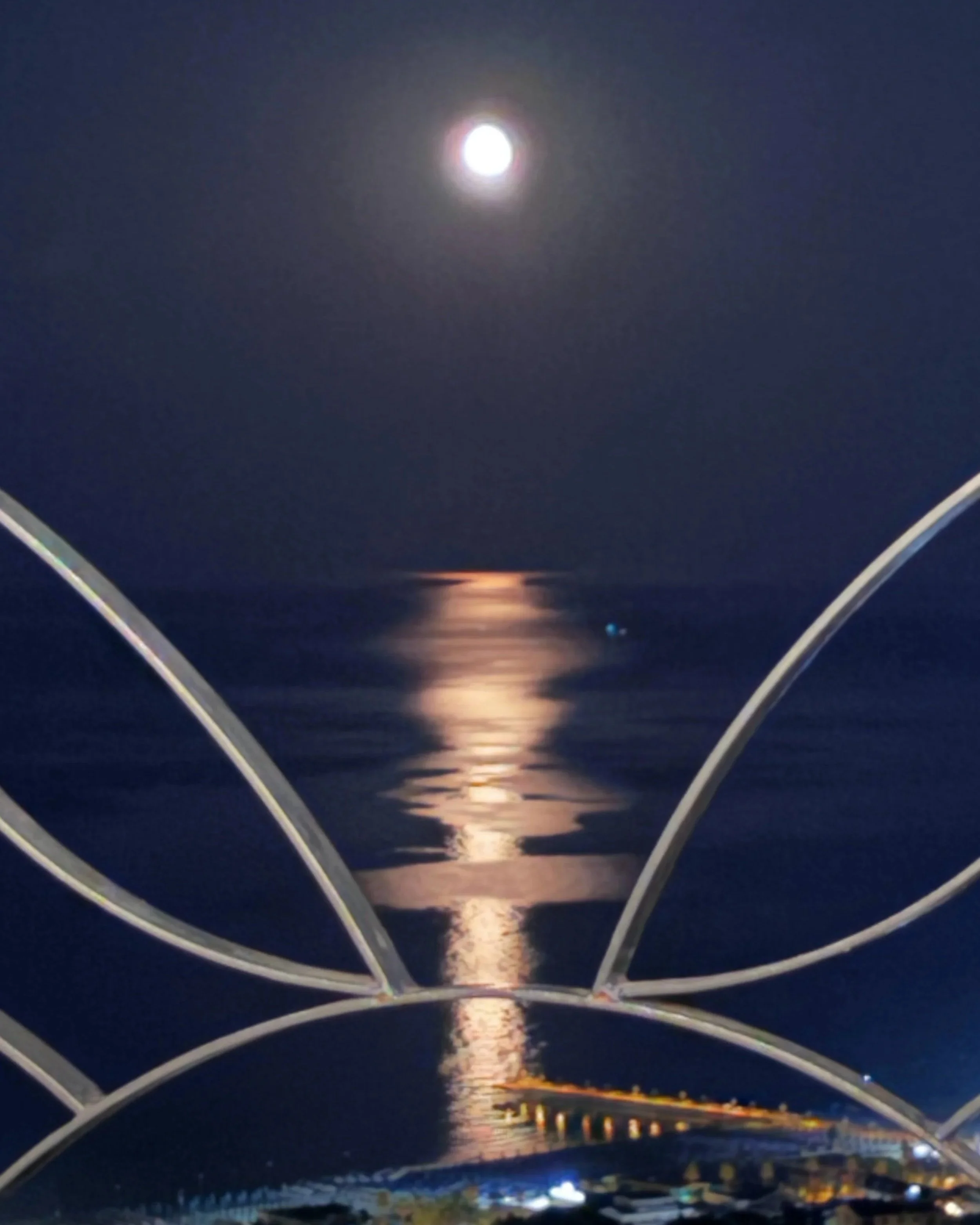
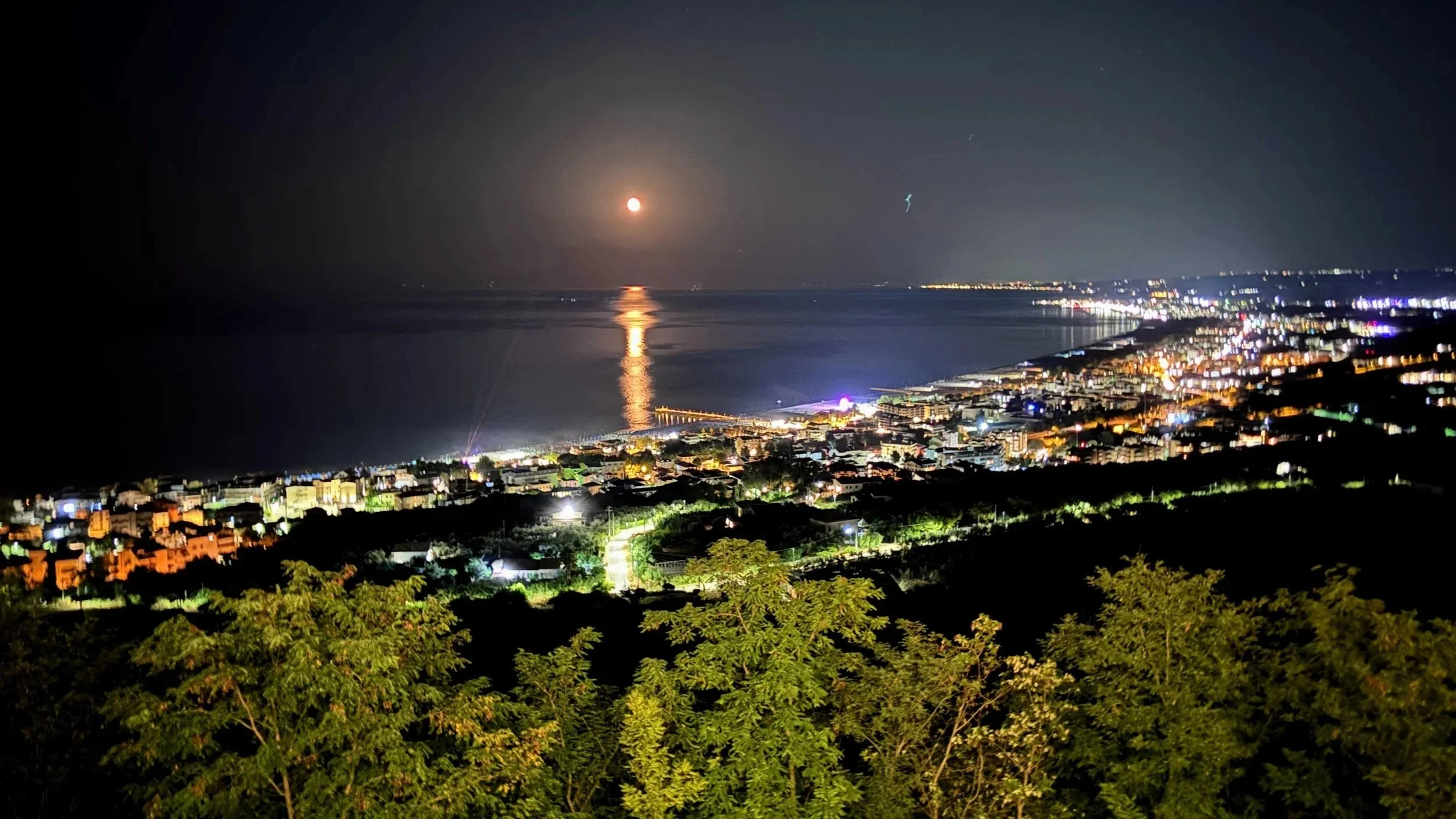
Vasto Marina with a full moon, a few weeks ago.