Love Has More Than Two Eyes - Paracas
Paracas and Las Islas Ballestas, Perú
“Oh, look at that sea lion! He’s taking a nap! Or maybe he’s just being lazy.”
Our boat had stopped next to a multicolored rock formation jutting out of the sea. The sea lion must have heard us arrive but did not interrupt his siesta. I had never seen such a large sea mammal in its natural habitat. The animal’s back flippers looked like black rubber and were so huge they made me laugh.
“How do you know it’s a he? Looks like a lazy she to me,” Umberto said. He could not resist the temptation to tease me.
“Come on! The females are somewhere busy cooking and cleaning, feeding the little ones! Besides, he’s too big and heavy to be a female,” was my snappy reply, based on no scientific knowledge whatsoever.
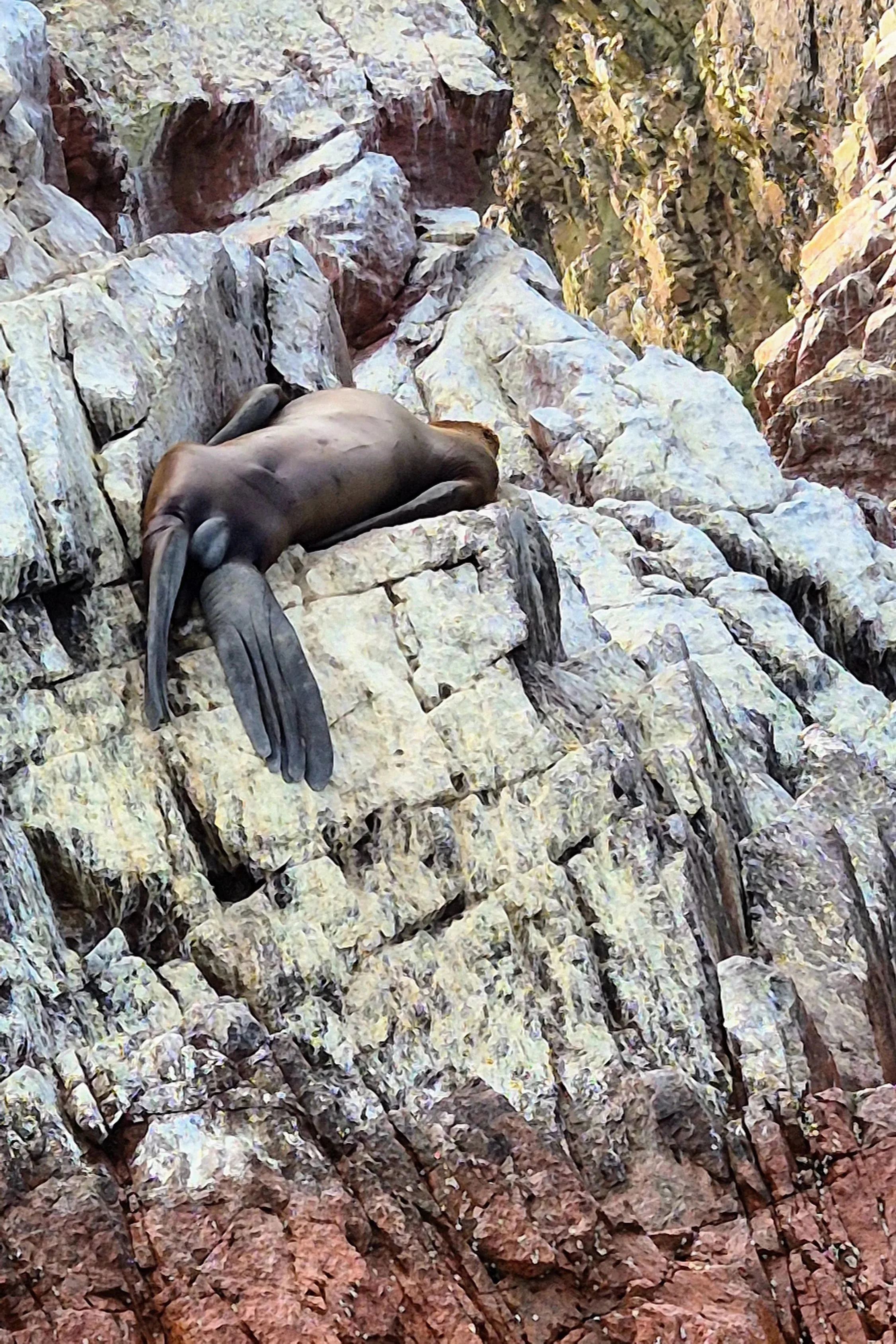
The “lazy” sea lion taking a nap!
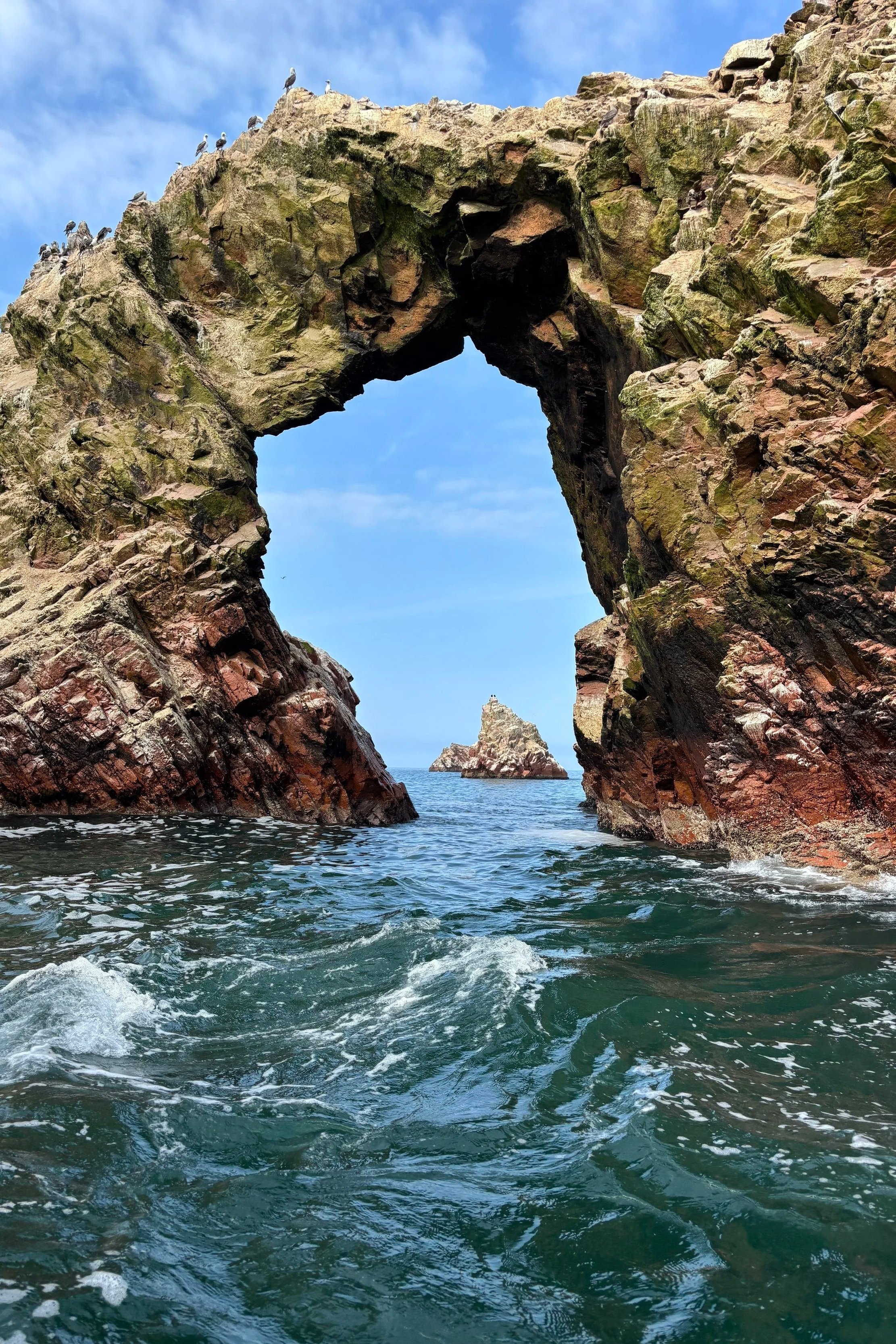
The Ballestas Islands are beautiful in a rugged and dramatic way.
Boat tour in the Ballestas Islands
We were on a boat tour in the Ballestas Islands, a group of small rocky islands on the south coast of Perú. They’re often referred to as “the Galapagos of Perú”, thanks to their incredible biodiversity and marine life. In addition to sea mammals like sea lions and marine otters, it is home to thousands of seabirds. The area is protected, so tourists are not allowed to set foot on the islands, only visit on a guided boat tour.
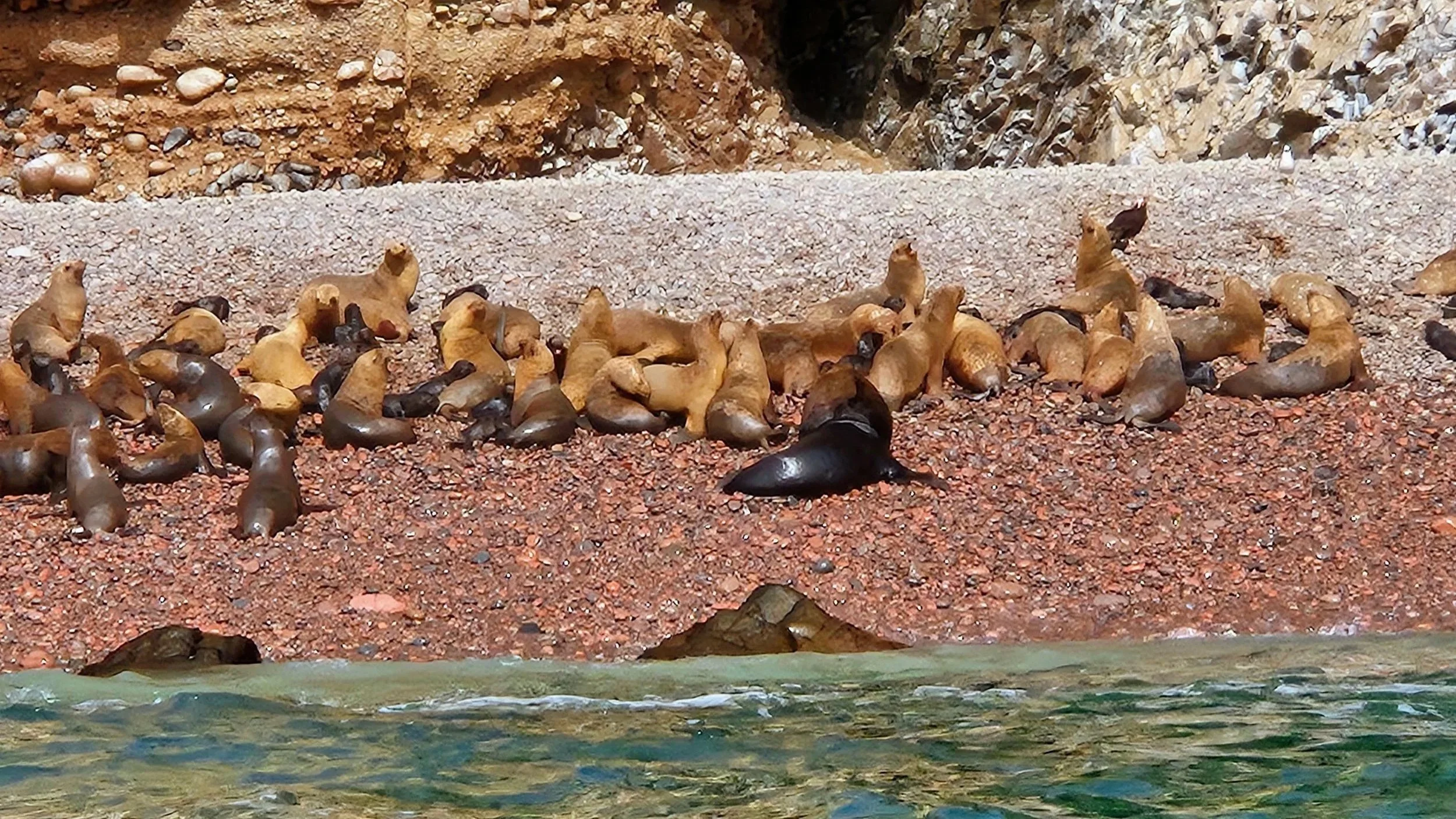
Our skipper re-started the engine and the boat started moving again at low speed, in order not to disturb the animals too much. A few minutes later, we arrived at a bay where dozens of sea lions were sunbathing on a pebbly beach. Now we could perceive the difference between males and females, both in terms of size and color. The air was filled with bizarre noise, as the animals were making sounds that were a strange mixture of screaming and barking.
“They’re such weird and wonderful animals. Fascinating,” I whispered to Umberto and kept observing how they communicated. Out of water, even the biggest sea lions looked helpless, with their awkward movements.
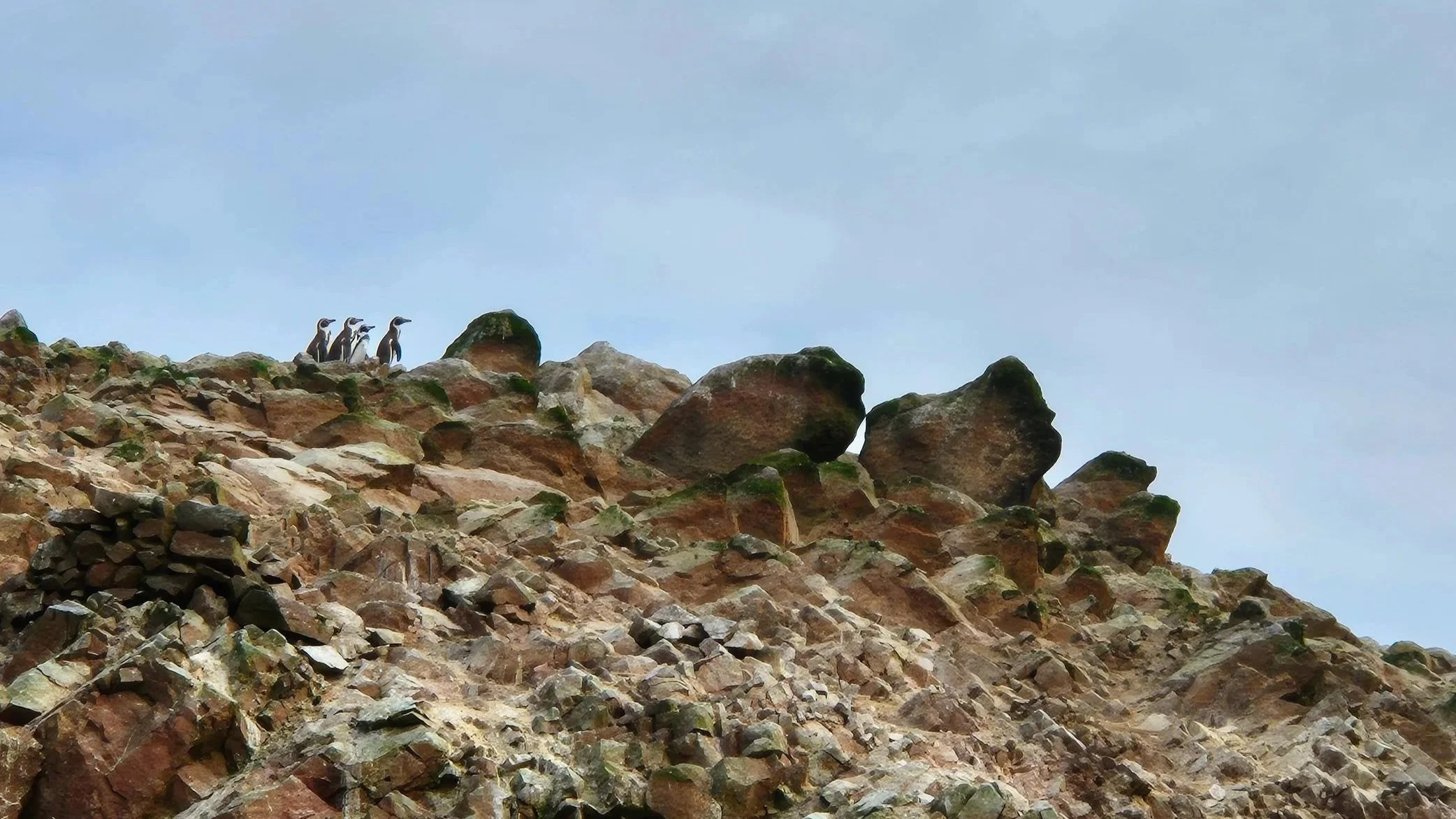
Humboldt pengions on a rocky island. Maybe a family?
The tour continued and we encountered a group of Humboldt penguins high up on a rocky island, then a flock of Guanay cormorants. The guide continued to point at colonies of other sea birds, but I couldn’t memorize their names. We also spotted a dolphin’s dorsal fin a bit further out in the ocean.
The rugged islands changed color from the water level to their peak, and looked dramatically beautiful against the blue of the Pacific Ocean. When I closed my eyes, I tried to store the smell of the wind in my memory.
On our way back to the coast, the skipper stopped the boat so that we could admire the famous “El Candelabro”. It’s a massive chandelier-shaped geoglyph carved on a hillside in the Paracas Natural Reserve, dating back to about 200 BC. Its original purpose is uncertain but different theories have been proposed - just as they have been regarding the Nazca Lines geoglyphs that I wrote about in a recent blog post. The theory that sounds quite plausible to me is the one suggesting that the geoglyph was used as a navigation aid, as it is visible all the way to 12 miles out on the sea.
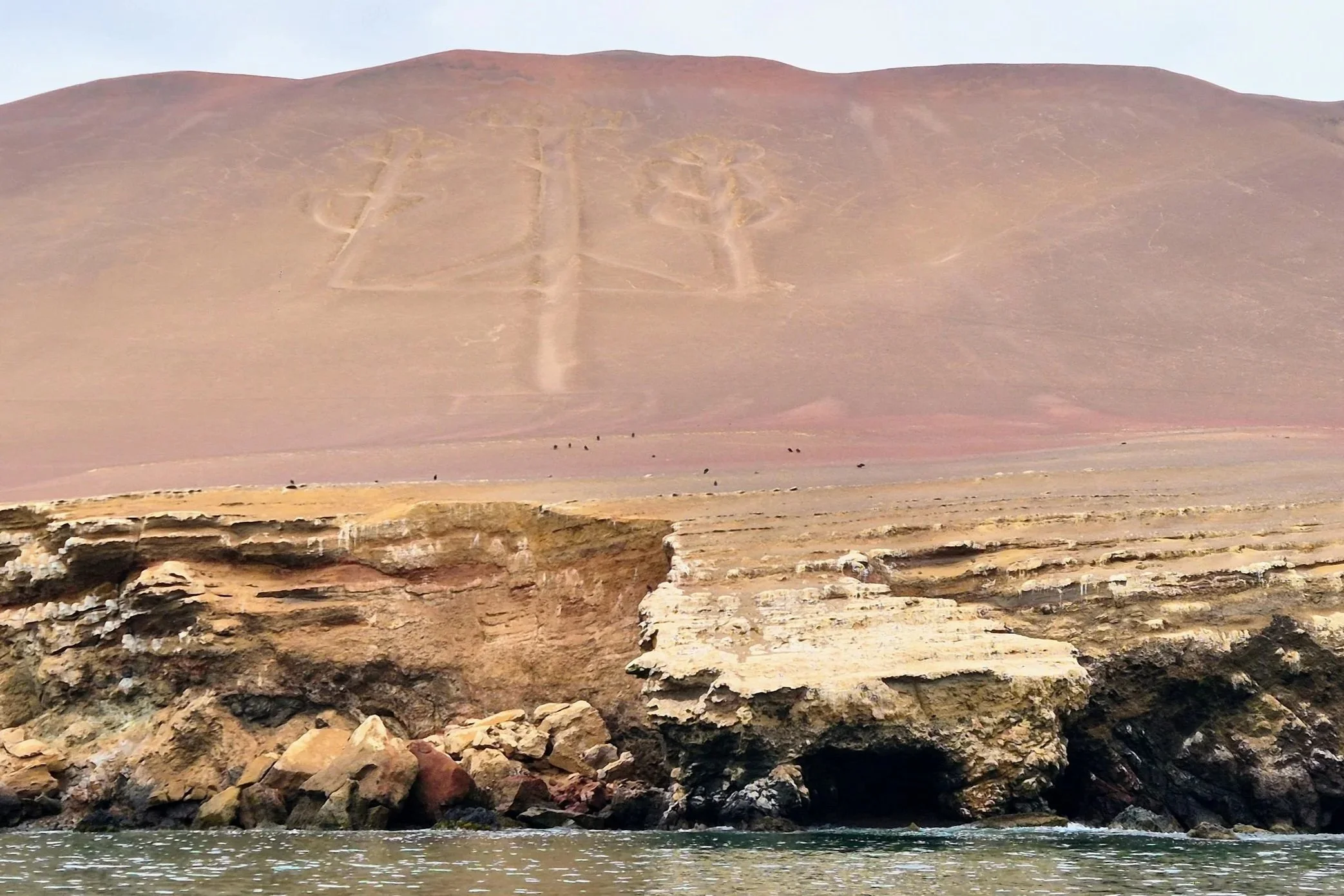
The Paracas geoglyph, “El Candelabro”, which dates back to circa 200 BC.
During the two-hour excursion, I noticed Umberto had fallen into a deeply concentrated state, so much so that he was almost not blinking. He was quietly observing the wildlife and snapping photos left, right and center, with a subtle expression of delight on his face. I could tell he was inspired and fired up by the experience. I know how he is fascinated by birds and other wild animals.
A beautiful moment of soul-gazing
These are moments that I cherish, whether they happen at home or on the road. When I watch my partner in such a deeply happy state, immersed, concentrated, fully present, it feels like soul-gazing, getting a glimpse of his essence, the kind soul that he is. That is something our physical eyes cannot see.
Still, it’s just a glimpse. I know him so well, but so much remains mysterious. I once told him this. He laughed and said I knew everything about him. Of course I don’t. We can never completely know another person, no matter how much we love them. We don’t even know ourselves fully. Luckily, the eyes of love are able to see a lot! This applies to all kinds of love, not only the romantic variety.
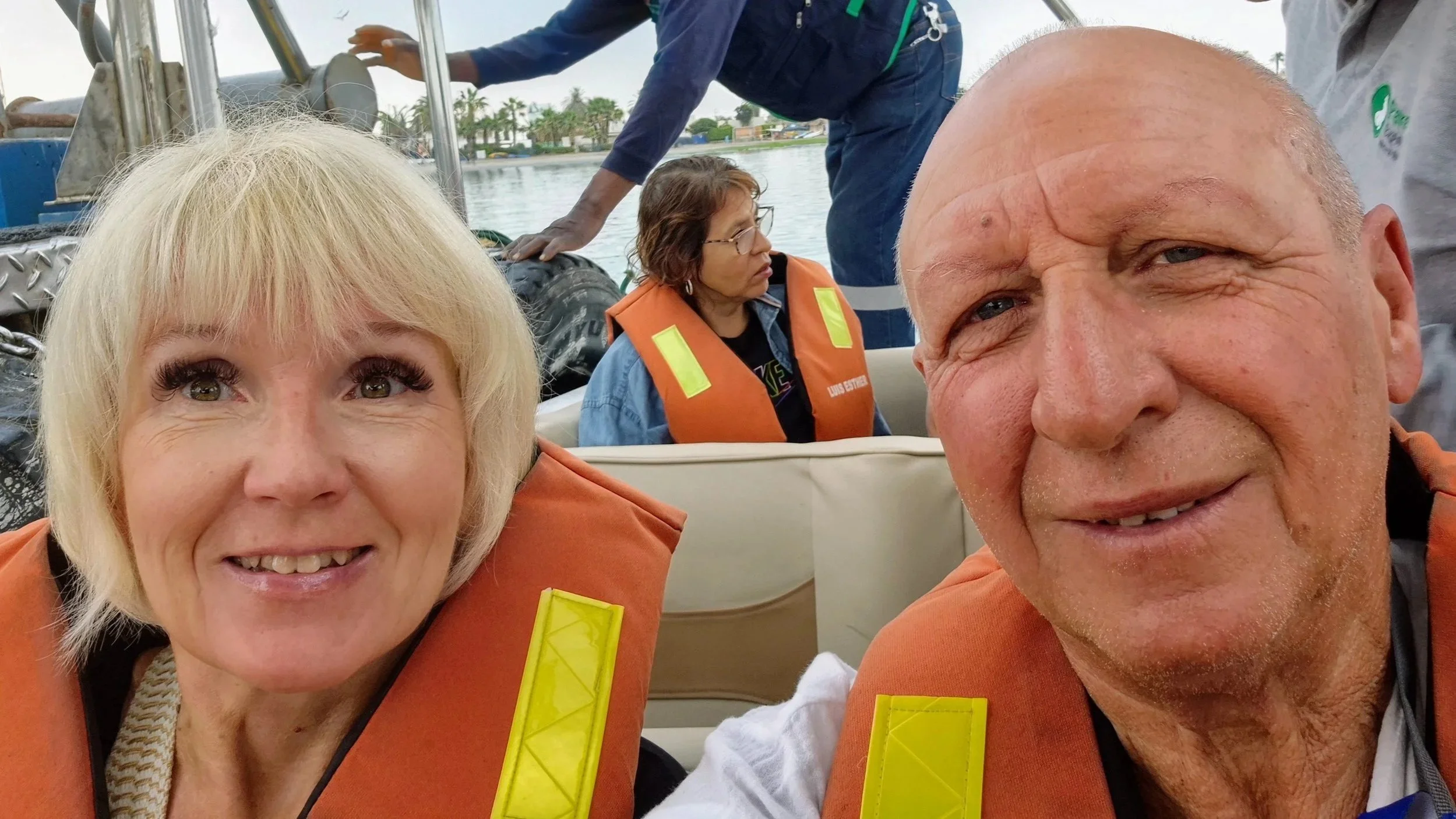
When Umberto takes selfies, he often misses parts of our heads. This time, he was spot on!
Traveling with more than two eyes
When we travel together, I love hearing his reactions to the places we visit and the experiences we have. He often wonders in awe at different things. We pay attention to different details. He may be curious about something that I missed altogether, or vice versa. This is particularly fascinating when we visit places that I’ve been to many times, or cities where I’ve lived in the past. His observations makes me feel as if I’d seen the place with an extra pair of eyes.
This certainly applies to our travel photos! We have two opposing approaches to taking pictures. I’m quite methodical and precise, I try to frame and capture a beautiful object, landscape or situation. I clean up the day’s pictures in the evening, choose the best ones and make corrections if necessary. I have automatic back-ups. Umberto, conversely, pretty much shoots from the hip. He takes a gigantic number of photos and never cleans them up. He does not worry about backing things up. All of this is my job…
After our big tours, I first organize my own photos in online albums. Then, I undertake a massive clean-up operation on Umberto’s Google Photos. I delete the numerous duplicates, as well as the pics that are out-of-focus or miss critical body parts. I straighten up skewed horizons and correct the light if I think it helps. This is time-consuming but I love doing it, for two reasons:
He may take a seemingly excessive number of photos but quantity breeds quality: among the “rubble” there are pure diamonds, pictures that take my breath away.
We traveled together but our photos from the same places and situations are different. His pictures make me relive the trip from a different perspective, which is a bit like looking at the world through his eyes, seeing what he found interesting, peculiar, beautiful, lovable, worth remembering. That is - again - like peeking through a little window in my heart into his.
In the end, I combine his photos and mine into albums that entwine our points of view.
These are albums that were created with more than two eyes.
P.S. The wildlife pictures in this blog post were taken by Umberto, not me. I chose them because… you know!
*****
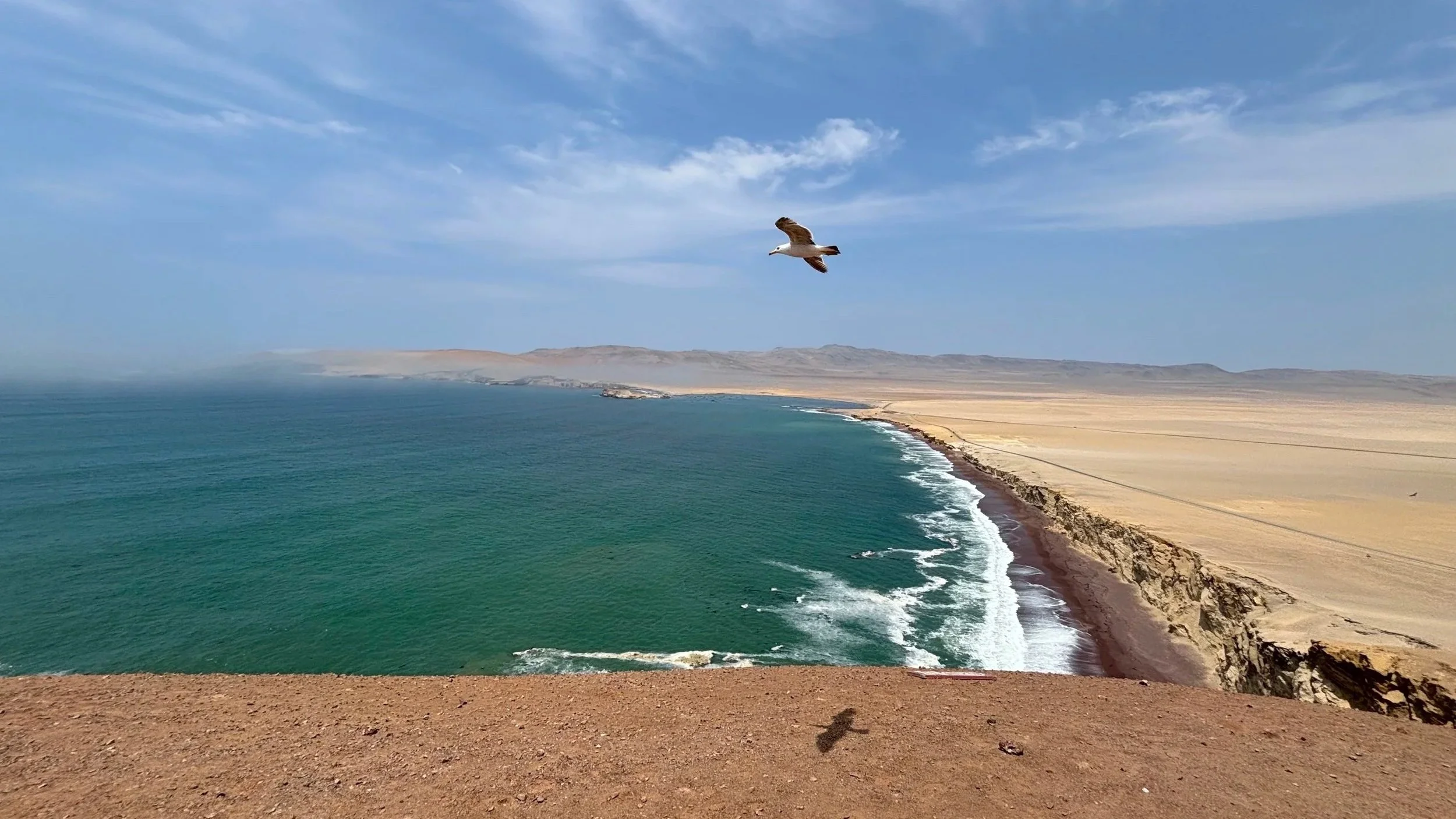
The Paracas Natural Reserve offers incredible desert and beach views on the Pacific coast.
The Paracas Natural Reserve is a desert reserve of over 335,000 hectares, on the south coast of Perú, a four-hour drive or bus ride from the capital. In addition to wildlife spotting, the reserve offers unforgettable coastal views.
The Ballestas Islands can be visited on boat tours departing from the small town of Paracas. You can easily find and book excursions, including day trips from Lima, on apps like Get Your Guide.
We stayed at the gorgeous Hotel Paracas Resort, featuring spacious suites with a balcony or terrace, beautiful pools and excellent bars & restaurants. I wish we could have stayed longer!
As noted in my previous Peruvian stories: we toured Southern Perú with Peru Hop (https://bushop.com/peru/). It’s a great choice for people who do not have a lot of time, yet want to experience a lot.
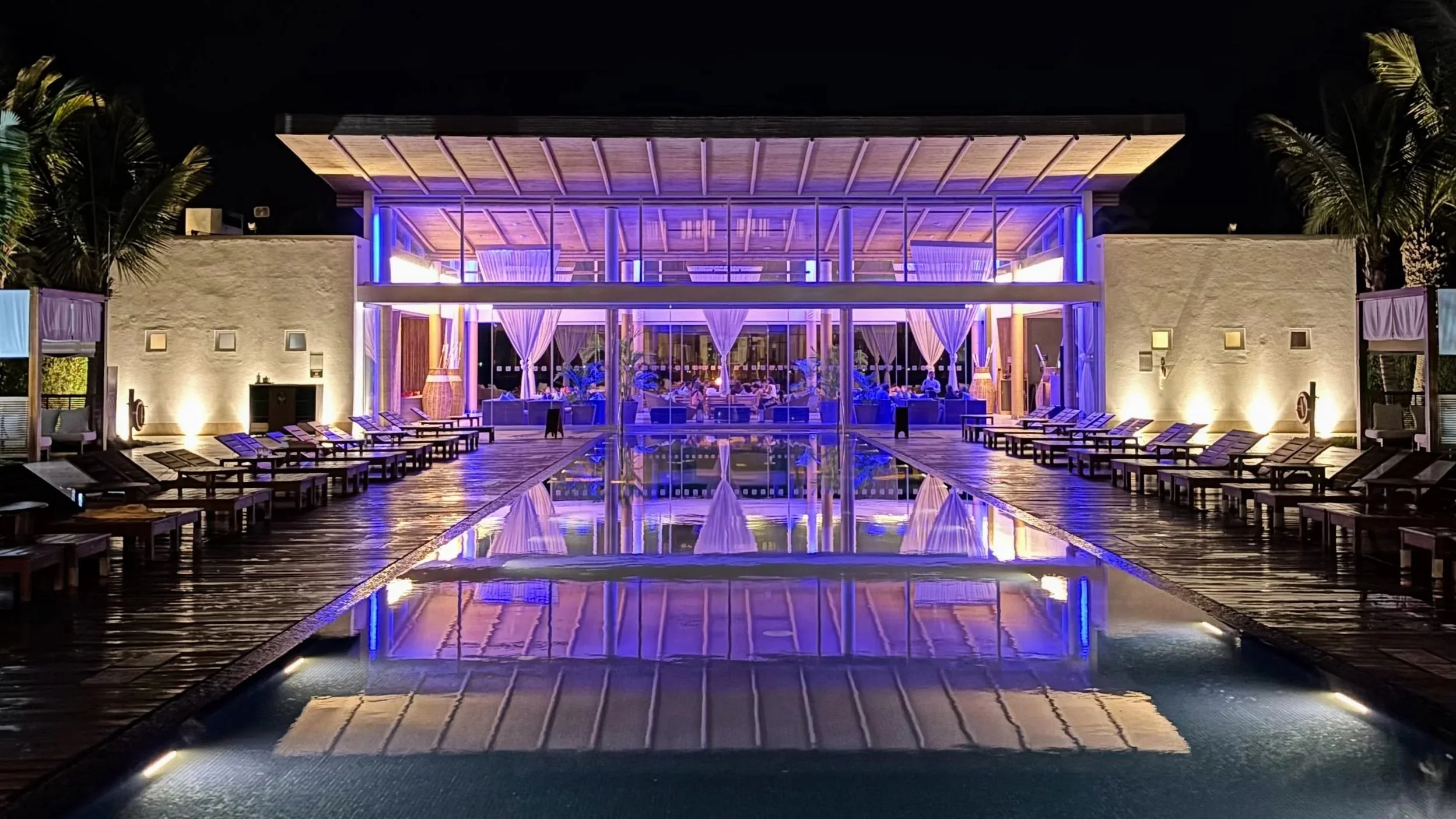
A night view of the main pool at the luxurious Hotel Paracas Resort.