Vasto, Italy
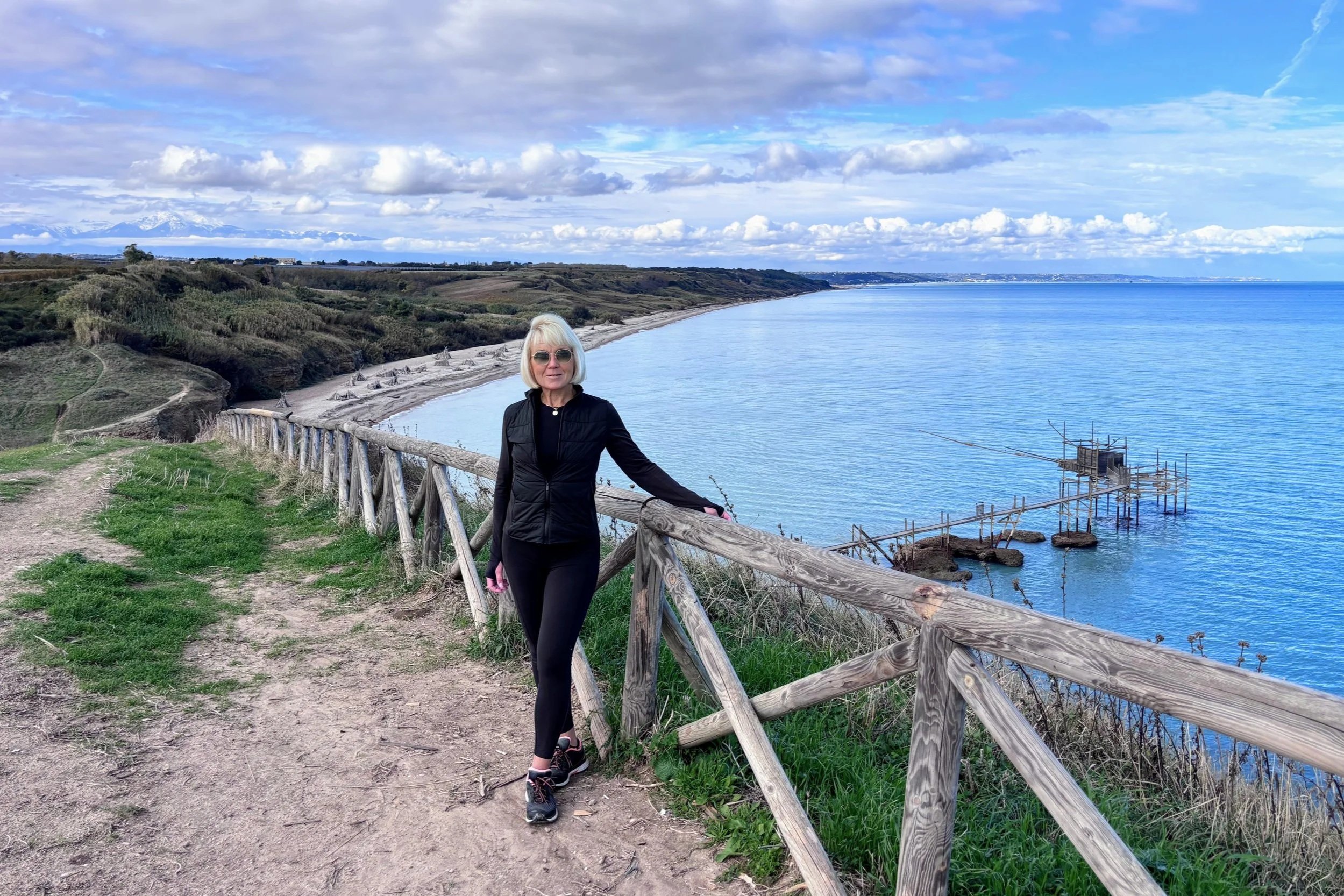
It’s a gorgeous autumn day, so beautiful that I had to go for a morning walk in the Natural Reserve of Punta Aderci. Nature tends to have a calming effect on me, and whatever has been occupying my mind somehow resolves itself effortlessly. It happened this morning, too.
Here’s what I've been thinking about in the last few days.
Expert of Failureology
It started with a podcast, an interview with the Colombian entrepreneur, singer, actor and culinary influencer Tulio Zuloaga*. The conversation was deep and honest, almost two hours, full of inspiring anecdotes and pearls of wisdom. Some of Tulio’s points were serious, others were delivered in a funny gift wrap but contained incredible insight.
There was one message that stuck with me. He called himself a "Maestro en Fracasología" which I would translate freely as an “Expert of Failureology”. Or alternatively, grasping a hint of irony, a “Failure Guru”.
His point: we all fail all the time, every day. We fail more than we succeed, it’s part of human life. The important thing is to accept it and learn to embrace your failures.
“If you get used to it and love your failures, my goodness, the world is your oyster.” **
My initial reaction was a giggle. Years back, before meeting Umberto, I would call myself a World Champion in Failed Relationships. Now, applying Tulio-like logic, I could upgrade that title. I’m not only a world-class expert with a Master’s degree, I took a PhD in Romance Failureology!
Then, after giggling, I got serious.

The interview resonated so strongly with me for two reasons:
a) I identified with Tulio’s story. By the sound of it, he’s a jack of all trades and has dipped his toes in many waters, always reinventing himself. So have I. I’ve lost count of all the life changes I’ve made, how many times I’ve started all over again, in a new home, city, country, or line of business. And recently, no business at all.
b) I have been thinking a lot about the theme of failure over the last year and a half, and have come to similar conclusions. Tulio’s delivery, of course, was more humorous and punchy.
Here’s what I wrote in May, in a blog post title “I Like Getting Older - Ballenbühl”:
The younger me used to be brutal to herself. Now I no longer beat myself up for my mistakes. I understand they are a normal part of life, and necessary for learning, unfortunately. Sometimes, they’ve even turned out to be blessings over time.
Still, I was not prepared to go as far as saying “I love my failures”.
Failures sting, at least for a moment. But yes, I have grown to embrace them as great teachers, bodyguards or change agents, in all fields of life - home, travel, career, finances, health and fitness, love and relationships.
Hold on. Embrace, that’s another grand and vague English word.

What does it actually mean, in practice, to “embrace your failures”?
For me, it has two parts: acceptance and learning.
First, we need to accept that failing is not only useful, it is inevitable and necessary. You don’t always get the outcome you want. Many times, things don’t work out the way you expect. That’s the way the Universe works. If you are afraid of failing, you cannot do anything. If you never fail you are not living.
Second, you try and you learn.
You’ll know if you like a certain food only if you taste it. Sometimes you do, you’re delighted with the discovery and eat it again. Other times you hate it and won’t touch the stuff a second time. The same principle applies to most things, especially when you’re young and inexperienced. You’ll know if a certain career is for you only if you try it. You’ll know if a certain person is right for you only if you spend some time with them.
Sometimes, we could have known even without trying, if we had listened to good advice. For some mysterious reason, we have to learn by our own failures!
Of course I wasn’t proud when I had an accident with my Vespa. It would have not happened if I had taken the car instead on a rainy day. A major failure of judgment. I took the lesson and became a more careful rider.
Of course I wasn’t delighted when I was robbed on the street in Chile. It could easily have been avoided by being less naive and over-confident. But instead of being traumatized, I decided to use the experience to become more street-wise.
Experience has also made me slightly redefine the word “failure”.
The dictionary definition is ***
omission of (expected) occurrence or performance
lack of success
a falling short (deficiency)
To my mind, the official definition lacks one essential element: time. When? For how long?
Timing is of essence to determine if something was a success or a failure.
Anybody who is investing actively knows this.
I remember buying a certain stock many years ago, when I had very little experience in investing. The stock price dropped radically just weeks thereafter and I accused myself of making a stupid mistake. Luckily, that time I did listen to expert advice, kept a cool head and did not sell during the dump. The same stock is now worth about twice my initial investment, and has paid back its worth in annual dividends.
So, a failure or not? Depends on the time point of assessment.
Of course, things don’t always work out that well. I have plenty of reverse examples, in the stock exchange and other markets.
Taking the “wrong job” was not the failure. Staying for years, in spite of being unhappy, was. Falling in love with the “wrong person” was not the failure. Ignoring the alarm bells was. Staying in the relationship for too long was.
As painful as they were at the time, they are still useful in proving the point. Timing is indeed of essence.
The interesting thing is, now that I remember some of those experiences, they no longer sting. Some of them even make me smile. I suppose that’s a third part of embracing your failures: over time, learning to laugh at your disappointments.
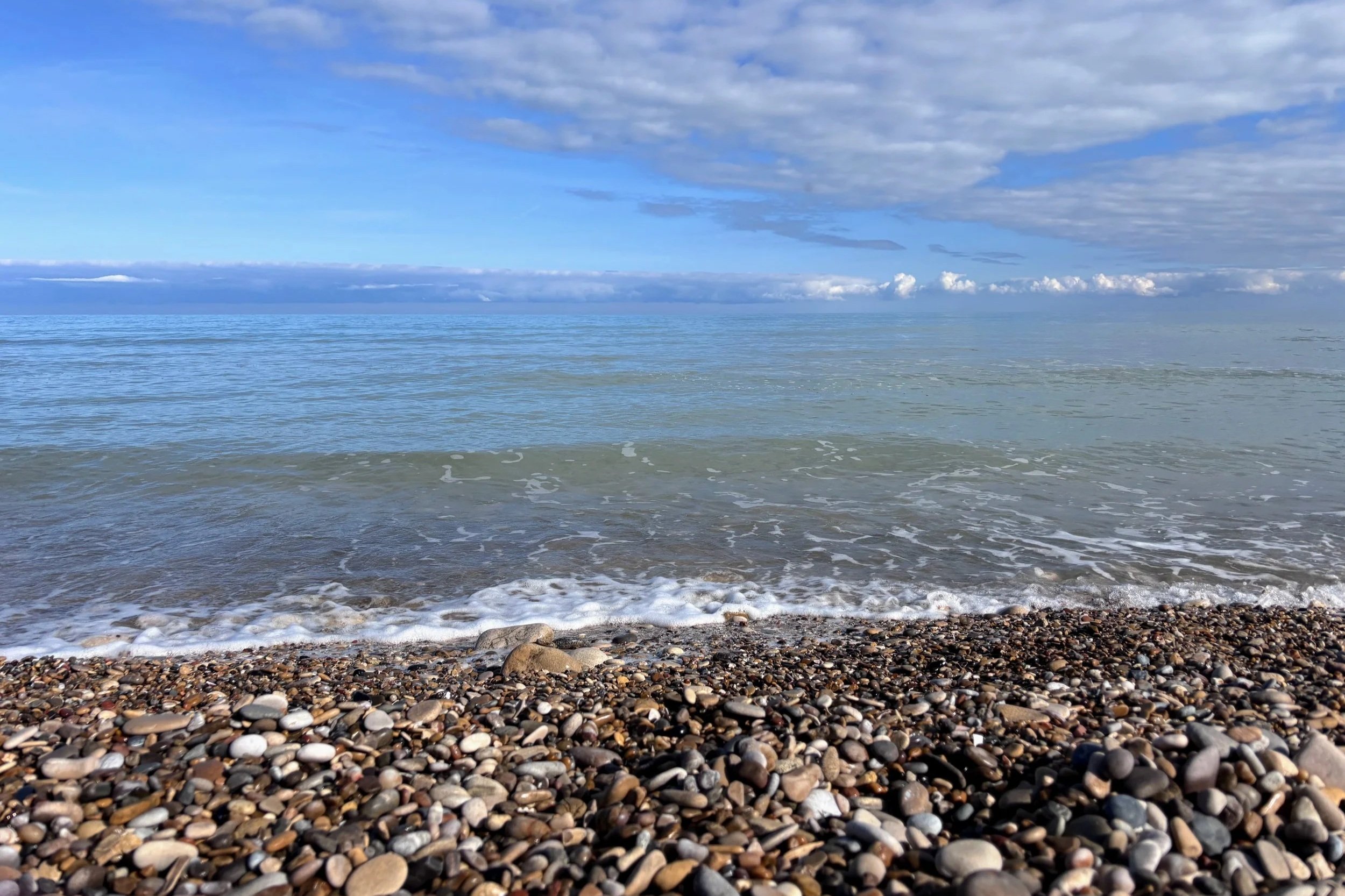
At the end of my nature walk, I sat down on the pebbles to admire the beauty of the beach.
If I had to name my favorite failure, what would it be?
There are many to choose from but one is definitely in a league of its own.
If I had been any less miserable in my “previous private life”…
I would have not escaped to Rome for Christmas 2012.
I would have not decided to buy the apartment in Italy in 2013.
I would have not met Umberto and fallen in love.
I would not be living here…
In other words, without that catastrophic failure, everything in my life would be completely different. Everything!
Sitting on stones made me feel cold. I got up and took another glance at the breathtakingly beautiful landscape. I felt incredibly happy and grateful. I would not want things to be different.
“I suppose Tulio has a point,” I thought. “You can love your failures.”
*****

* Vos podés podcast by Tatiana Franko, published on Spotify on 21 October, 2026.
** My translation of Tulio’s words on the podcast: “Si tu te acostumbras y amas los fracasos, Dios mío, tienes el mundo a tus pies.”