The City of Eternal Spring - Medellín
Medellín, Colombia
This is post #3 of a series written during a six-week trip to Colombia. You can find #1 here.
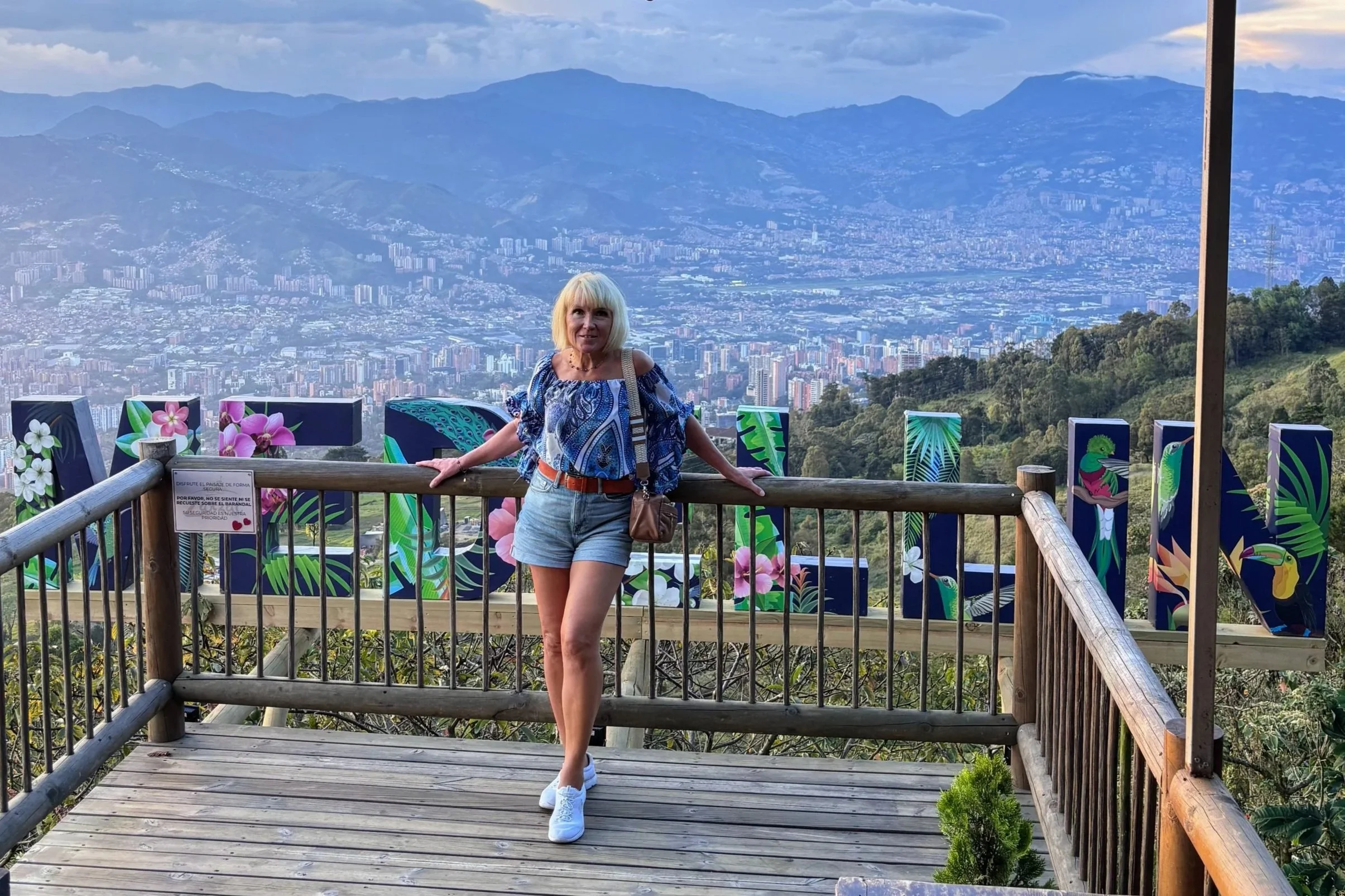
It’s my last evening in Medellín. Fifteen days have flown by at an accelerating speed, and reflecting upon the experience makes me all emotional. Not sad, because tomorrow I’m flying to Cartagena on the Caribbean coast, but nostalgic, happy and lucky.
So, I’m writing this post as an ode to this wonderful city.
Here are the nine things that I love most about Medellín:
1. The Paisa People
This is the main reason why I wanted to study here. On our first visit to Colombia, Umberto and I both fell in love with the kindness of Colombian people. It was particularly striking in Medellín and made me curious. I wanted to learn about this culture and understand the mentality.
Medellín, with its 2.6 million people, is Colombia’s second largest city. It is also the principal urban center of the Paisa region in northwestern Colombia, in a valley surrounded by the Andes. Nationwide, the Paisa people are known for their strong cultural traditions, entrepreneurial drive, growing coffee, as well as their warm hospitality.
Now that I’ve had an opportunity to spend time with Paisas - speak, ask a lot of questions, and listen, I’ve got an idea of what’s behind the warmth. Every single person I asked gave me the same response: “it’s in our upbringing, it’s in our culture”. Children learn to be polite, friendly and hospitable from an early age. These are values embedded in Paisa culture and still going strong. I absolutely love the genuine smiles, friendly eyes and positive energy!
Mind you, I have been spending time mostly with people half my age or less - just in case somebody should think this is “GenX stuff”. Not so. My experience has been similar across all age groups and all kinds of situations, not only in the special school environment. This gives me hope in today’s world, which is inundated by waves of rudeness and egocentrism.

With my group teacher Celeste, on my last day at Centro Catalina in Medellín.
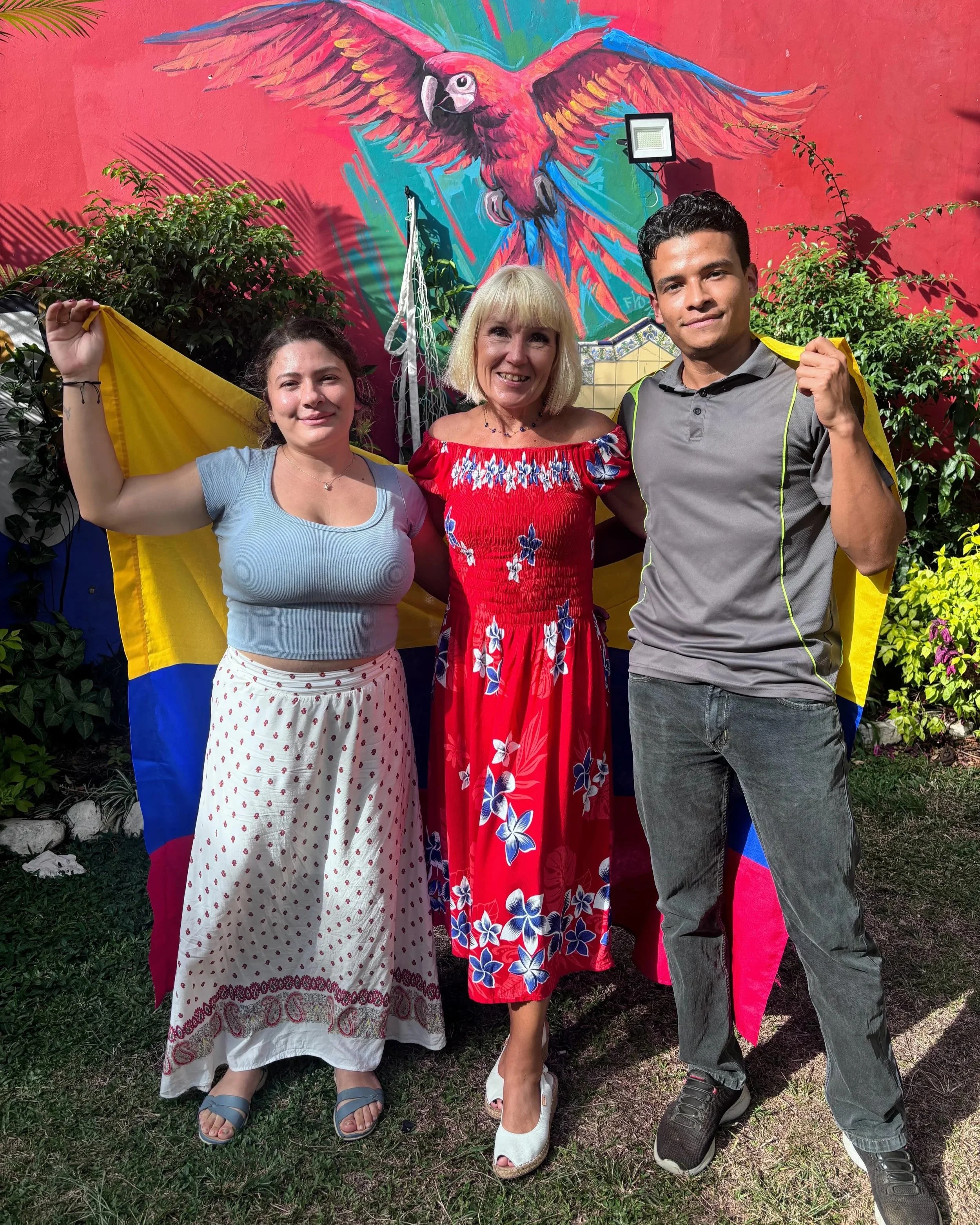
With my wonderful 1-2-1 teachers, Viviana and Mateo.
2. Paisa Spanish
The Paisa accent is in line with the kind nature of the people. It’s soft and melodic.
The local Spanish uses a lot of expressions to soften the message, for example, to make requests without sounding too demanding, or to avoid sounding confrontational. The most charming technique for me is using diminutives. For example:
un momento (a moment) > un momentico (just a little moment)
un rato (a while) > un ratico
un tinto (black coffee) > un tintico
caliente (hot) > calientico
mi casa (my house/home) > mi casita
ahora (now) > ahorita
And so on and so forth. As you can see, the principle applies not only to names (Anita is a diminutive, by the way) and nouns but also adjectives and adverbs. The diminutives make things sound smaller, softer or sweeter, and make the speaker sound more polite and kind.
The Paisas also use a lot of terms of endearment. Logically, in line with the above, mi amor becomes mi amorcito!

A popular expression in Paisa slang, could be translated as something like “That's awesome, man!"
3. The Eternal Spring Climate
Medellín has a pleasant, mild tropical climate with stable temperatures all year around. That’s how it’s gained its nickname, “the city of eternal spring”.
Daytime temperatures usually stay around 25-28 degrees celsius, whereas night-time lows drop to around 16 degrees. The city sits at an altitude of about 1,500 meters, which makes the climate cooler than many other tropical areas. My Paisa friends told me that most houses and apartments do not have air conditioning because it’s not necessary. I had my doubts on the first day but can now confirm they’re correct. I’ve been living in a room without AC for over two weeks now and the temperature has been comfortable.
Sadly, climate change may end all of this soon. I’ve seen rain only once in these two weeks. Normally, it rains more frequently, and water reserves are getting drained. The city has therefore been compelled to introduce water rationing.
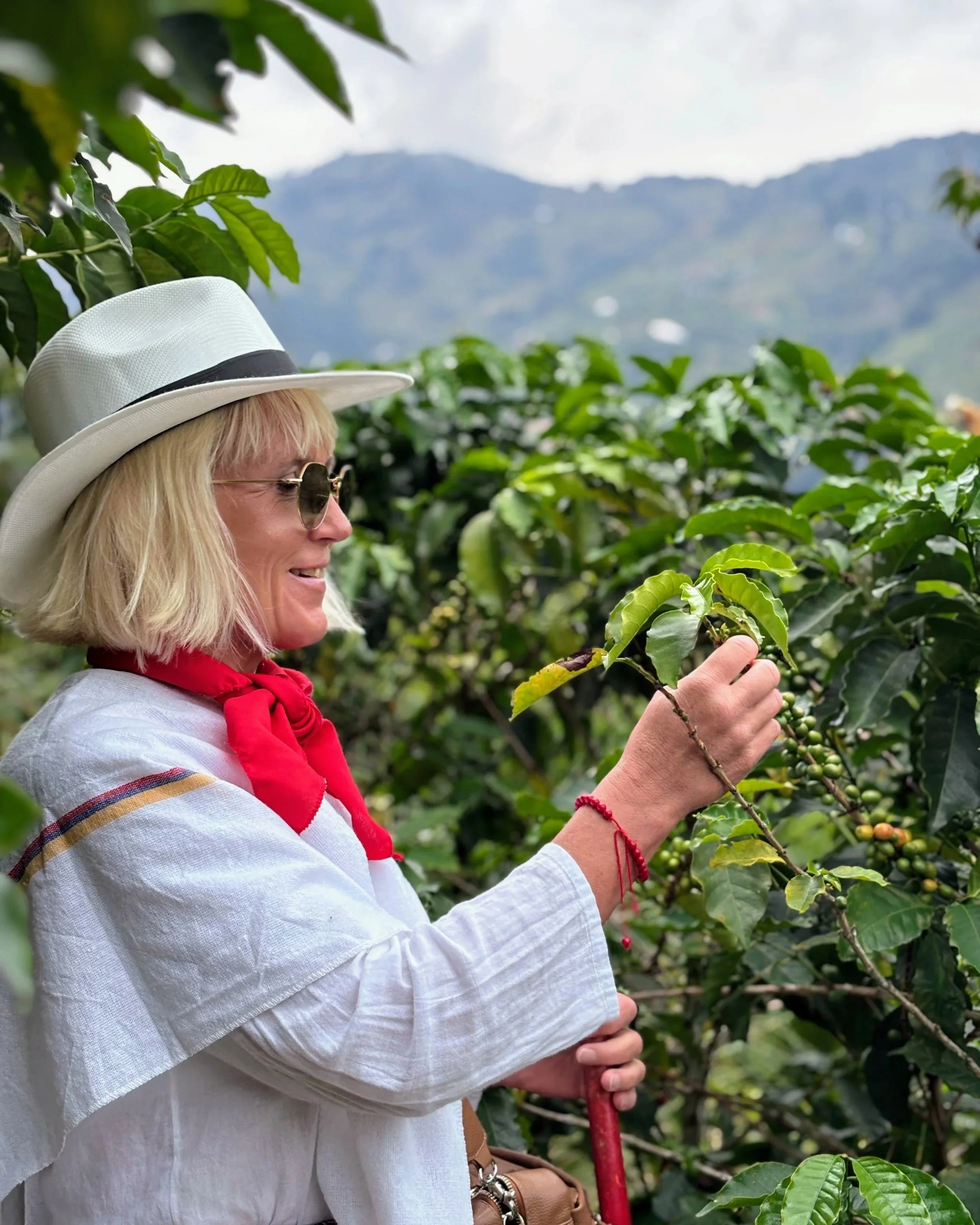
Visiting a coffee farm near Medellín.
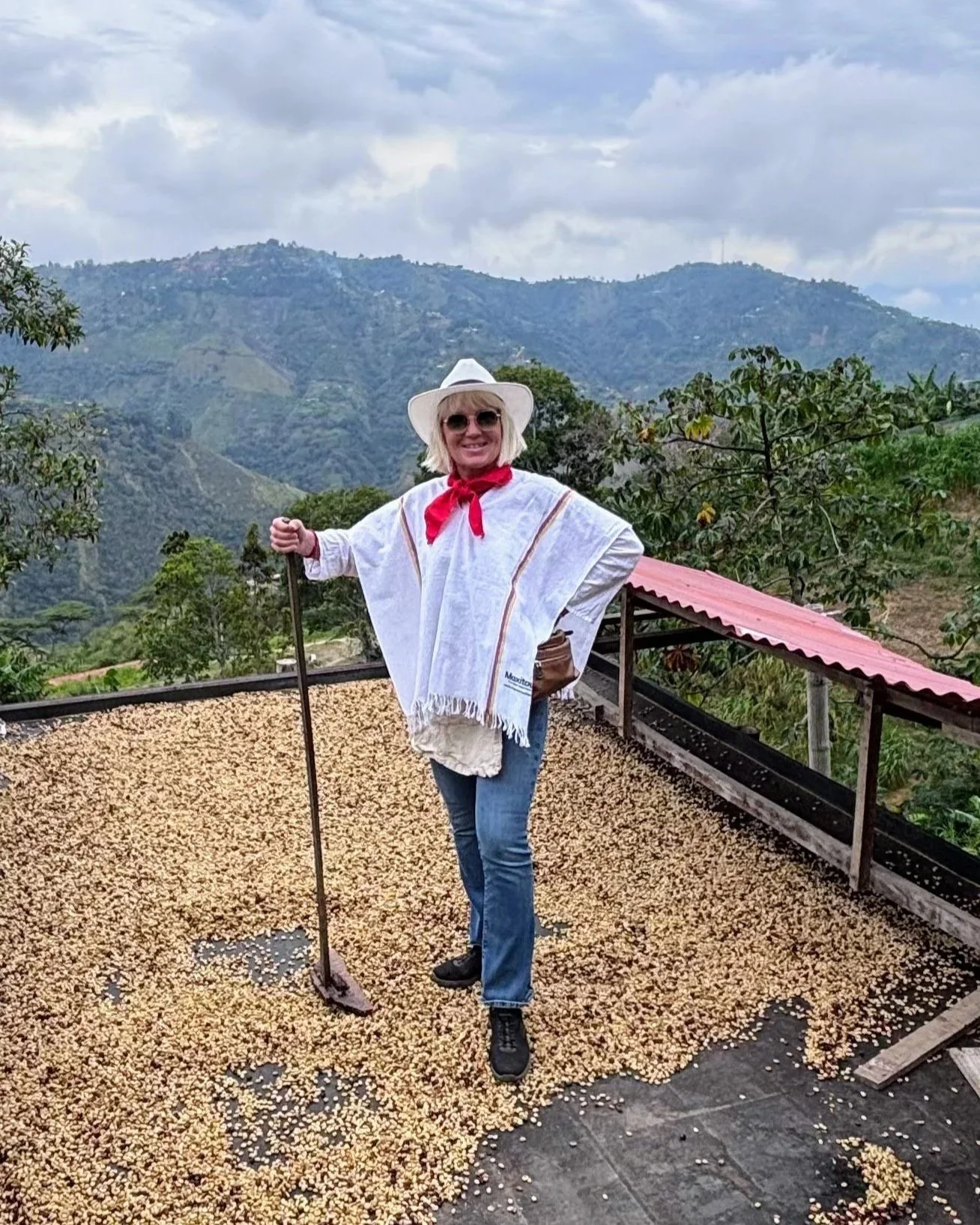
I think I could be pretty good at the coffee business!
4. The Paisa Cuisine
I can think of only one English word that describes Paisa cuisine perfectly, and that word is hearty. Traditional dishes are massive, rich in flavors and high in both proteins and carbs.
The staples of Paisa cuisine include corn, red beans, rice and pork. Here are some signature Paisa dishes:
Frijoles. The word means red beans as well as the soup that’s served at most meals. I don’t usually like beans very much but decided to give frijoles a try on my first school day lunch, and ended up having it almost every day.
Arepas. The Colombian arepa is a round corn cake. The method of preparation and thickness vary region by region. The Arepa Paisa is thin, traditionally eaten with butter and cheese, but can be topped by pretty much anything.
Chicharrón. A crispy slice of pork belly with the chin and a strip of meat attached. Crunchy bits of chicharrón are served in an endless number of different dishes, and of course, on top of arepas.
Calentao. A traditional breakfast dish that’s made by frying the previous night’s rice and beans together. You top it up with some protein, such as fried egg, chorizo or chicharrón, and eat it with avocado and arepas.
Bandeja Paisa. This must be the most massive dish I’ve ever encountered. It’s a giant platter that combines all of the above-mentioned essential ingredients, plus more. It’s red beans, rice, ground beef, chicharrón, fried egg, sweet plantain, chorizo, avocado - all of that in one dish and, don’t forget to add an arepa.
Not all of the nutrition is heavy, though. Colombia is one of the world’s top countries when it comes to biodiversity. It is therefore not surprising that there are hundreds of different types of fruit.
On my first day, I saw people drinking fruit juice with their lunch and did not think much about it. Until the next day, the topic came up in my 1-2-1 Spanish lesson. Mateo, my teacher, told me that Colombians do indeed drink natural fruit juices (jugos naturales) practically every day, which makes the blender (licuadora) an indispensable kitchen appliance. Just for fun, I researched this topic online and got exactly the same information. Natural fruit juices are an unmissable part of Colombian lunch culture.
Quite unexpectedly, I picked up the habit. When I go home my blender will no longer be gathering dust!
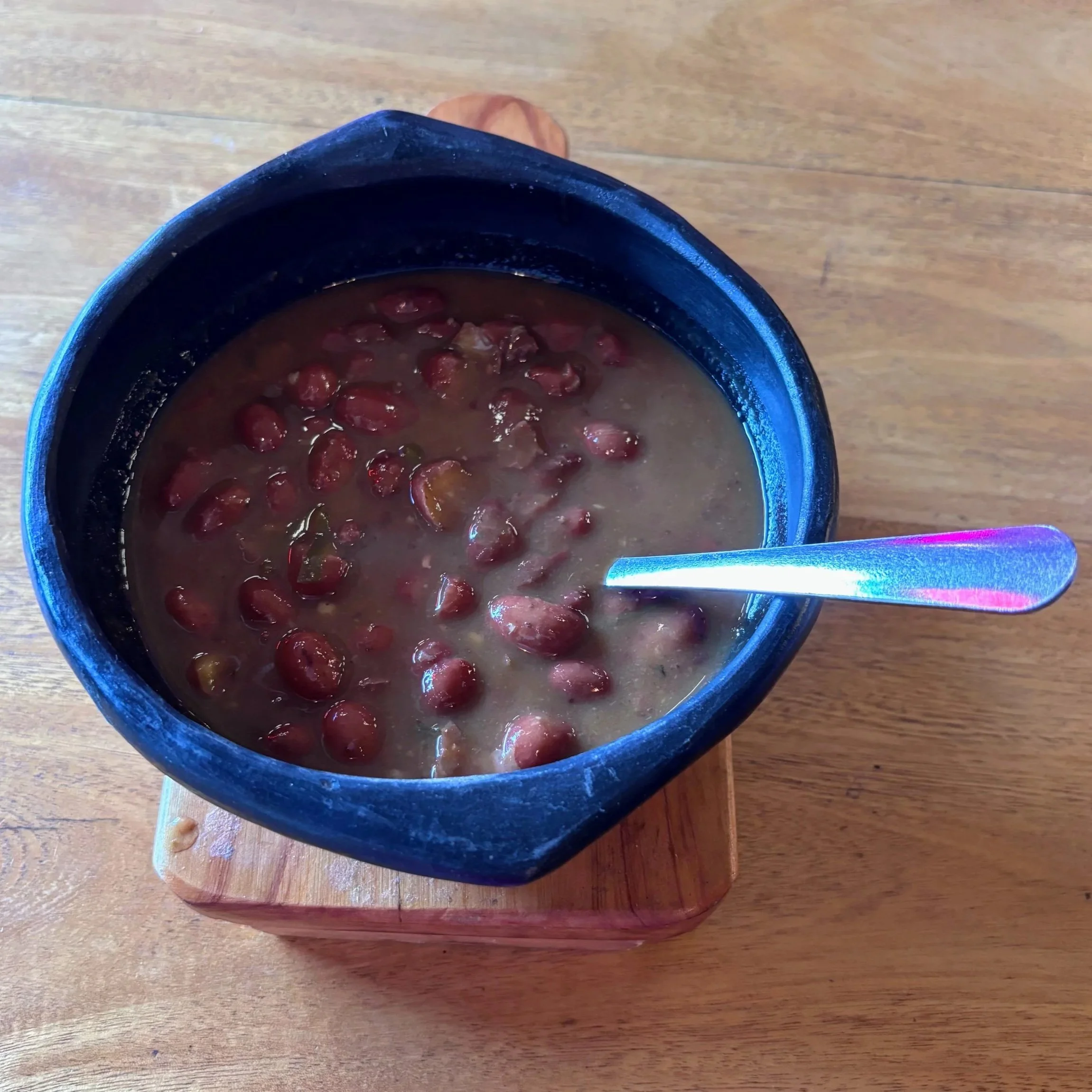
A bowl of frijoles, the red beans starter I had almost every day at lunch time.
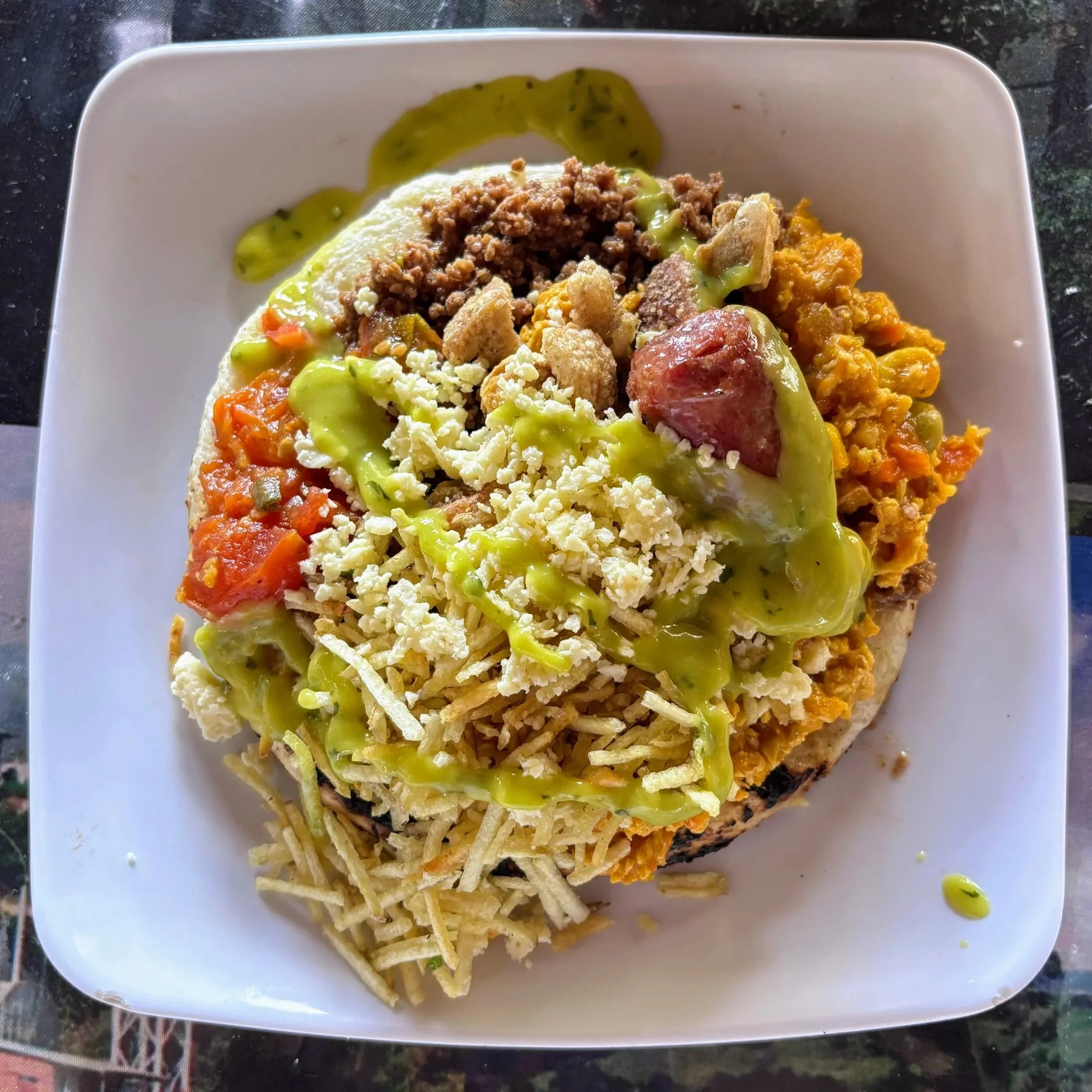
“Arepa with everything” - the corn cake was literally covered with everything!
5. El Poblado neighborhood
After two weeks, I’m liking this neighborhood even more. It’s vibrant, full of sounds, flavors and colors. The restaurant scene is amazing. Many of its streets are lined with trees, and urban greening makes the city environment not only more aesthetically attractive but also brings environmental benefits.
El Poblado is an upscale neighborhood, which makes it relatively safe. In daylight, it’s also quite walkable and attractions in other parts of the city are easily reached by taxi, Uber or public transport.
As mentioned previously, I am crazy for rooftops, and El Poblado certainly offers an unparalleled array of restaurants & bars with spectacular views. I’m sharing a list of my personal favorites at the end of this blog post.
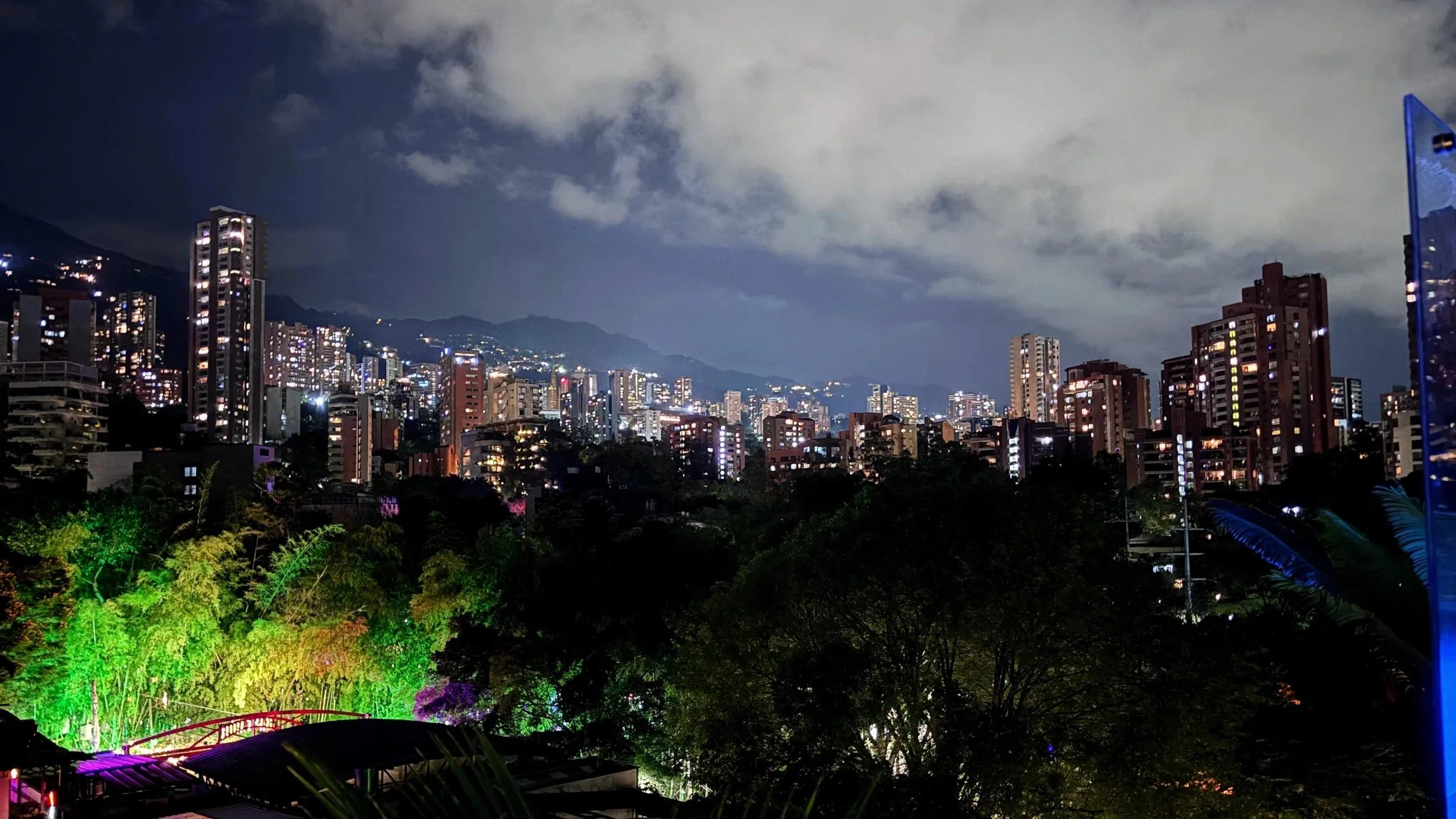
View from the Enso bar & restaurant rooftop in El Poblado, Medellín.
6. Viewpoints - Miradores
Medellín is located in the Aburrá Valley, in a bowl surrounded by mountains. Thanks to this geographic setup, there are numerous viewpoints - miradores - giving spectacular views over the city.
No matter which viewpoint you choose, the cityscape is dominated by red brick buildings. High rise condos, office buildings, as well as little huts on the hillsides, red brick is everywhere. I asked a tour guide about the reasons why and his explanations were quite logical. The ground across the valley is rich in clay, which makes local brick production affordable. Also, brick is an excellent, resistant material in Medellín’s tropical and wet climate.
My absolute favorite mirador is in the Comuna 13 neighborhood…
Sunset at the El Zarzal Estadero viewpoint.
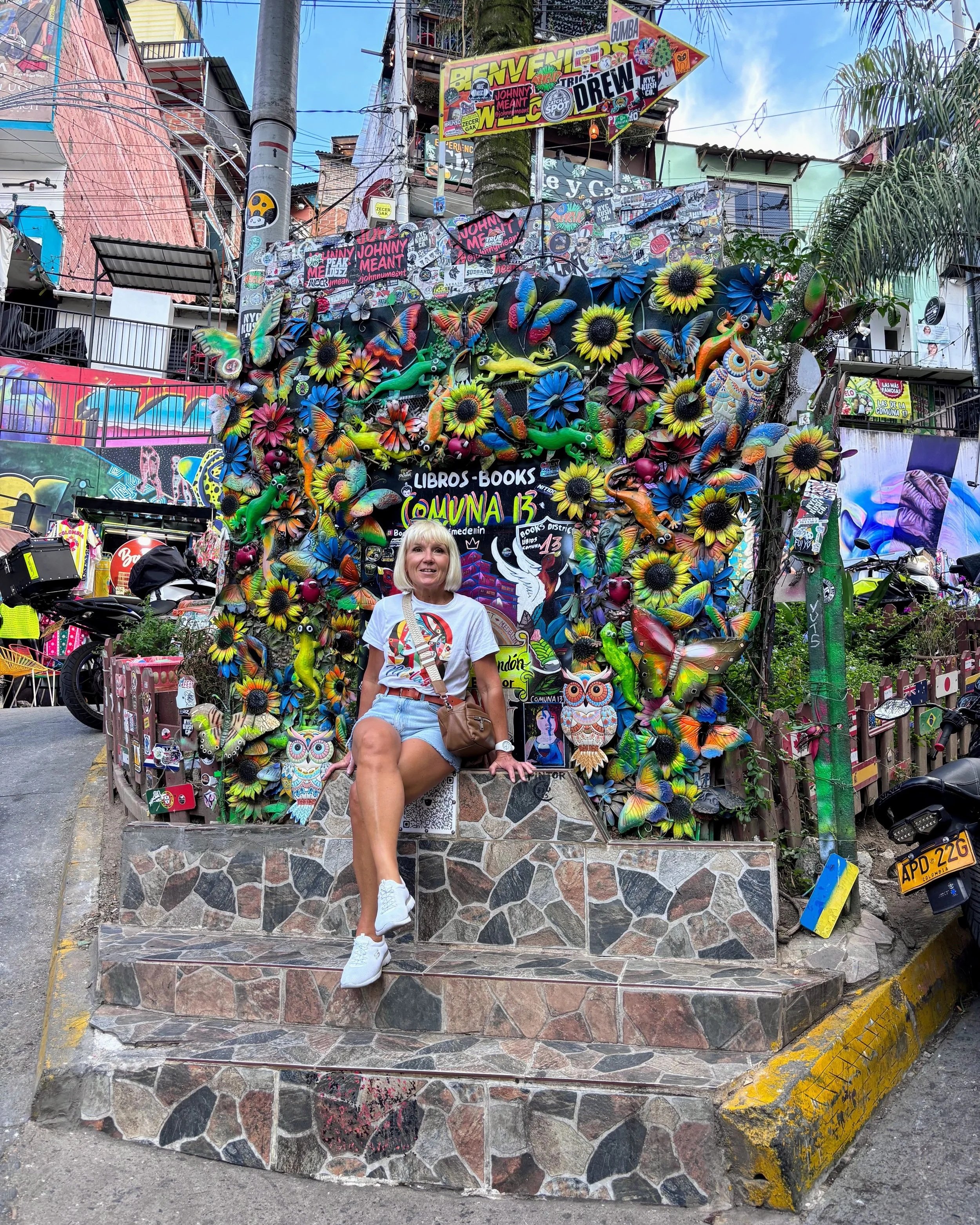
We have a picture together with Umberto at the exact same spot. I did miss him so much during the Comuna 13 visit this week!
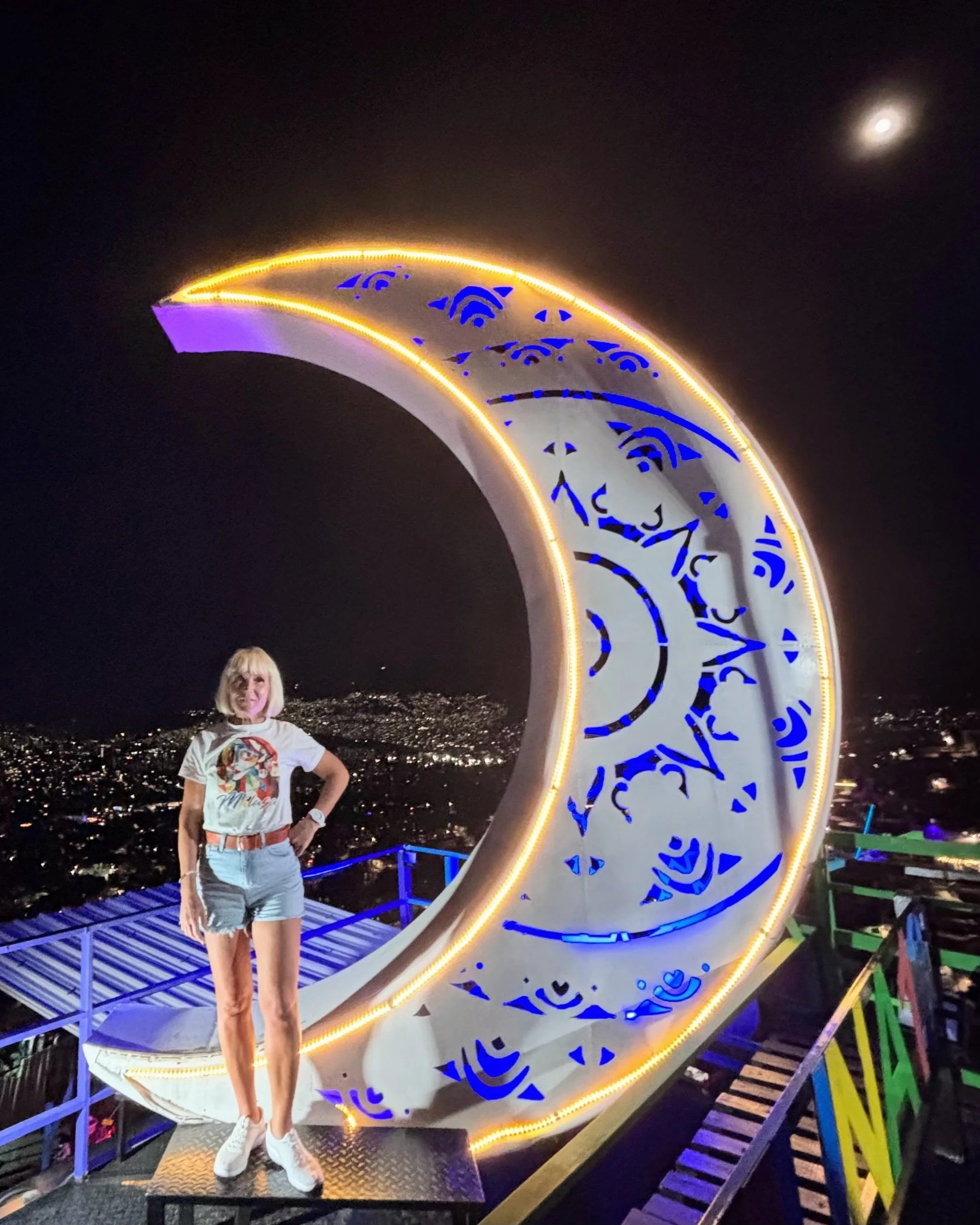
Two moons in Comuna 13.
7. Comuna 13
This week, I had a chance to visit this famous neighborhood a second time.
Until about twenty-five years ago, Comuna 13 was the most dangerous and murderous neighborhood in the city, which made Medellín the most dangerous city in the world. Guerrilla groups, local criminal gangs and right-wing paramilitary groups were fighting for control, and the area was strategically important for drug traffickers. People’s lives were shadowed by extreme violence and fear.
Now, the same staircases and alleyways feature street art, music, souvenir shops and bars, and the neighborhood has become a top tourist attraction. The transformation that Comuna 13 has gone through in the last two decades is mindblowing, and gave the inspiration for my first ever blog post. This second visit was wonderful but, to be honest, not quite as inspiring as the first one with Umberto. I missed my husband too much to enjoy it fully.
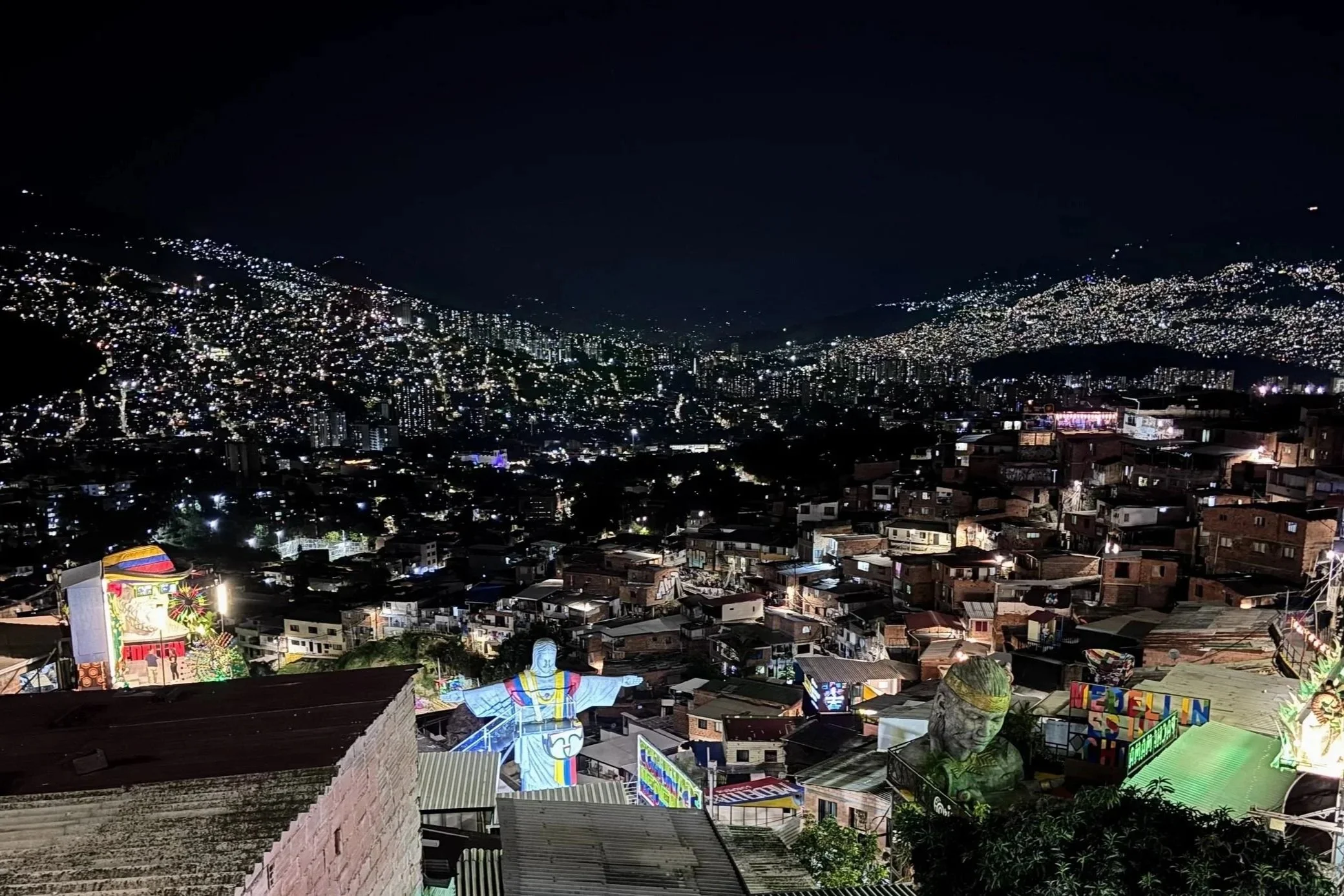
View from “Suba Pues” bar & viewpoint in Comuna 13.
8. Botero
The painter and sculptor Fernando Botero (1932-2023) was born in Medellín. As cosmopolitan as he was, at heart he always remained "the most Colombian of Colombian artists", and many of his works feature Colombian life, history and culture. It is therefore important to understand the Latin American context.
The artist's dedication to his patria is further demonstrated by the massive art donations he made in Colombia. Bogotá’s Botero museum, which we had a chance to visit in December, houses 123 of the artist’s own works and 85 by international masters. They were donated on the condition that the museum remains permanently free for the public.
In Medellín, the Museo de Antioquia houses over 110 Botero works, donated at different stages of the artist’s life. On top of that, Plaza Botero, the quare right in front of this excellent museum, features twenty-three outdoor bronze sculptures.
I love the way Botero’s art challenges you to look at reality with different eyes. The obvious and easy question is “Why did Botero depict people so plump?” Look and try to see again. What could the generous forms mean?
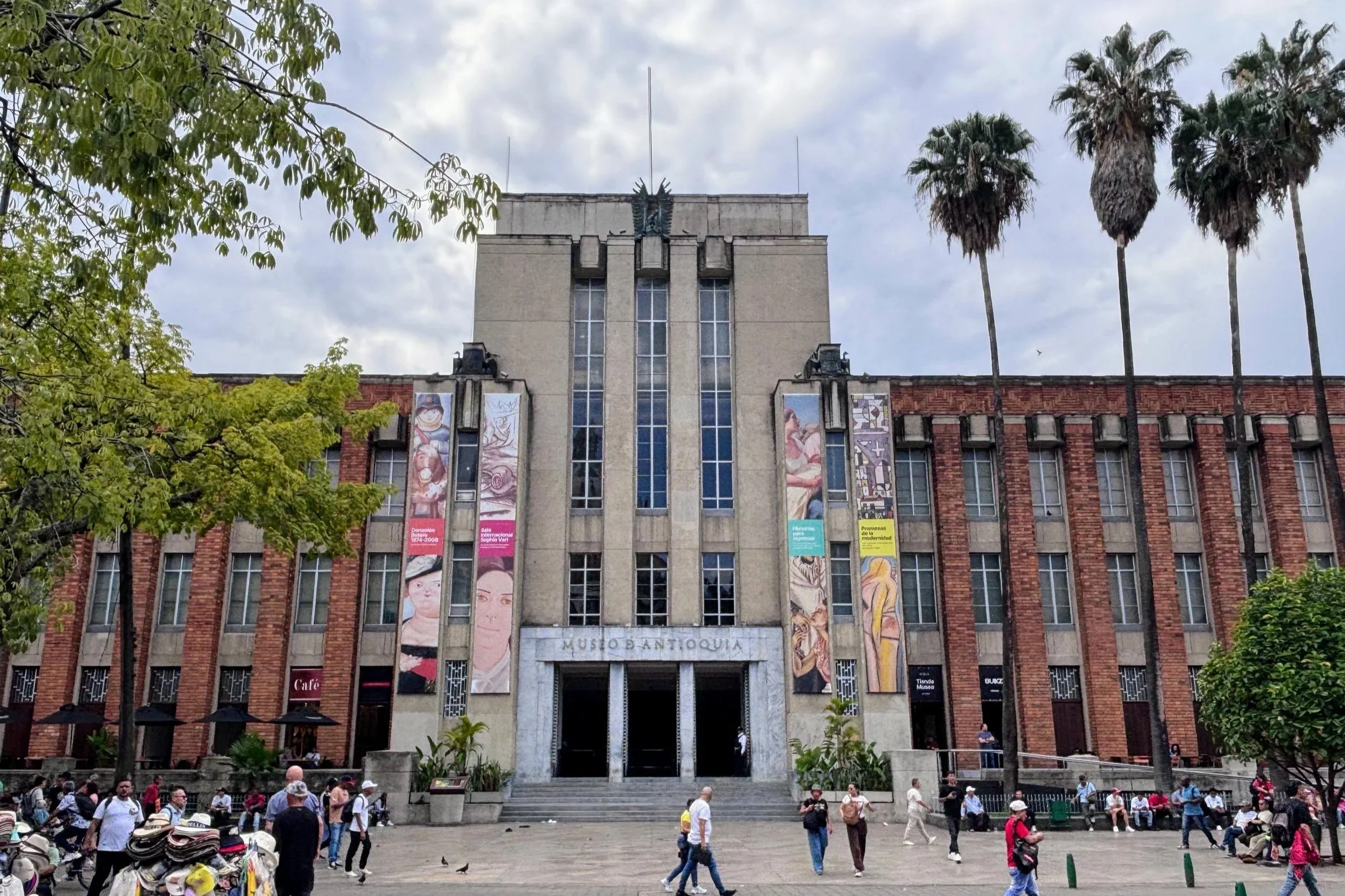
The Museo de Antioquia that houses an exceptional donated collection of works by Botero.
9. Centro Catalina Spanish School
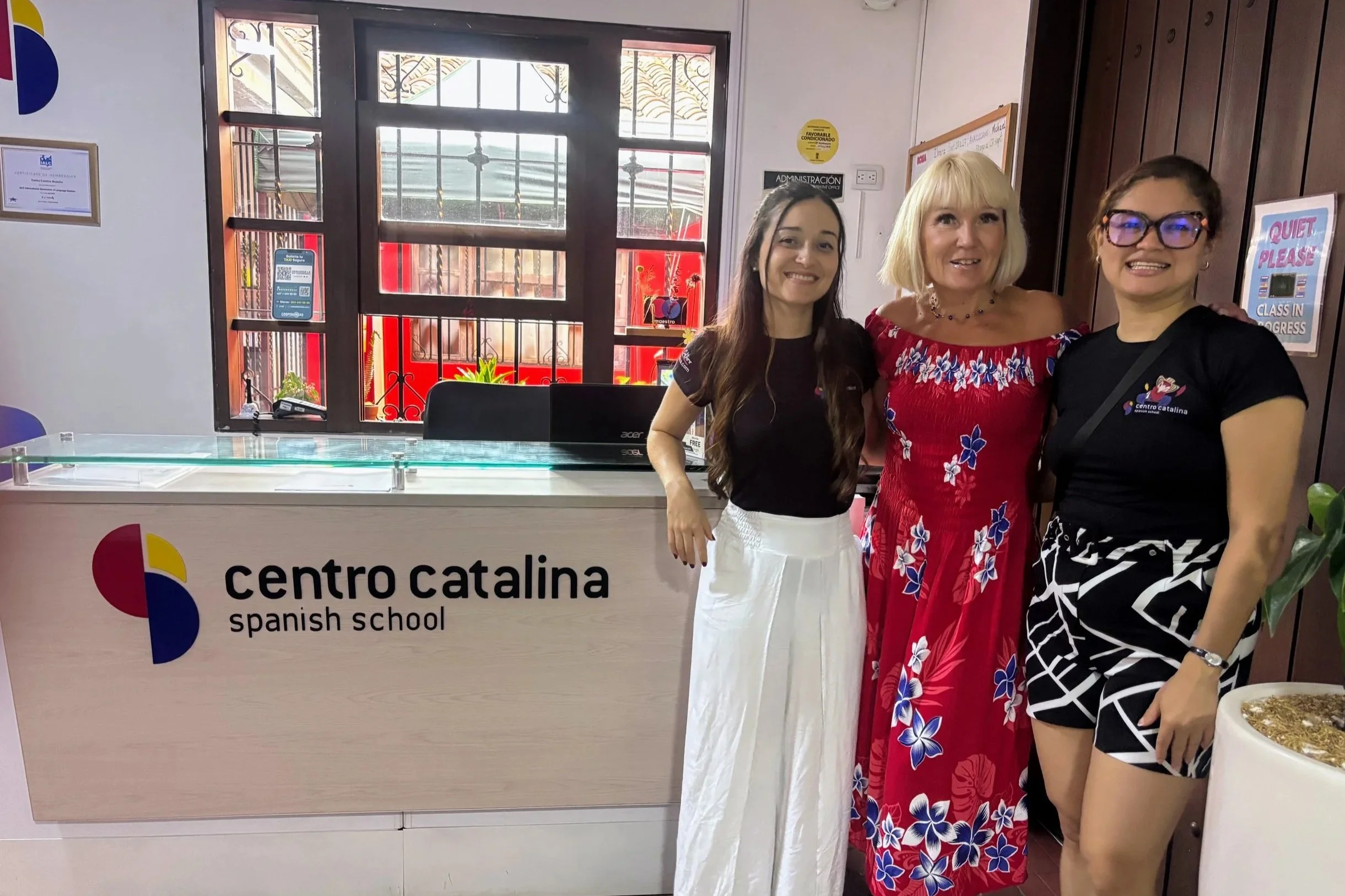
Last but by no means least, I want to give my warmest thanks to everyone at Centro Catalina Spanish School.
I remain deeply impressed by the kindness and professionalism of the teachers and the staff alike. My expectations were high prior to arriving and amazingly enough, they were exceeded. In two weeks, I learned much more than I anticipated - while having a fabulous time. While I’m slightly sad to leave Medellín, I’m excited about the next weeks at Centro Catalina in Cartagena!
Extra special thanks to Celeste, Viviana and Mateo, my fantastic teachers! This blog post is dedicated to you.
*****
My Five Favorite Viewpoints in Medellín
Rooftops
Restaurante El Girador Medellin
Miradores
Mirador Suba Pues - Comuna 13
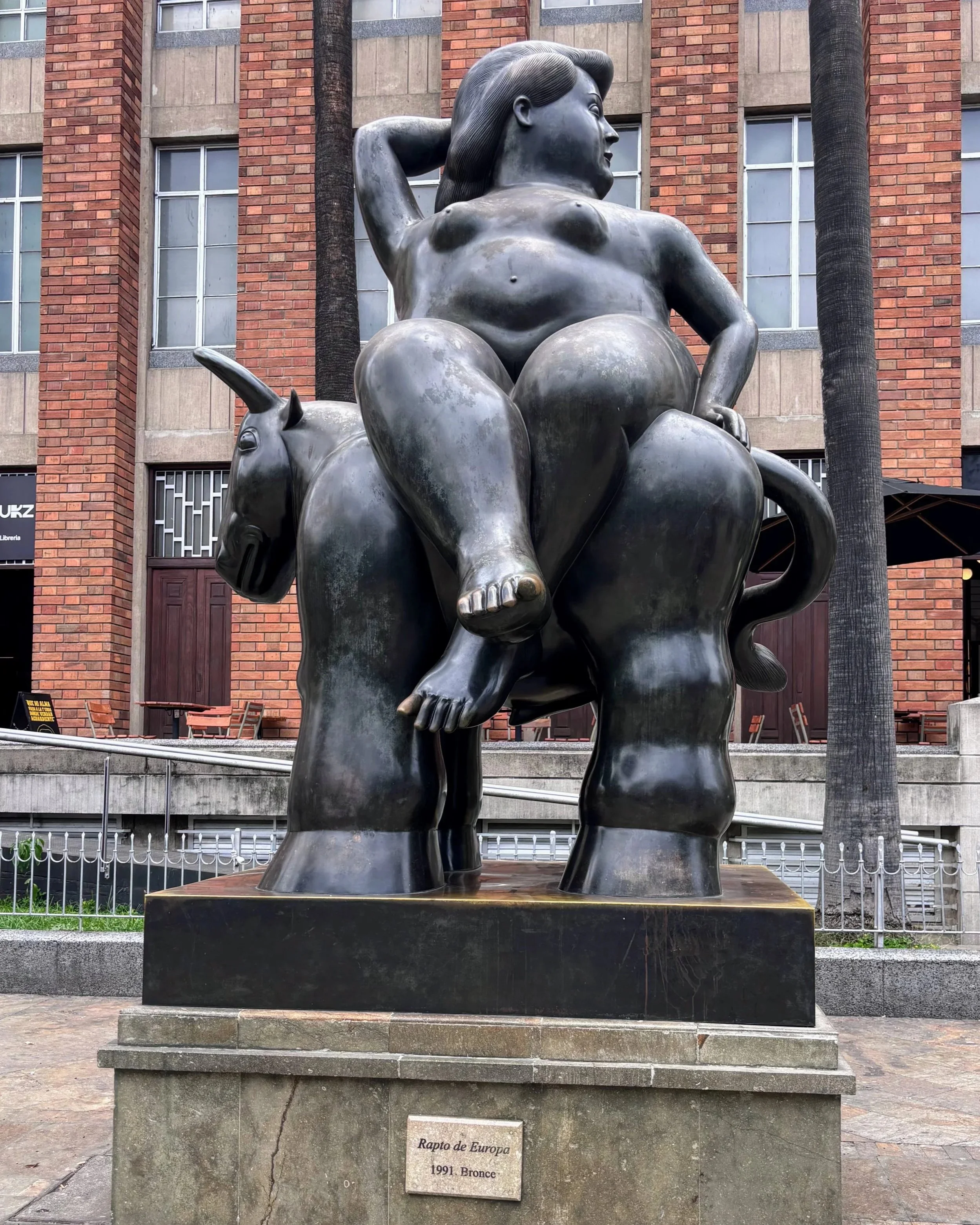
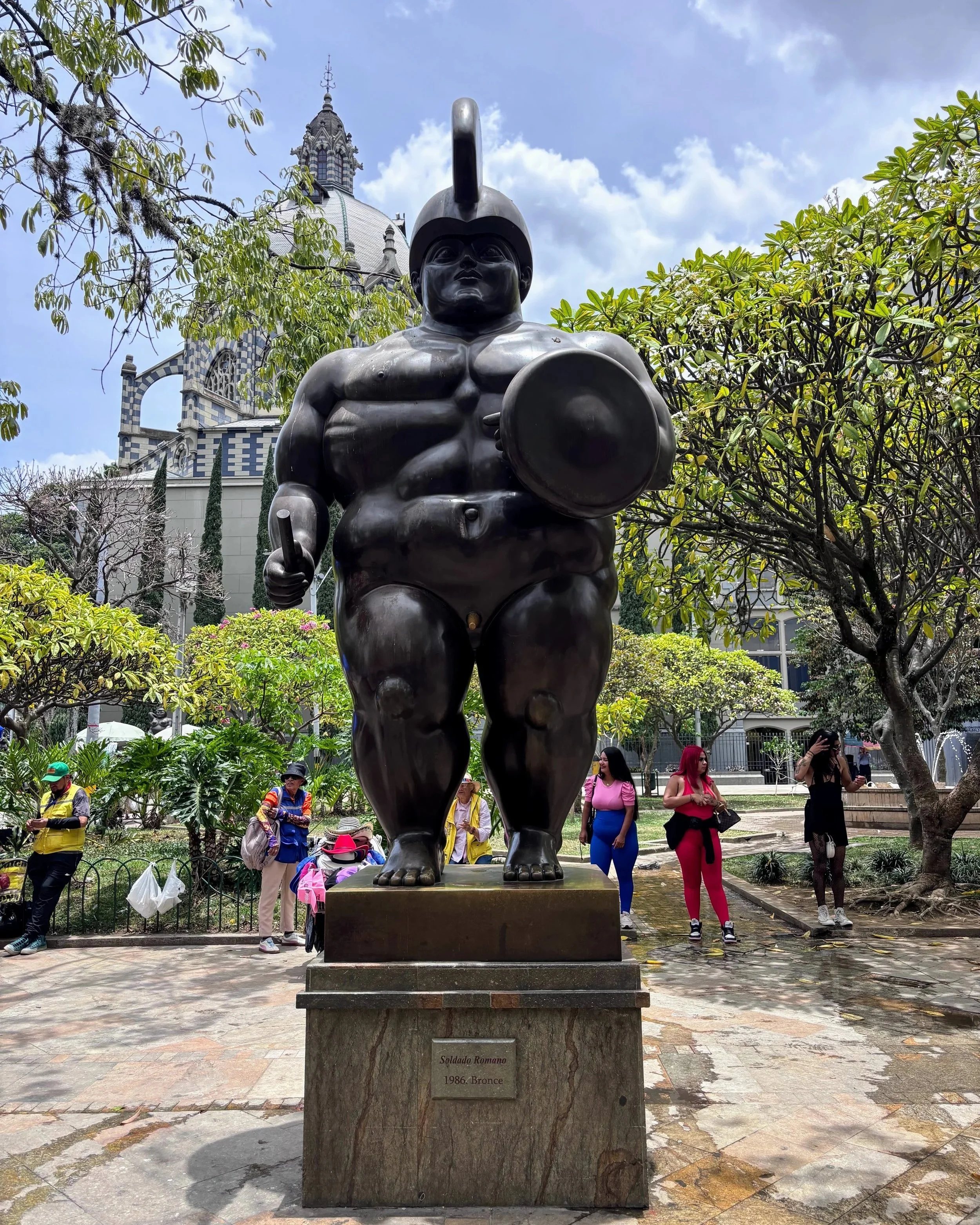
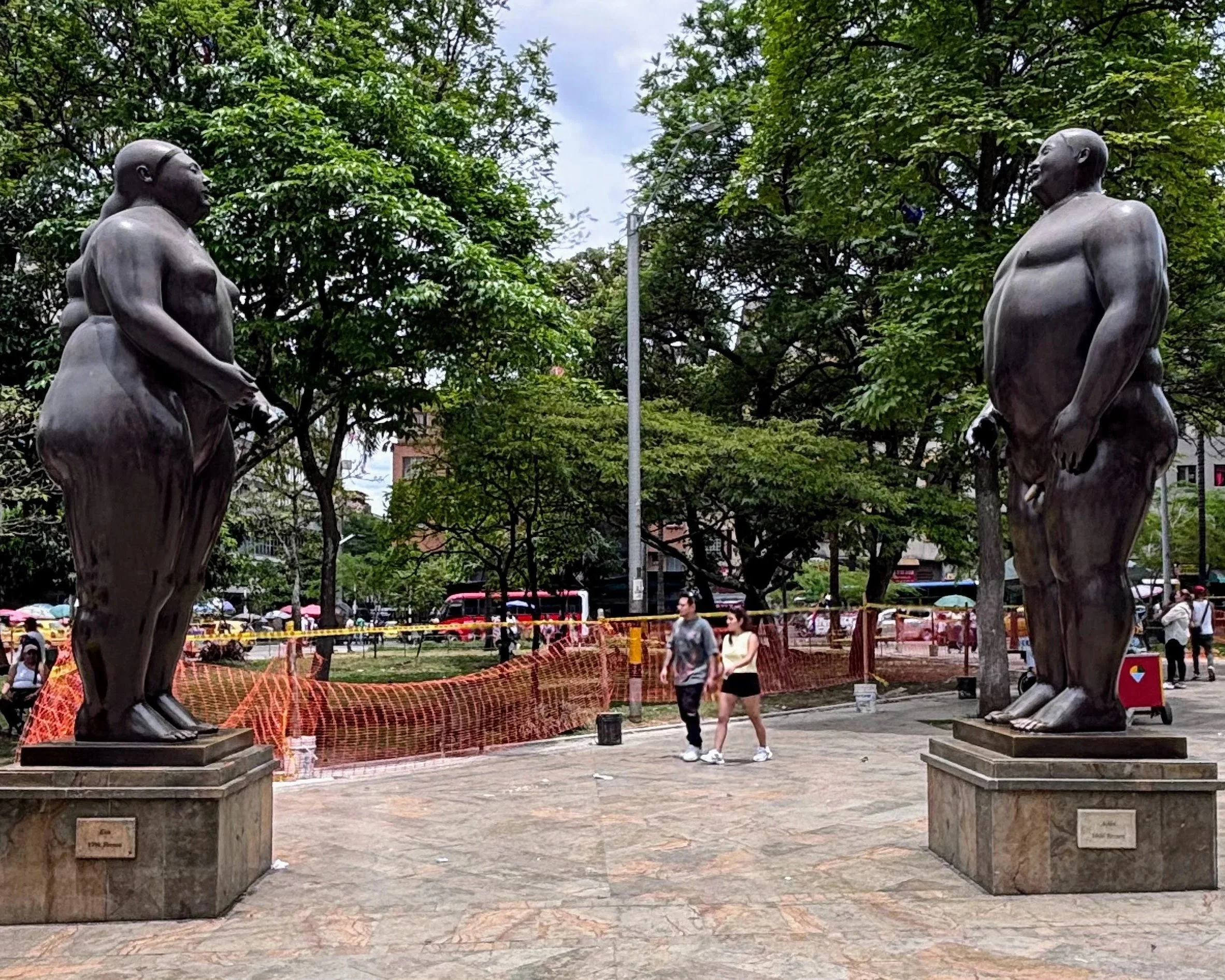
Sculptures at Plaza Botero.