A Beginner’s Mindset - Medellín
Medellín, Colombia
This is post #2 of a series written during a six-week trip to Colombia. You can find #1 here.
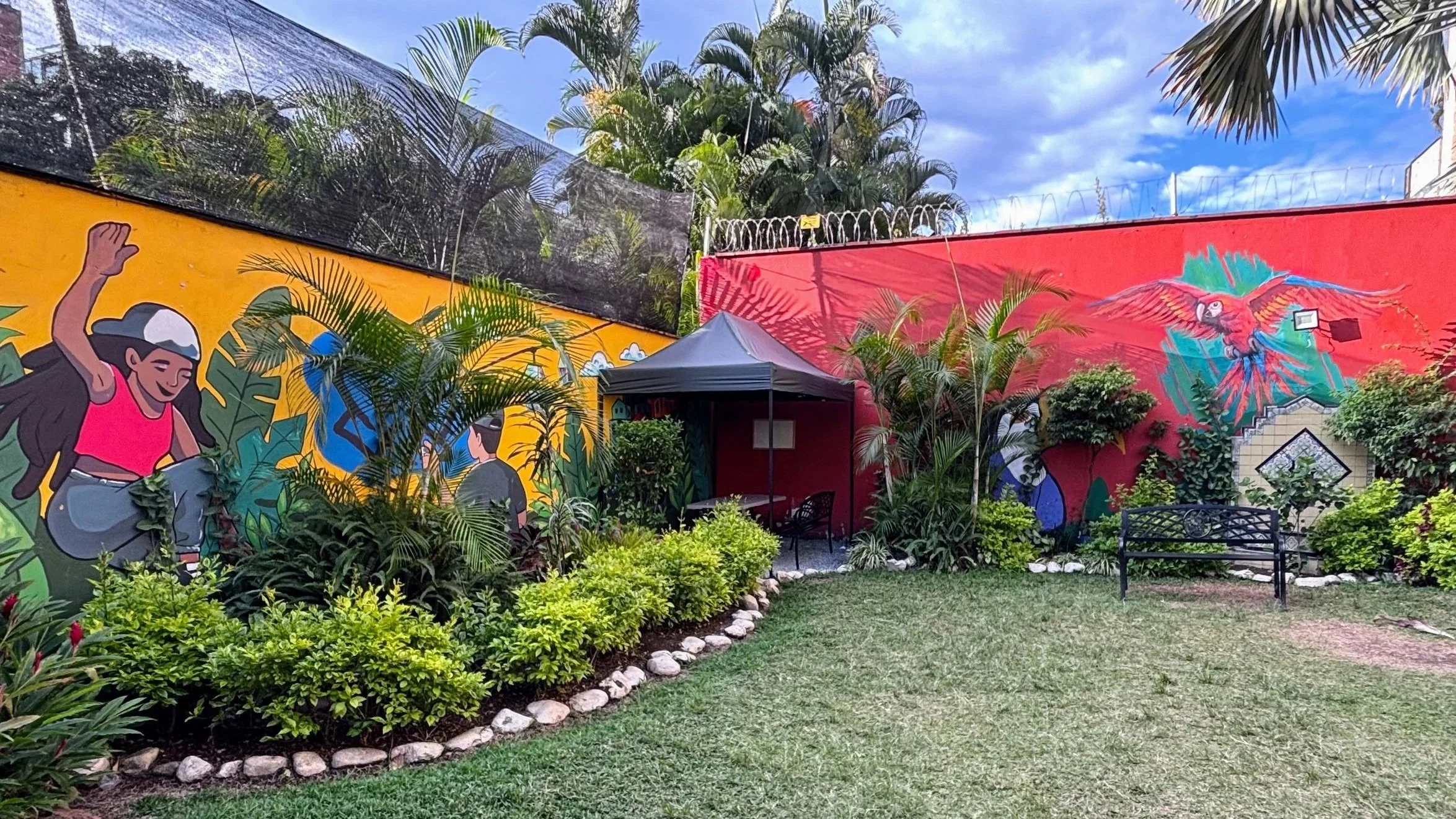
Centro Catalina’s back garden in El Poblado, Medellín.
Week 1 at Spanish school - finding my (intense) daily rhythm
Unbelievably enough, an entire week has already passed since I landed in Colombia, and the first week at Centro Catalina Spanish School has flown by in an instant. I’ve gradually recovered from jetlag which was particularly grueling this time. (It’s because of old age, said Umberto - well, he should know!)
I’ve quickly established a new daily rhythm for these first two weeks in Colombia which I am spending here in Medellín. It looks like this from Monday to Friday:
6am: wake up, go to the gym, then shower and get ready
9am: Spanish lessons in a small group (we were three persons this week)
around 1pm: lunch
afternoon: two hours of individual Spanish conversation, followed by optional group activity and individual study time
8:30/9pm dinner, followed by bedtime
It’s intense, disciplined and completely different from my free-format home life - just the way I wanted it. One of the many reasons I chose Centro Catalina was the possibility to tailor your own individual program. Most of the other students have afternoons off to chill and do whatever else they like. A full immersion was what I desired. Furthermore, the center has a another school in Cartagena on the Caribbean coast, and I’ll be able to change cities without interrupting the learning path.
I’m staying at the school’s student residence, which is extremely convenient as I can walk from my dwellings to the classroom in about fifteen seconds. The room is simple, no frills, but I’m no princess and it has all the essentials. In a way, it reminds me of university days - and so do all the young people around me. Most of the personnel and other students are half my age. This is not a value judgment, by the way, just a statement of fact.
Happily, the school has a fantastic location in the vibrant El Poblado neighborhood in Medellín. It’s an area featuring upscale hotels, huge shopping malls, trendy cafés as well as top-notch restaurants. And rooftop bars & restaurants which I’m crazy for! The nearby blocks offer a fantastic selection of excellent eateries so my brain and body will not go low on fuel.
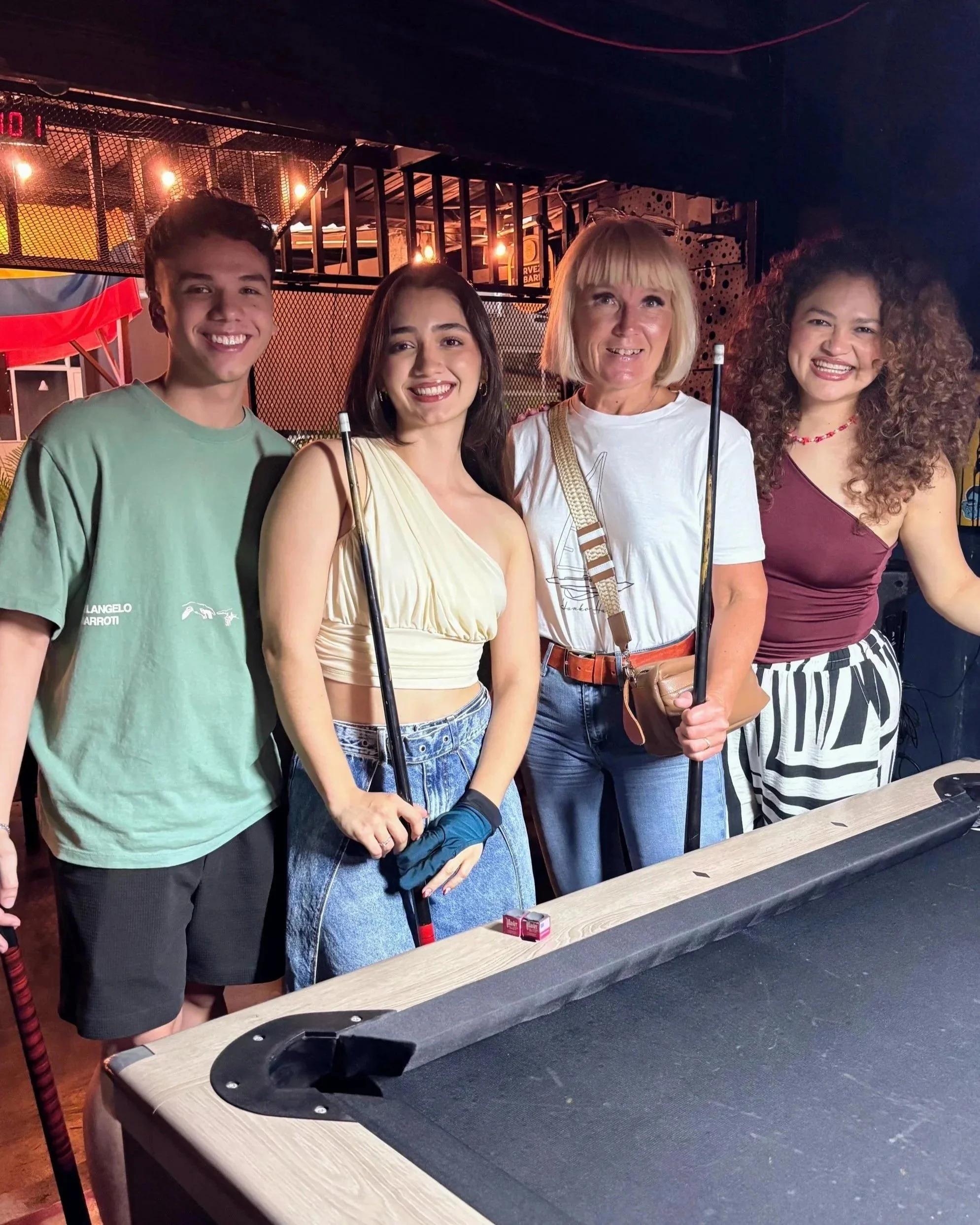
Last Saturday night, when I had just arrived at the school, shooting pool with some of the staff members.
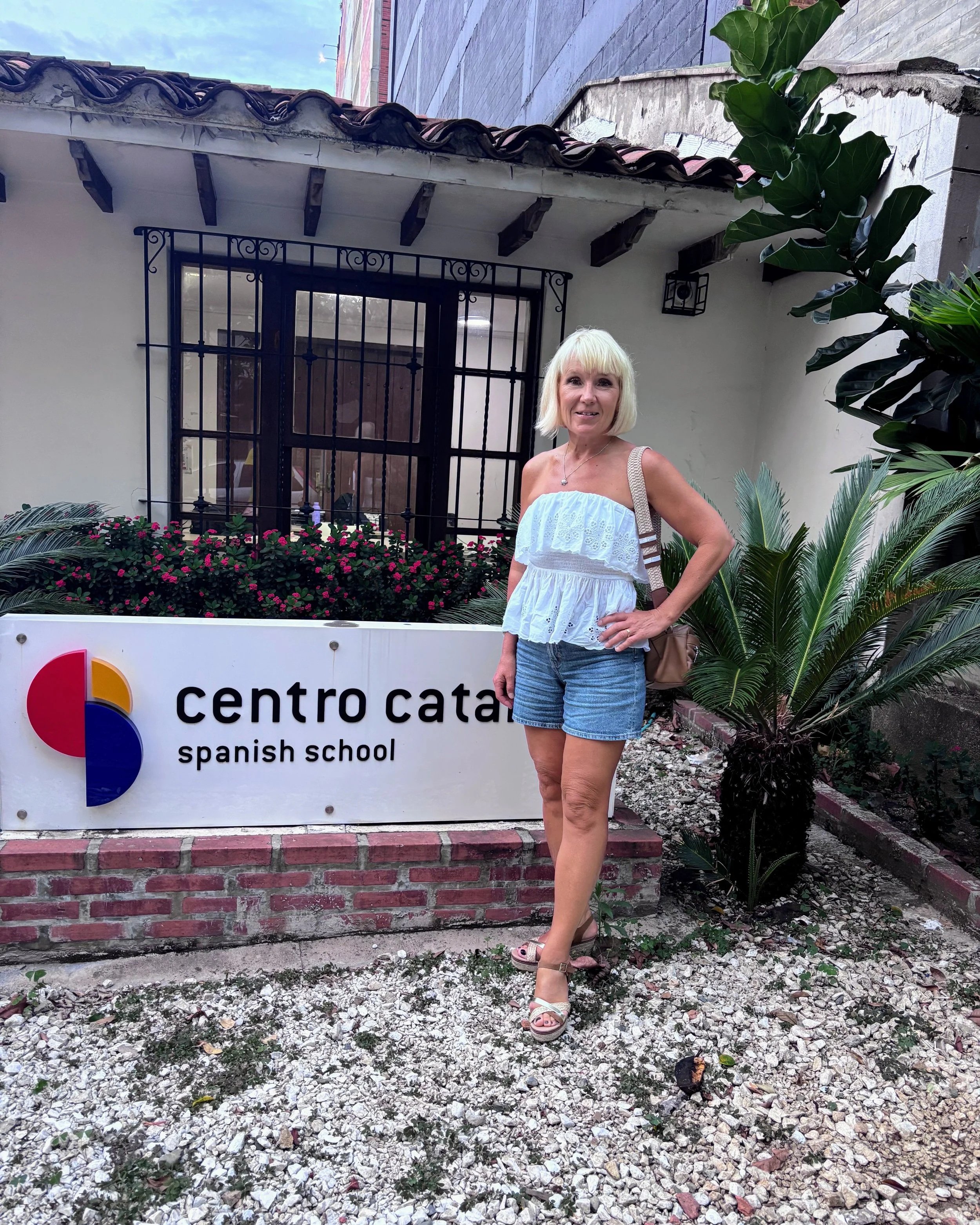
In front of the school.
My three “rules” to make the most of the immersive experience
The word “rules” sounds a degree too militant but I cannot think of a more accurate term. The important point is, I want to make the most of this fabulous opportunity. And, being no novice to language learning, I know a few things to avoid and watch out for.
This is the three-point mental pact I signed with myself:
1. I am here to radically improve my Spanish, not for tourism.
More specifically: at the end of the visit, I’ll be able to speak Colombian Spanish fluently and, for the most part, correctly. I will be able to write basic texts without constantly needing an online translator to check for errors.
2. I want to learn as much as possible about Colombian culture during this stay.
I could have chosen any other hispanic country but I chose here. This is not just about language. I’m in Colombia because I fell in love with the country and its people on our last visit. So yes, study hard but also have fun - as long as it’s in Spanish.
3. In order to maximize the impact of the immersion and make points 1 & 2 happen,
a) I will attend the intensive program with both group and individual lessons, 30 hours per week.
b) I will do self-study during my free time to absorb the material from the classes.
c) I will engage in chatting with locals at every opportunity.
d) I will not speak any English during these six weeks in Colombia. (Writing messages and this blog is OK, speaking English is NOT.)
e) I will live this experience with a Beginner’s Mindset.
So far, I’m delighted to say, it has been easy to keep the pact and I have no breaches to report in the first week. Not even with point 3d! I have not spoken a word of English since boarding the flight for Bogotá more than a week ago. On top of that, I’m minimizing English listening time. My usual podcasts are on pause, I only listen to hispanic music and, if I ever find a moment to watch Netflix, it will only be Colombian telenovelas.
If somebody happens to speak to me in English, I respond in Spanish. If I don’t know a word or expression, I explain it in other words. Colombians tend to be very friendly and helpful, so this rule is actually not difficult at all to follow. Of course it may mean limiting some social situations during this trip, but that’s fine.
And why am I so adamant on this point? Here’s a big mistake that many language students and expats make: they travel all the way to a foreign country and end up hanging out with English-speaking people in their free time. Thats’s a bit like keeping a really strict diet during the daytime and binging at night. Does not work. I’ve done it myself in the past but no señora, that’s not going to happen this time.
The most important rule, however, is the last one. Let me explain what I mean by it.
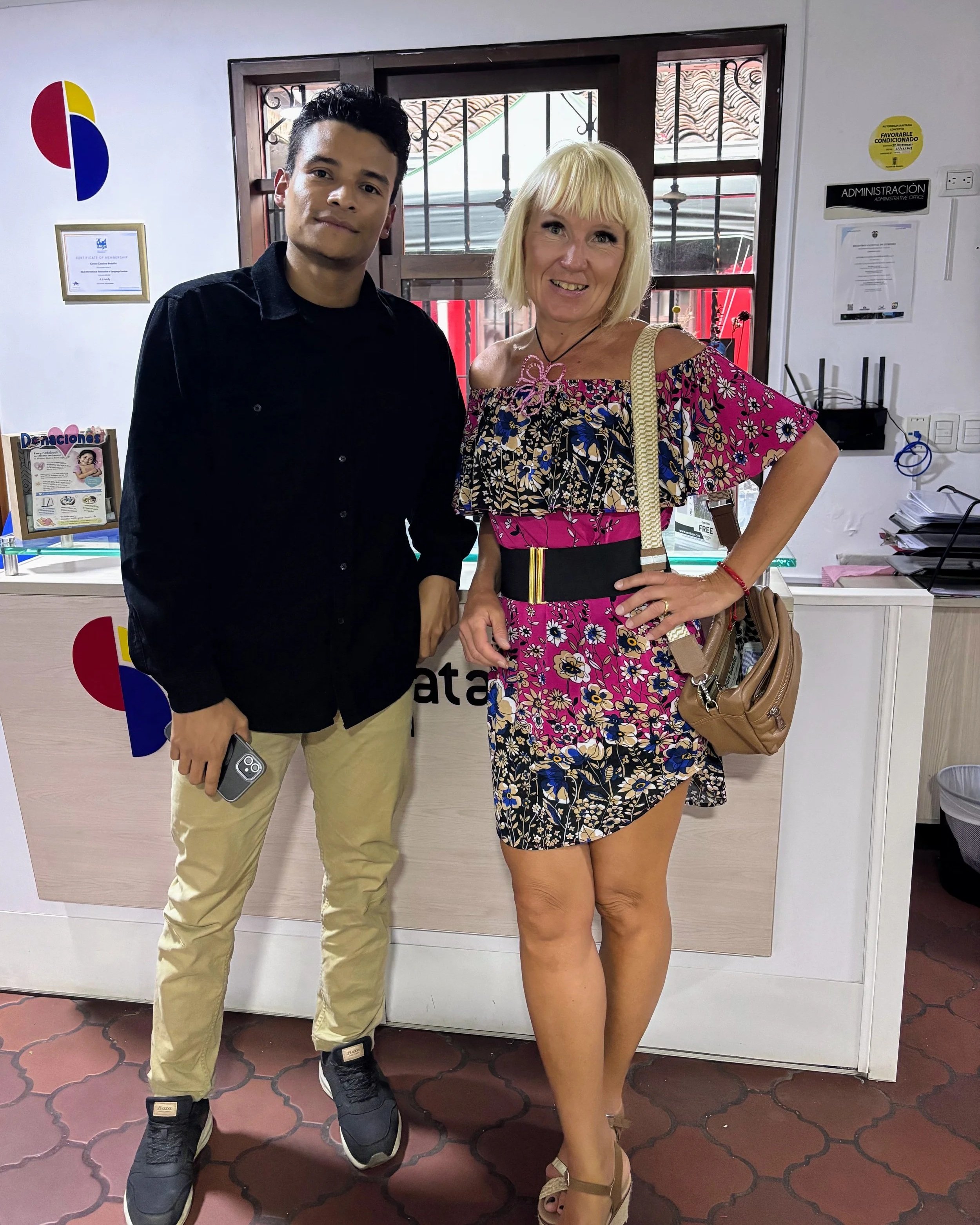
With Mateo, my 1-2-1 teacher this week.
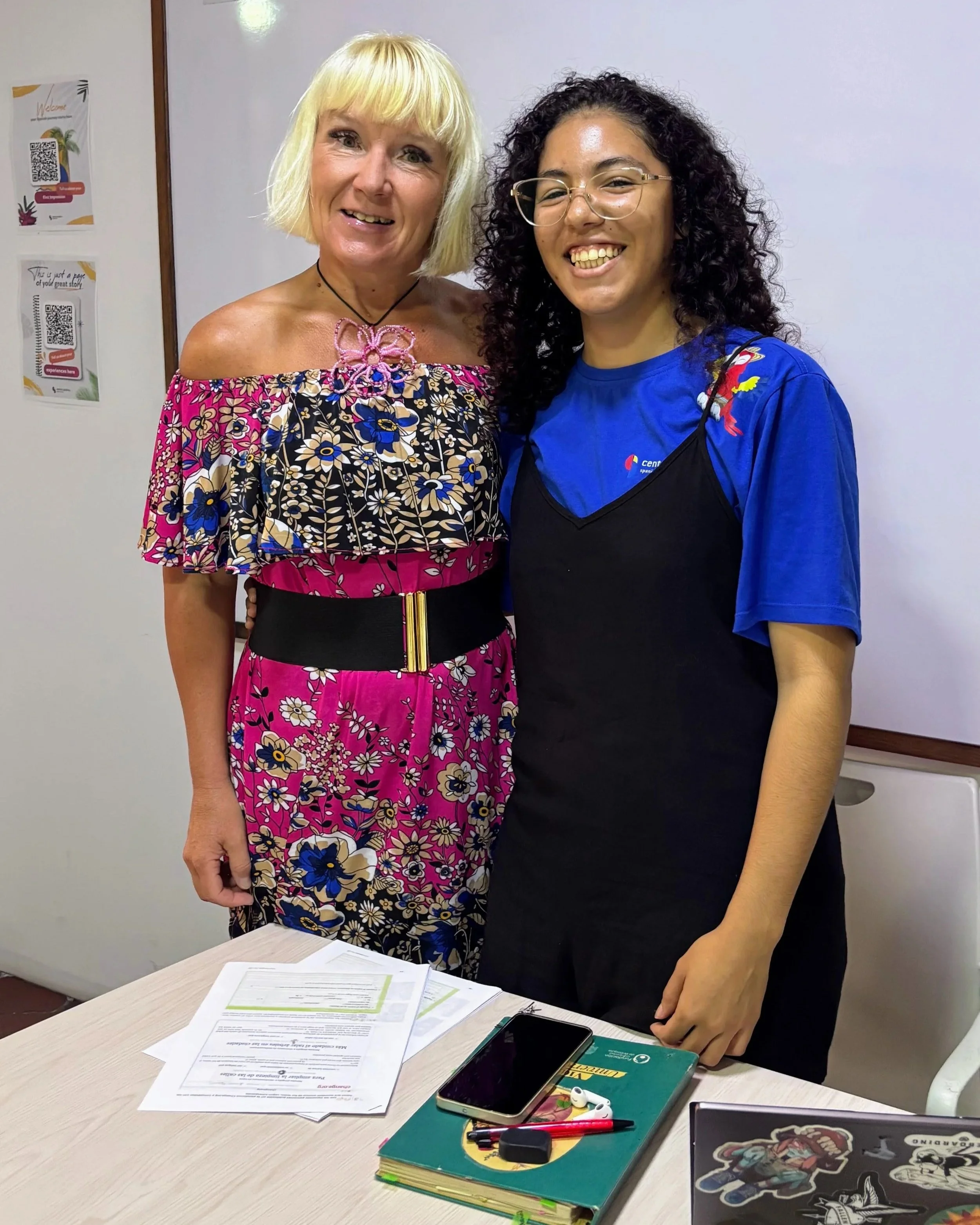
With Celeste, my group teacher this week.
Applying a Beginner’s Mindset to language learning
Do you remember how you felt on your first ever day of school? I do, even if it was forty-eight years ago. The excitement, the anticipation, the unlimited motivation to learn. Also, I remember feeling slightly nervous. I was the new kid in town and did not know almost anyone. Still, I walked confidently into the school building. It was going to be great!
That’s pretty much how I felt when I booked this trip back in February. Excited, motivated, slightly nervous but confident. Even more so this Monday morning as I was waiting for the oral exam. It determined my initial level so that the school could place me in a group of students with a similar level of Spanish.
A Beginner’s Mind is a term that originates in Zen Buddhism. In brief, it means approaching situations with a curious, open mind, humble and without preconceptions - just like a true beginner would do. It is a principle that can be incredibly useful in many walks of life, not only in a learning context.
The opposite of a beginner's mind is thinking about yourself as an expert, a dangerous attitude that can make you arrogant and blind to new ideas, possibilities and ways of operating. It fixes you to old ways of doing things and can block your path to deep learning.
Of course, in working life, we are often expected to be experts and know it all and perform. That’s what we’re measured on and get paid for, so it’s difficult to find the curious and open-minded child inside ourselves again.
Language learning is certainly one of the areas where many people have fixed (and false) preconceptions. These are the ones I hear most frequently:
You need special talent to learn another language. Some people have it and some don’t.
For the lucky and talented few, language learning is easy, for the others, almost impossible.
Only children can learn new languages, it’s too late for adults.
You have to speak the language perfectly before you open your mouth.
You cannot learn a foreign language because you had a bad teacher at school.
You did not learn a foreign language because they taught grammar and grammar is useless.
If you speak English there’s no need to learn any other languages.
I already knew these points are not true, so there was no need to clear any of them out of my mental closet. Instead, I had a few other misconceptions. The one that I had to clear out, right off at the bat, was this: believing that if you speak Italian, it’s easier to learn Spanish. Turns out, not so.
I’m self-taught in Spanish. I’ve got to a fairly good conversational level using podcasts, Netflix and Luis Miguel’s (my all-time favorite singer) songs. It has been good enough for tourist purposes.
However, what I did not realize before this Monday was that
a) Spanish grammar is actually quite different from Italian, and more difficult,
b) my Spanish grammar was terrible (basically, full of holes), and
c) trying to fix the holes by borrowing Italian language logic and words is not helpful. On the contrary, the belief that the two languages are alike gives you false confidence. Native Spanish speakers may misunderstand you or not understand at all what you’re trying to say. You may sound silly, incomprehensible or ridiculous, but they don’t tell it to your face out of pure courtesy.
So, it was time to be humble again, roll up my sleeves and move the two romance languages in separate apartments inside my head. They’re nice neighbors but cannot inhabit the same space. For the time being, they’re only allowed to ring the doorbell but not enter.
There’s no magic trick to language learning, you have to work at it. Just like a true beginner. Understand and memorize the rules, repeat and repeat, again and again. Repeat the irregular verb tables like a parrot. Write down new words and expressions, repeat. Imitate the way native speakers express themselves. Stand in front of the bathroom mirror, practice facial movements in order to produce the right sounds. Sing some more with Luis Miguel…
I asked my 1-2-1 teacher to correct every mistake I make. They were countless on the first day. They still are numerous but at least most of them are new every day. I don’t want to keep repeating the same ones all over again. The good thing is, I’m not scared to open my mouth or ashamed to make mistakes and be corrected. Just bring it on! That’s the best way to learn.
Finishing off this piece tonight, I’m thinking how powerful it would be to have this attitude in life in general. Let go of the need to know and be right. Let go of “this is how it’s always been done” and “that’s not possible”. Just be curious, open, humble and motivated. The world would be a much better place if we could all think like beginners. And life would be so much more fun.
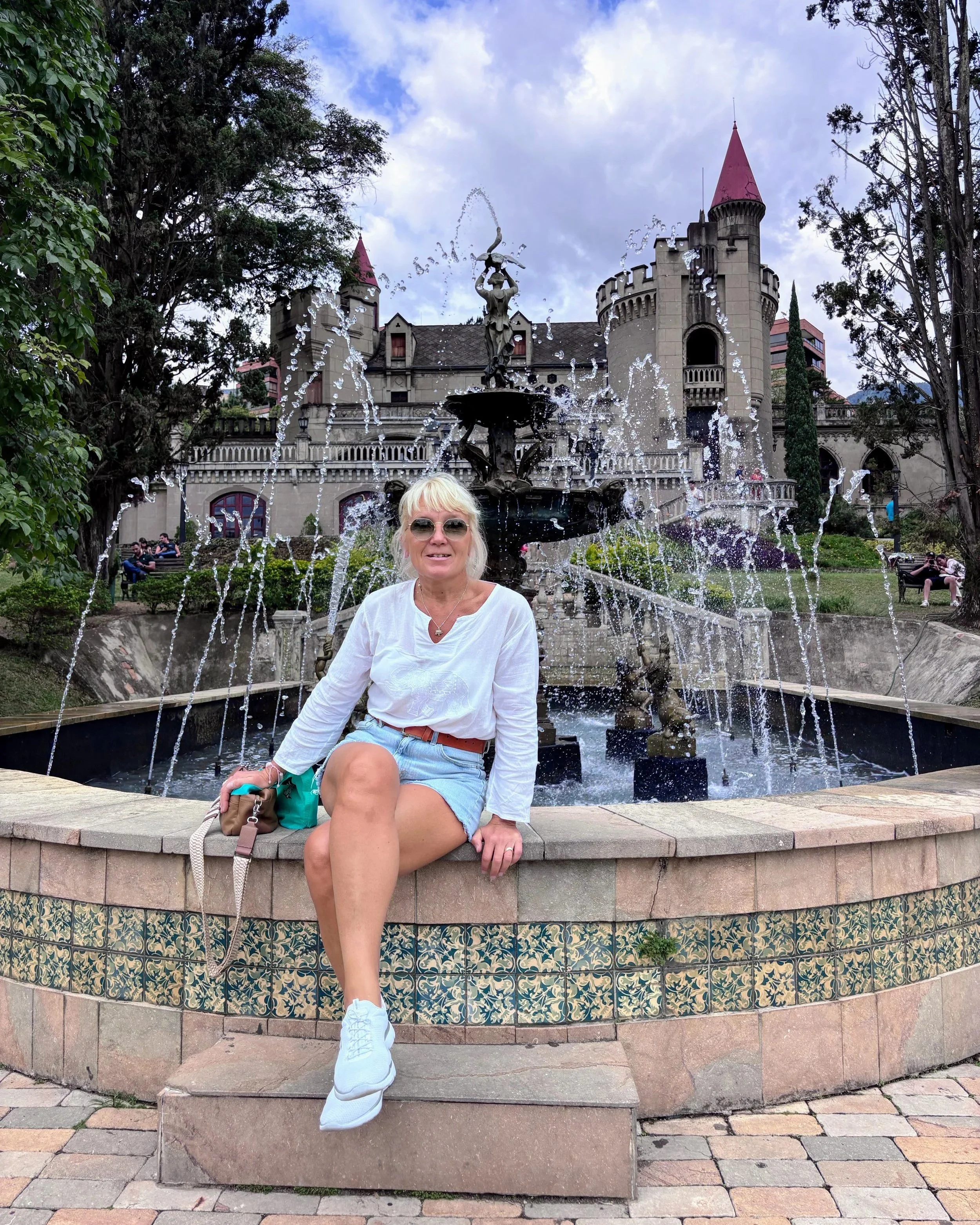
At the enchanting “El Castillo” museum.
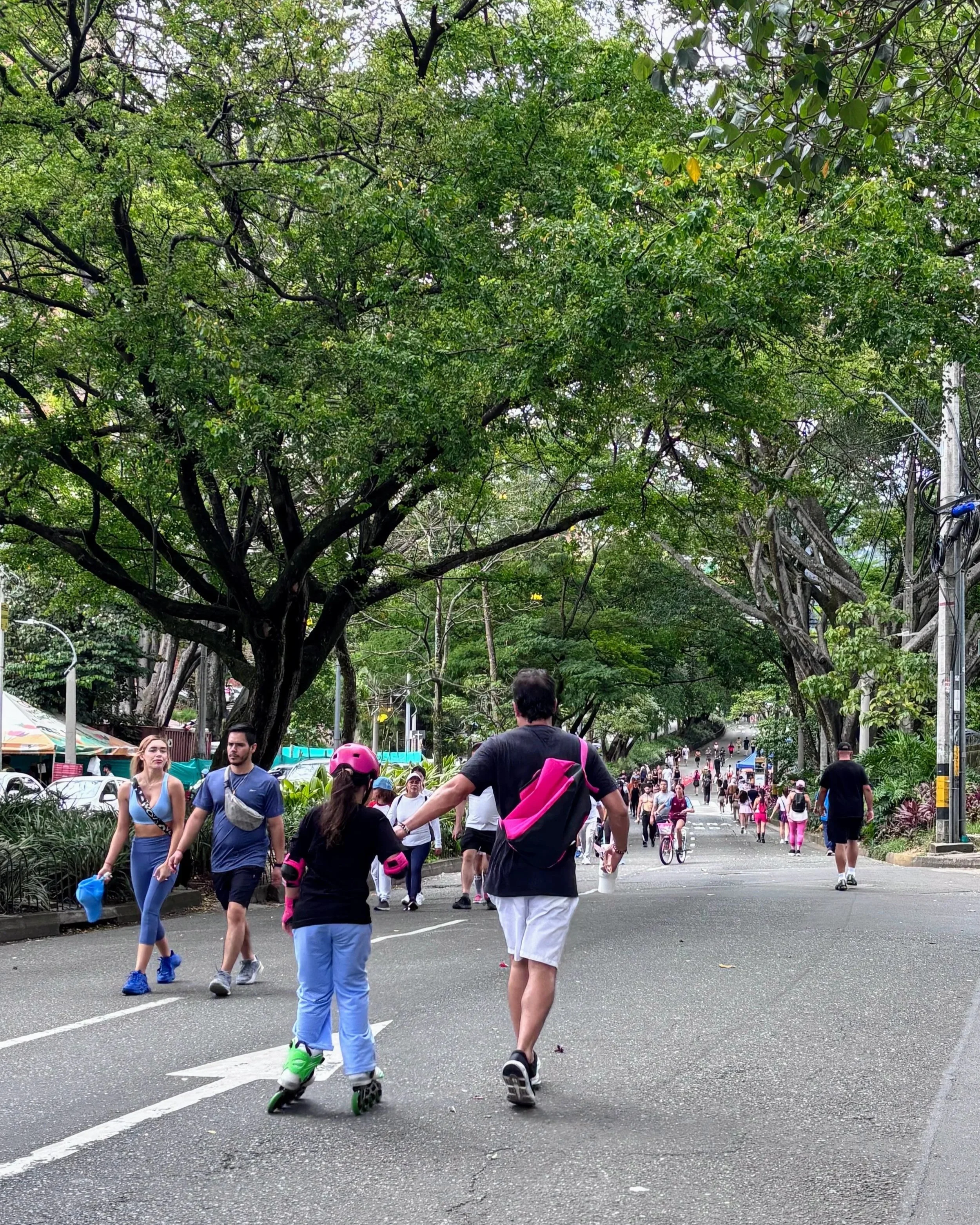
Sundays are “ciclovía” days. Almost 50km of streets in central Medellín are closed to traffic so that people can walk, run and cycle.
Next…
The weekend has arrived, with two days off school and time to be a tourist. I’ve booked excursions for both days - with Spanish-speaking guides, naturally. I’m falling more deeply in love with this city and cannot wait to explore some more!
Then, come Monday morning, I’ll sharpen my pencils again and go back to school.
More next week! In the meantime, love from Colombia.
*****
This is Centro Catalina’s official website: https://centrocatalina.com/
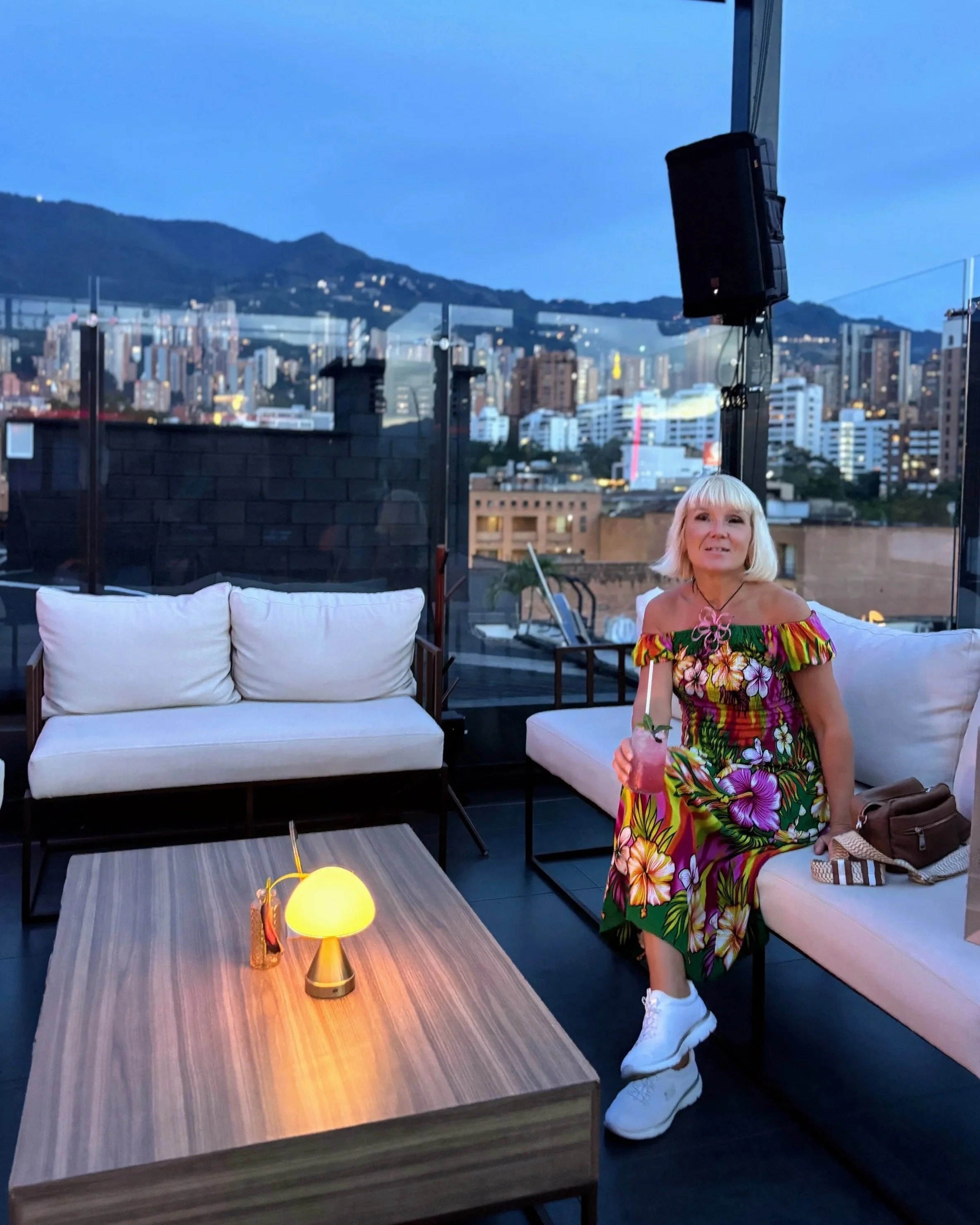
One of the many rooftops I’ve checked out already in my first week.
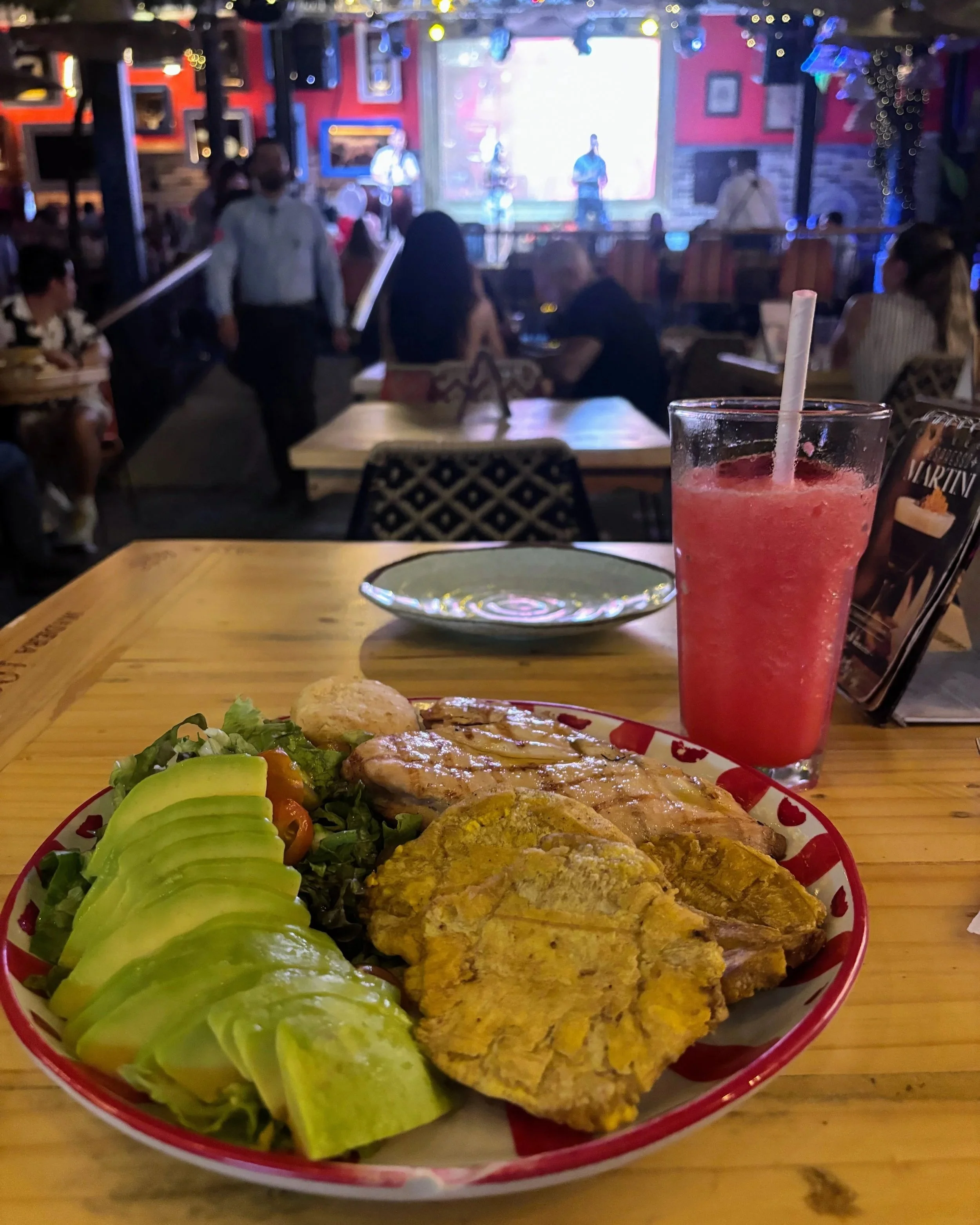
My favorite dinner so far, at “La Matriarcha” one block away. Chicken & patacones, served with avocado, salad and cherry juice. And a live salsa band!
Night-time view of Medellín from the “Mal de Ojo” rooftop bar & restaurant.
P.S.
The first blog post I published on this site was about Medellín - here it is, if you’d like to read it: The Spirit of Transformation - Medellín https://anitadvisor.com/blog/the-spirit-of-transformation-medelln