The Heroic, the Fantastic - Cartagena
Cartagena de Indias, Colombia
This is #6 of a series written during a six-week trip to Colombia. You can find #1 here.
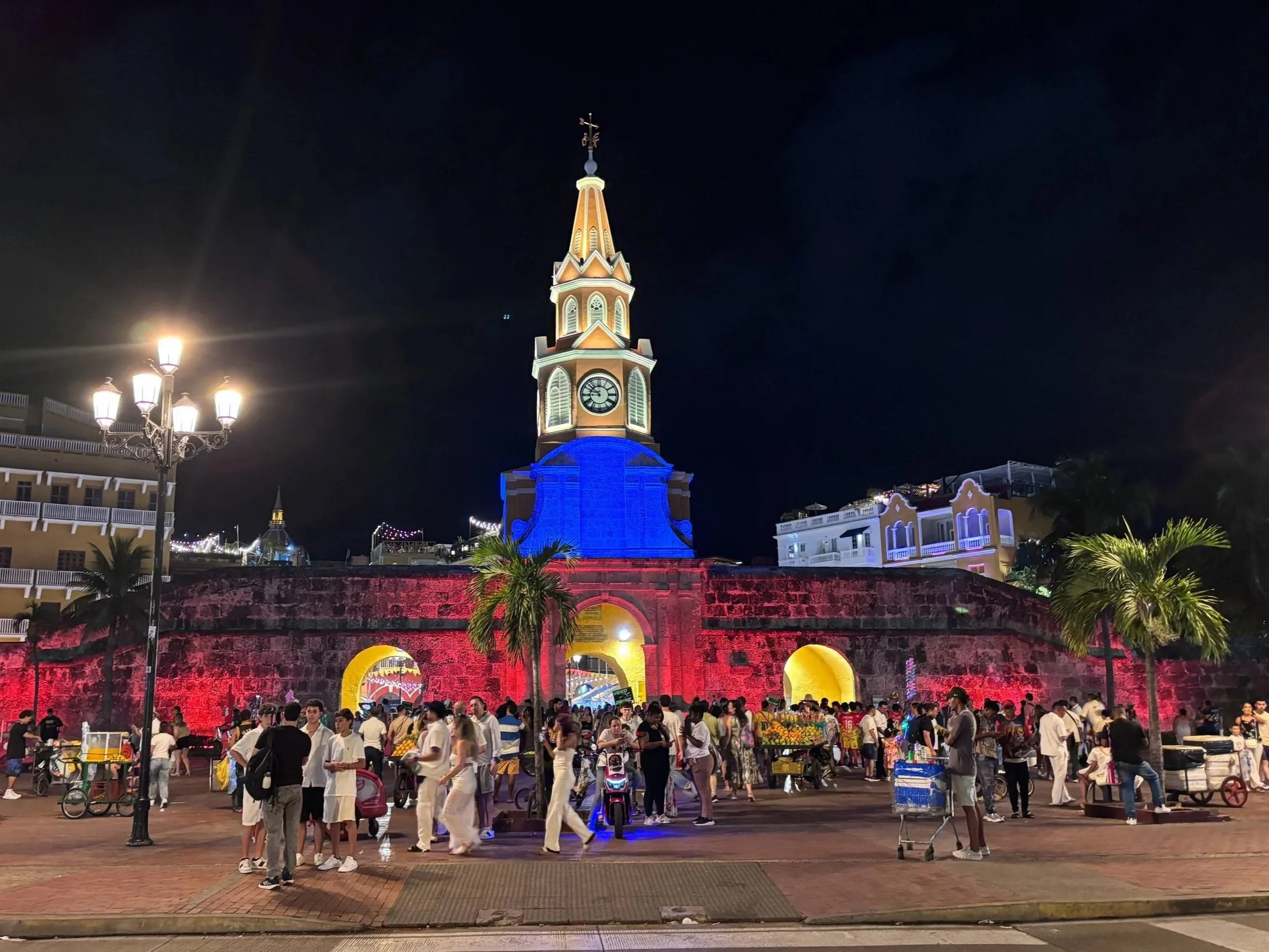
My time in Cartagena - and Colombia - will be coming to an end next week. Even if I still have a number of days left in this fabulous city, I'm already getting nostalgic. So much so that I’ve already started planning our next Colombian tour.
A few weeks ago, I wrote an “ode” to Medellín.
Now, it’s time for me to write a love letter to this Caribbean city with many names.
Cartagena, founded in 1533, is one of Latin America’s oldest colonial cities. Looking at the world map now, it is obvious that the city would have a strategic position for maritime routes in colonial times. It served as a major commercial hub, a shipping point for exporting precious metals from South America to Spain, as well as a port for importing enslaved Africans.
Today, while the city still has one of Latin America’s biggest ports, it has become more famous for its exceptionally beautiful historic center. This, combined with the vibrant Caribbean atmosphere, has turned Cartagena into a major tourist destination and helped the city gain the nickname “La Fantástica”. Another frequently heard moniker is “La Heroica”, referring to the heroic resistance of the city’s people during an unsuccessful Spanish siege in 1815.
Here are the things that I love most about Cartagena de Indias:
1. The walls of Cartagena - las Murallas
Most of Cartagena’s historic center is surrounded by massive centuries-old walls which were built to protect the city from pirates and other attackers. I love walking or running on top of the walls early in the morning. That way, you get a magical glimpse of the old town before it wakes up, as well as a panoramic view of the modern Bocagrande neighborhood. Later in the day, the sea-facing parts of the walls are a prime (romantic) location to watch the sunset, but that requires being lucky with the weather. Especially this time of the year, during the rainy season.
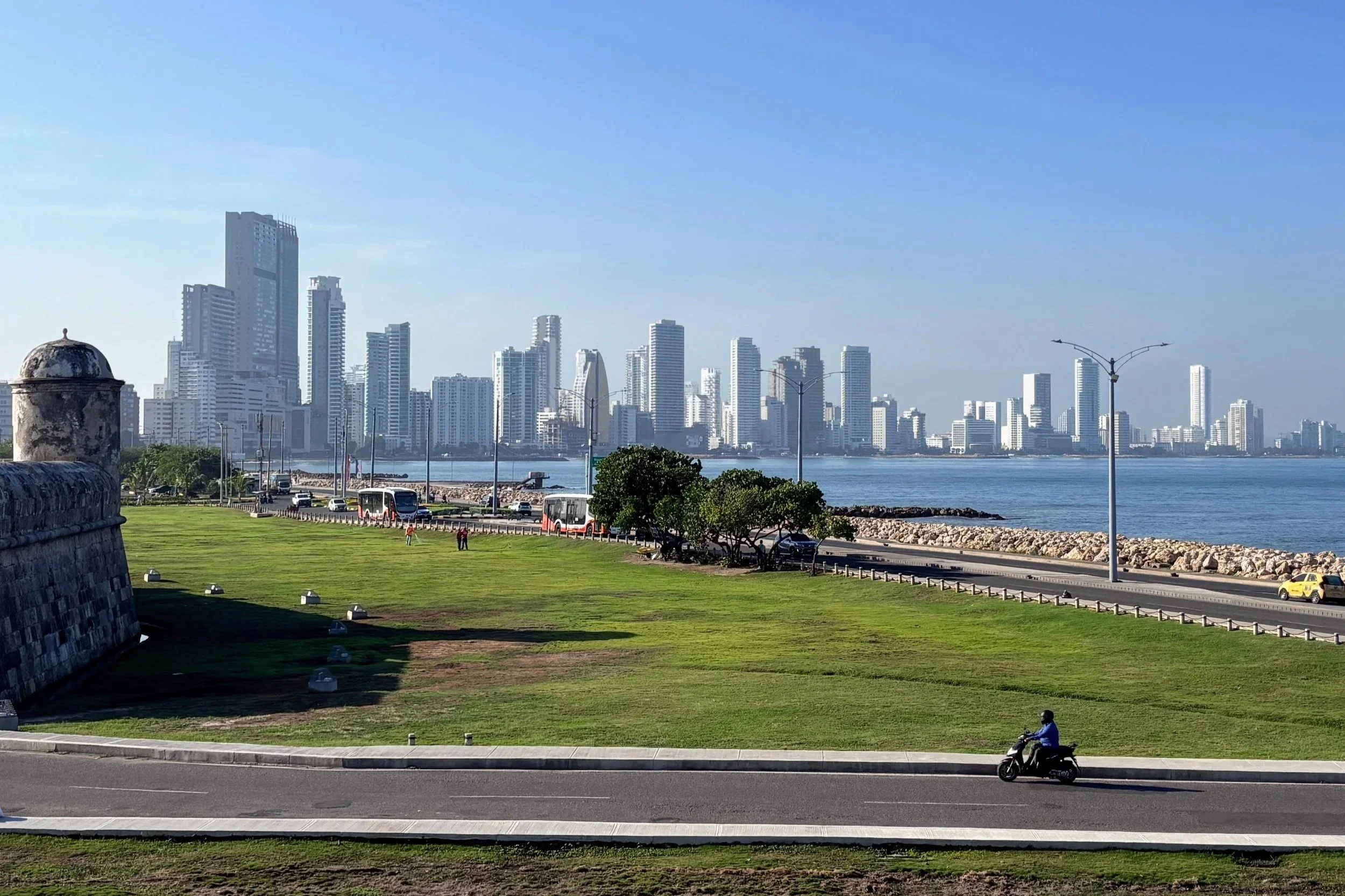
The Bocagrande neighborhood seen from on top of the Cartagena walls.
2. Colonial architecture
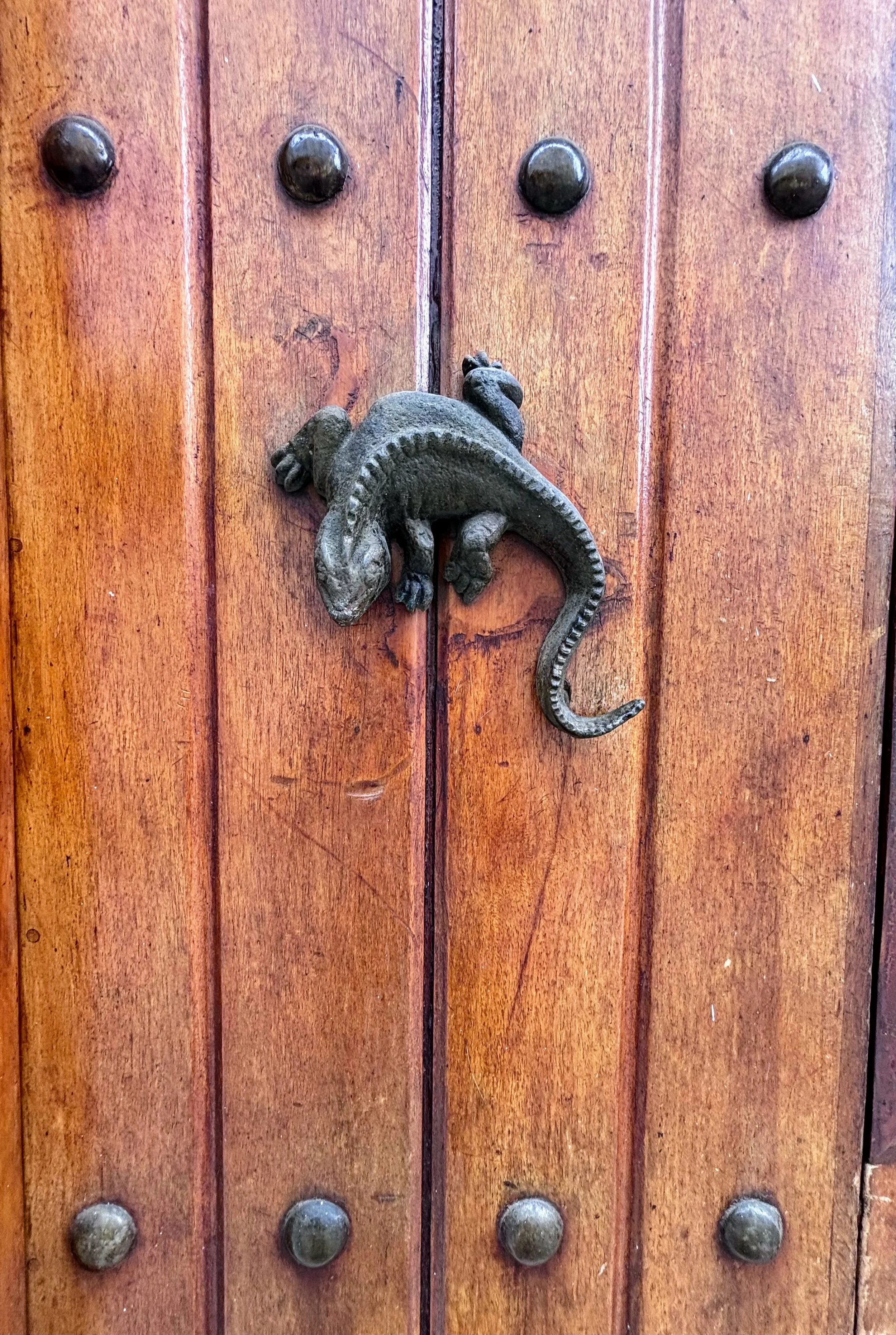
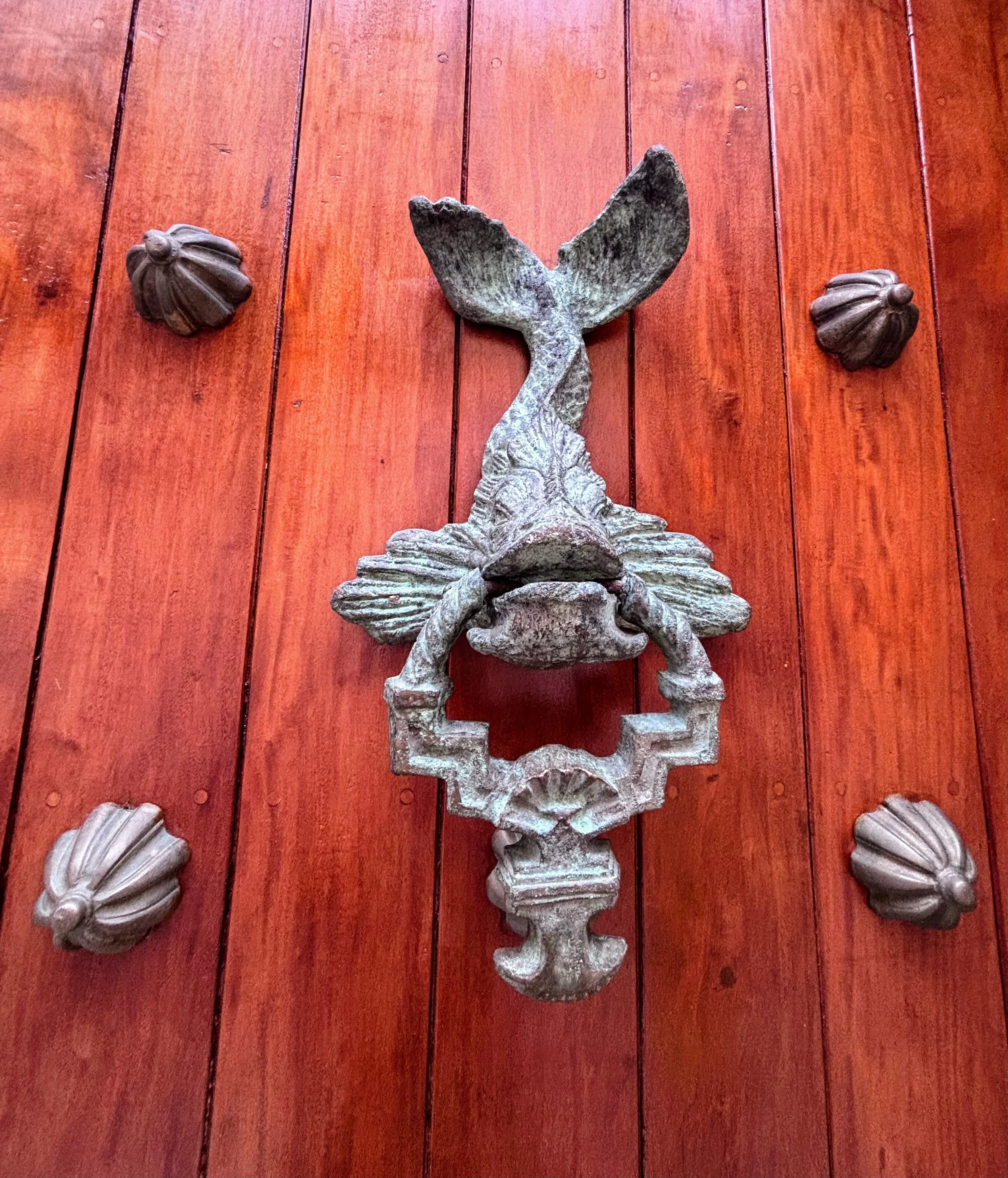
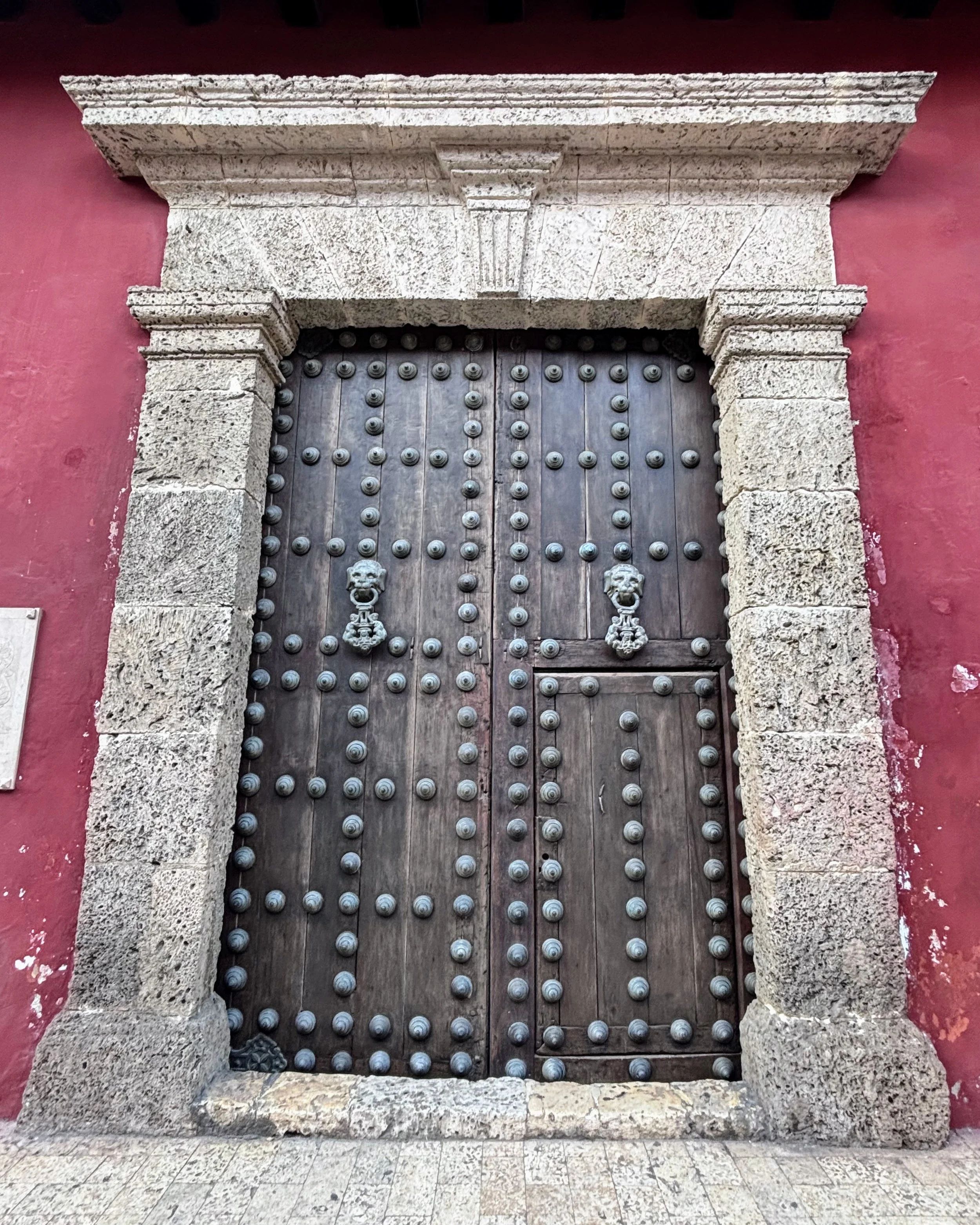
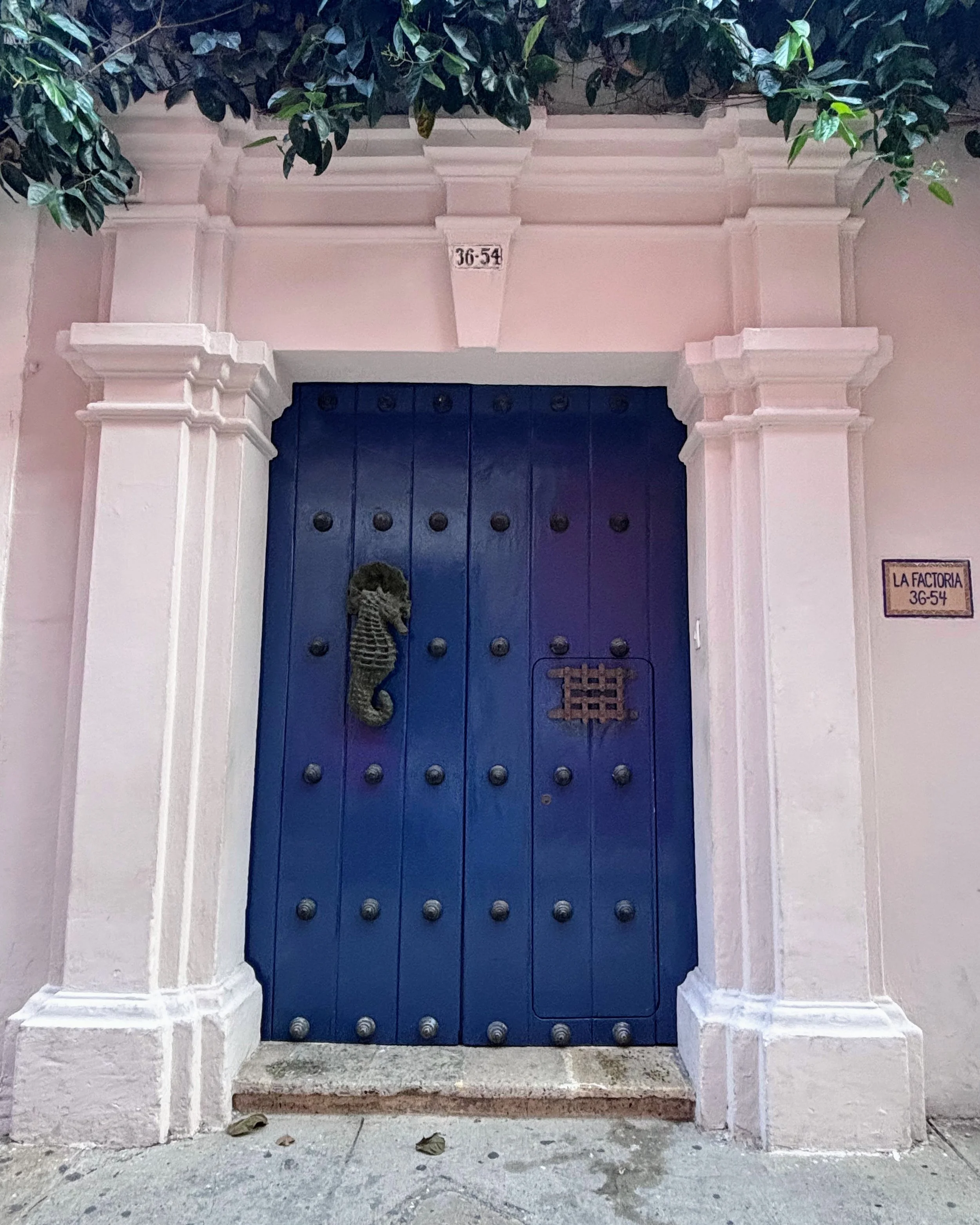
My school is inside the walled city, and so is my apartment. I’ve spent endless hours walking on the streets lined by brightly colored colonial houses. Flowers climb the walls and flow down from balconies, or reach out to the house across the street. In addition to the cheerful colors, I am enchanted by the decorative details of the houses. Street-level windows and balcony rails feature curvy wooden pins and the entry door knockers tell stories of days gone by.
In colonial times, the metal knockers, aldabas, would indicate the social rank, lineage or profession of the house’s owners. A lion’s head, for example, represented the military, and a lizard or iguana denoted Spanish nobility. My head keeps spinning threads of tragic and romantic stories as I pass by townhouse doors…
It is not surprising that the historic center of Cartagena has been listed as a UNESCO World Heritage site.
3. Colombian Caribbean cuisine and Cartagena restaurants
Just in case you didn’t know this: Umberto and I are foodies. That’s Foodie with a capital F. Eating well is one of the most important things in life for us, and it certainly can be accomplished in many corners of the world. But this place is a cut above the rest.
The Colombian Caribbean cuisine is a sensual blend of indigenous, Spanish and African influences, with plenty of seafood and fish on the menu. And the side dishes are amazing! My personal favorites are patacones (fried green plantains) and arroz de coco, coconut rice. And guess what, I now know how to prepare them since I took a Caribbean cooking class!
Cartagena is an unbelievable city for bars and restaurants, a real Foodie’s paradise. My initial plan was to “eat my way through the city” and dine at a different restaurant every night, but I have not been able to live up to the ambition. A few places are just too good to visit only once! I’ll be sharing a list of my favorites among favorites at the bottom of this blog post.
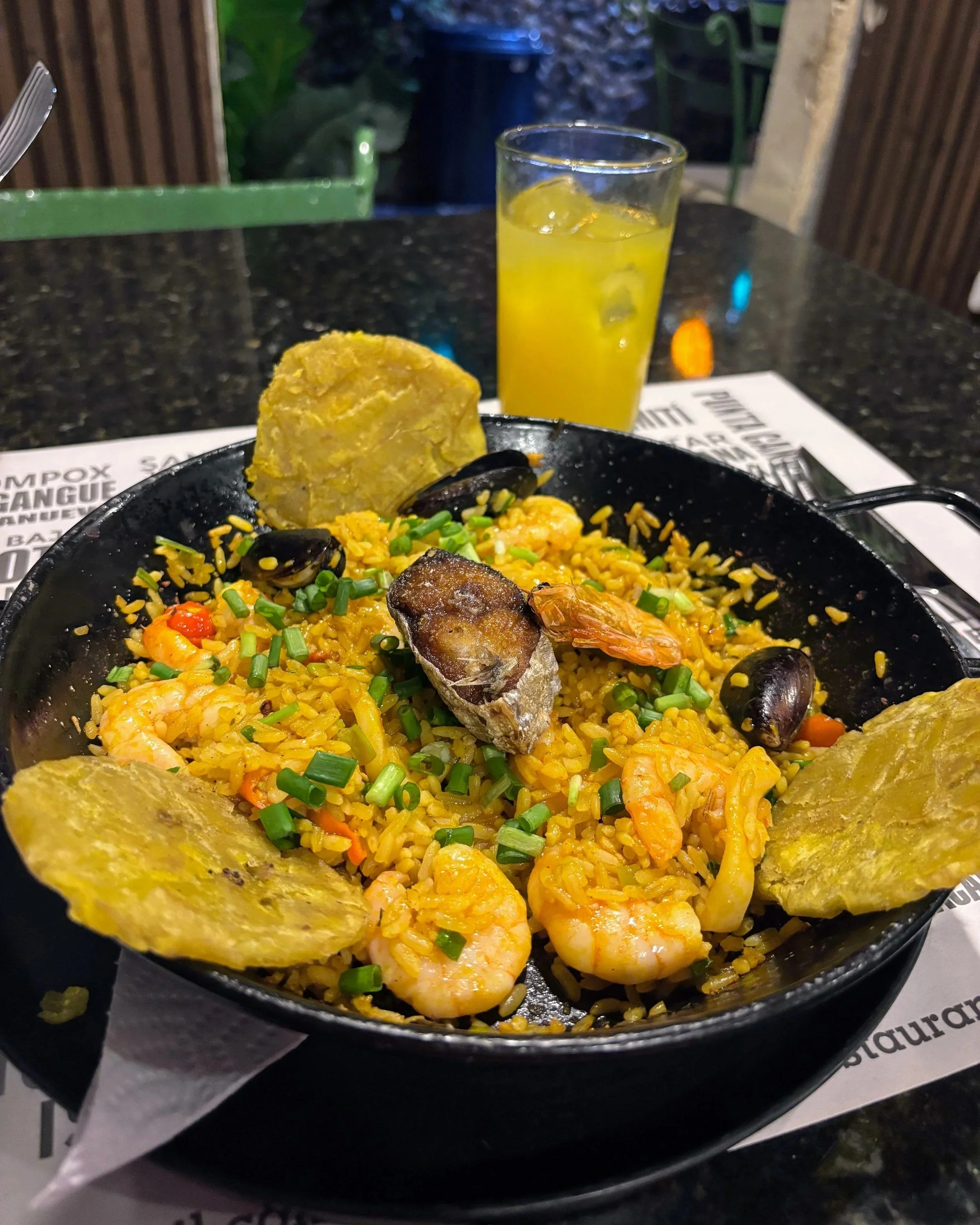
My favorite lunch: seafood rice at restaurant La Mulata, accompanied by a glass of maracuya juice.
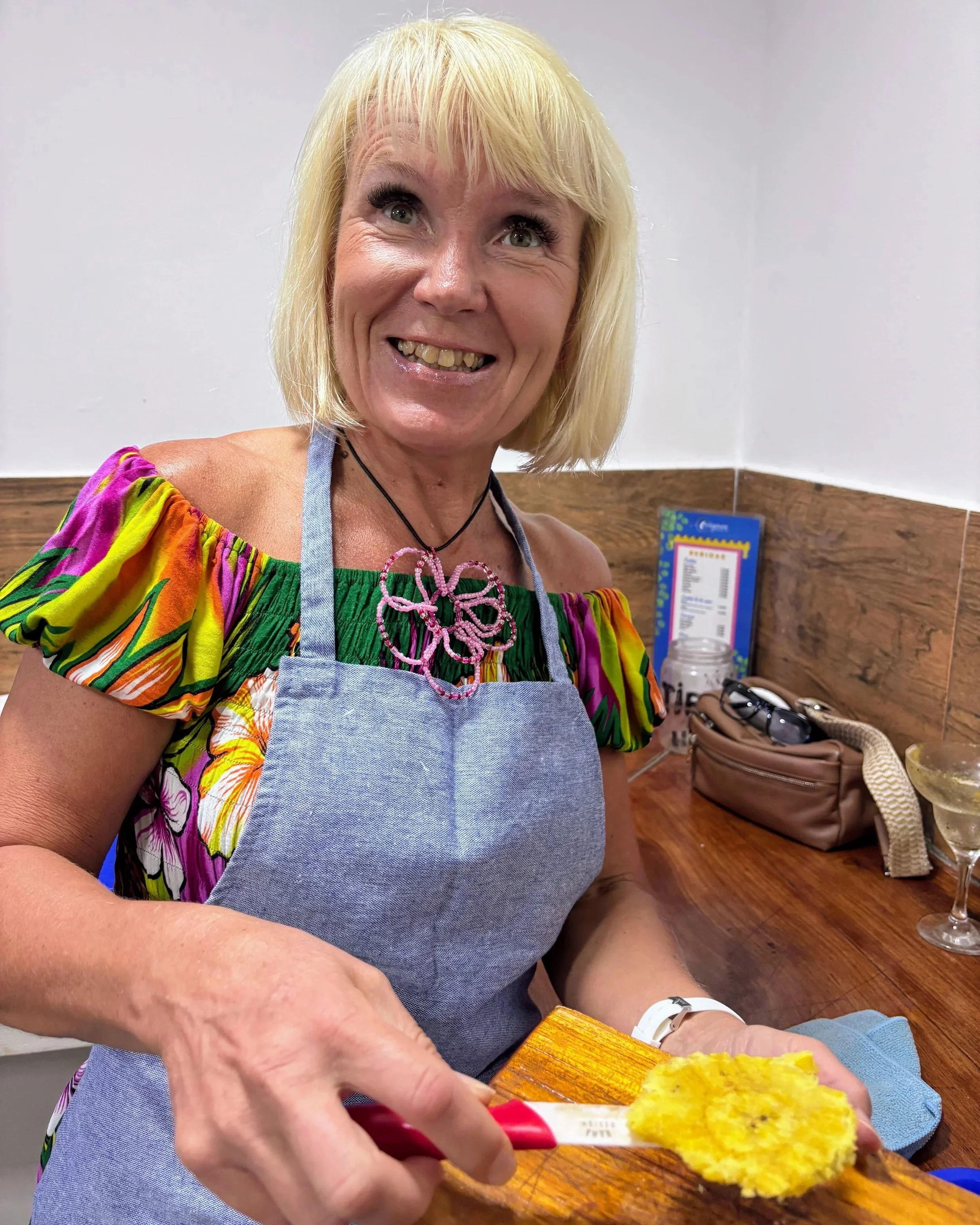
The joy of learning to make patacones at the cooking class!
4. The laid-back costeño vibes
People on the Caribbean coast tend to be joyful, playful and warm. Life here has a slower pace - including walking slowly, which actually is a smart, pragmatic strategy in the heat - and people seem to take most things with a sense of humor. Gladly, so do I.
I don’t remember ever hearing this many comments and greetings from strangers in the streets. Not even in my much younger days. Here’s a list of my new names: linda (beautiful), guapa (good-looking), reina (queen), mona (blonde), flaca (slender), mami/mamacita (a hottie), Barbie and Shakira. The last one was so hilarious that I could not help laughing out loud. Luckily, my Spanish has gotten sharp enough to respond in the appropriate style. (I’m not going to share it here because the written version would not have the same kick. Sorry!)
Wherever you go in central Cartagena, you hear local music - salsa, vallenato, champeta. I adore wandering around the colonial streets at night, smelling the sweet and savory perfumes of Caribbean cuisine and listening to suave sounds of music that makes your hips move. Many restaurants feature live music, so you can easily combine the sensory pleasures.
The laid-back attitude is reflected in the costeño accent as well. The people on the coast tend to speak fast, use local slang words and drop letters. For example, a syllable-final or word-final “s” is often aspirated or omitted, so that “costa” sounds like “kohta”. The way of addressing another person is more informal than in interior regions, using the informal tú instead of usted or vos.
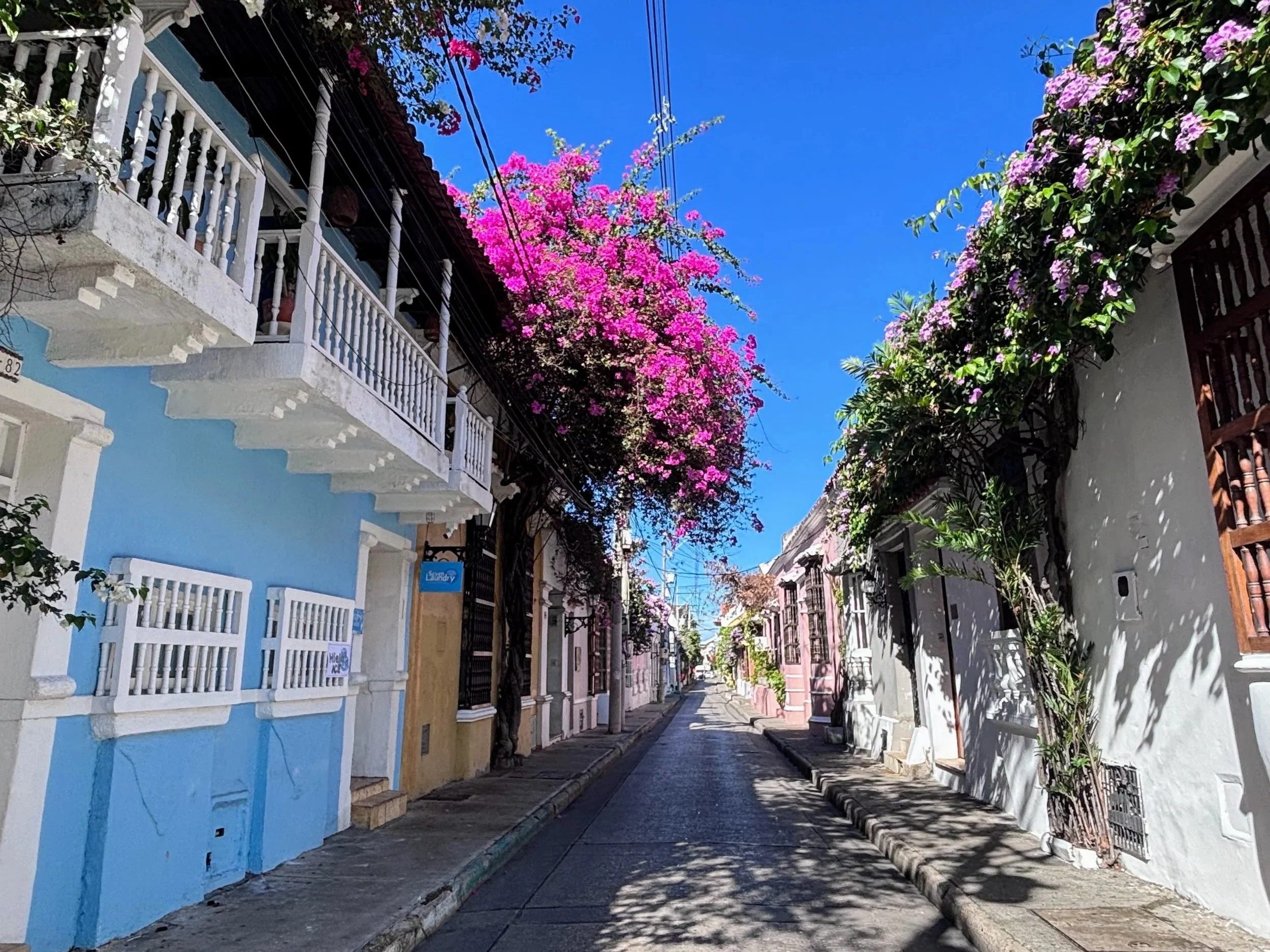
A view of the street where my school and apartment are located.
5. Barrio Getsemaní
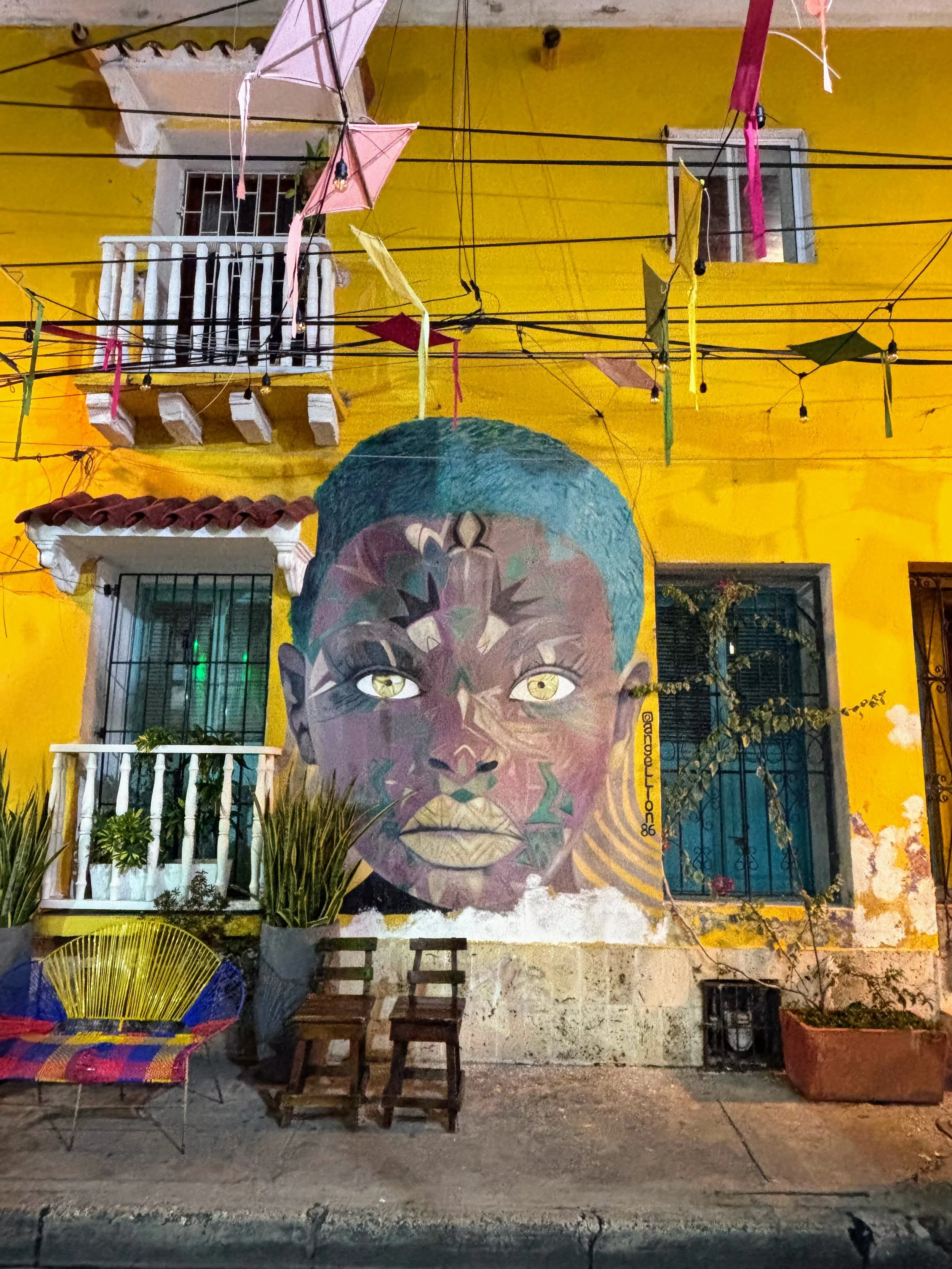
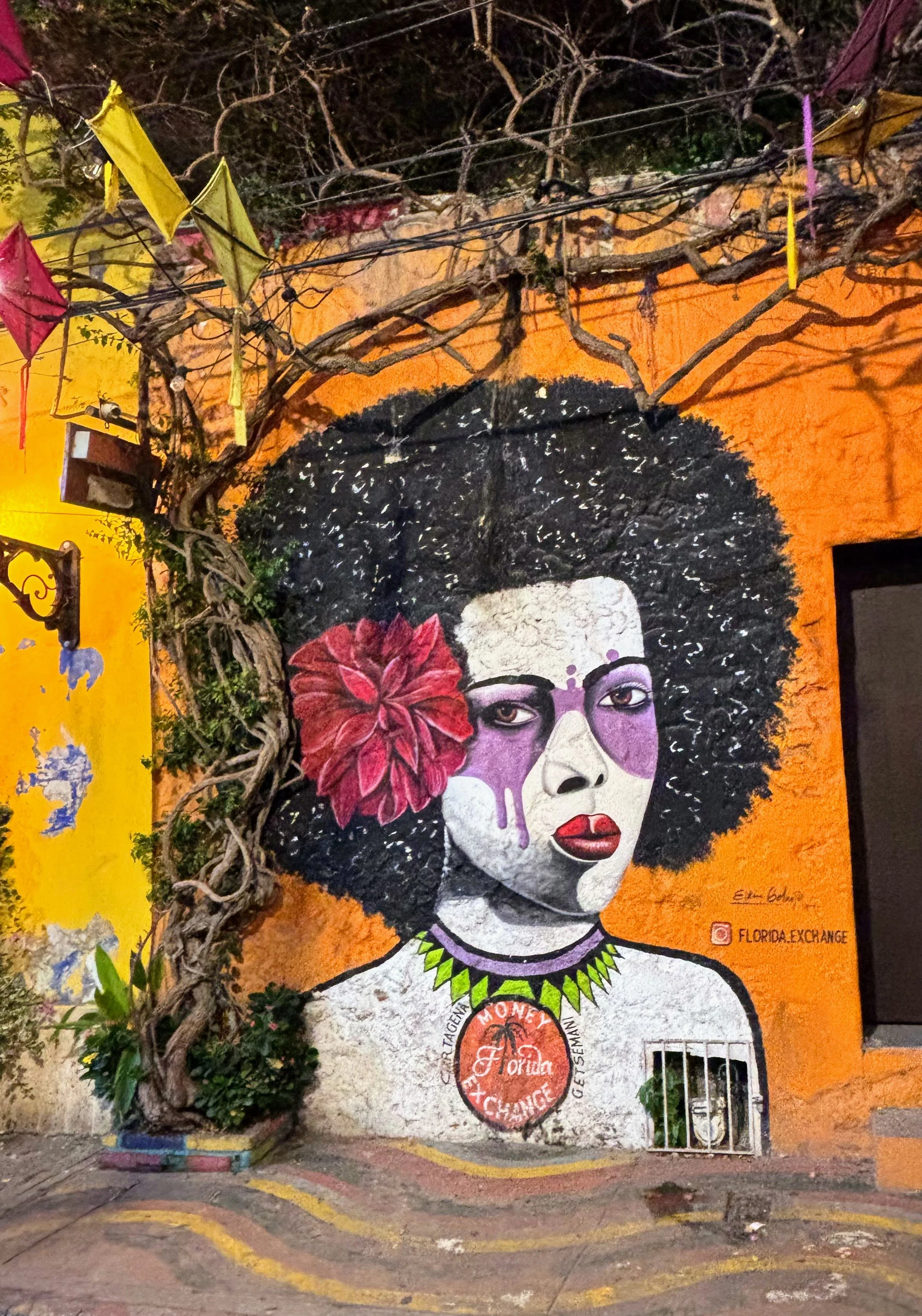
The Getsemaní neighborhood is located right outside the walled city. A former working-class area, it is now known for street art and vibrant night life.
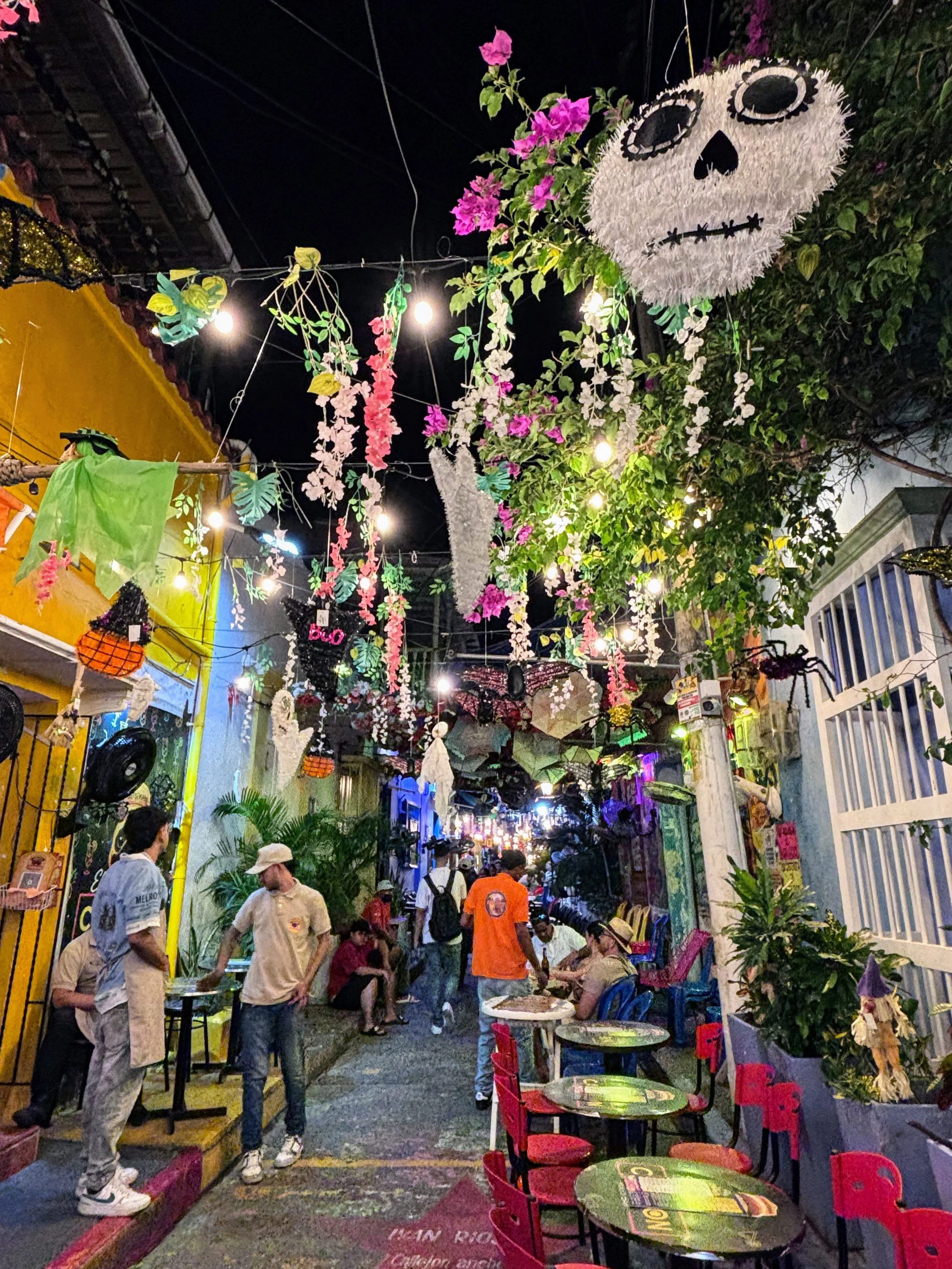
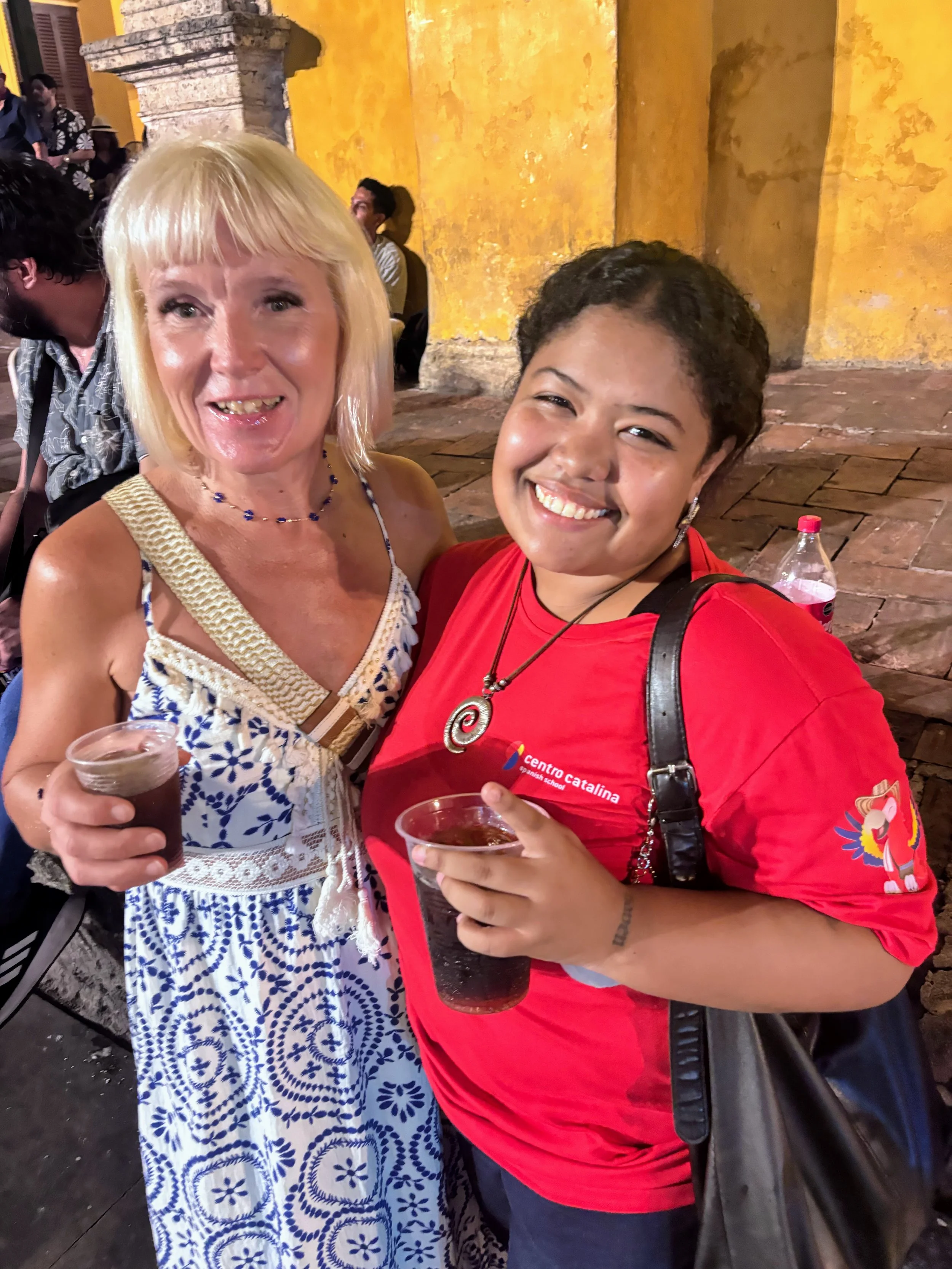
It’s a lot of fun to roam the streets around the Plaza Santa Trinidad, which has become the social heart of Getsemaní. In the evenings, this historic square in front of the Santísima Trinidad church gets packed with street food vendors and groups of people hanging out. You can grab a bite to eat and something to drink while you chat with your friends or watch street performers. There’s loud music and laughter in the air, car horns honking, smoke from the grills, a blend of different food scents.
The adjacent streets feature bars with what appears to be a permanent happy hour. To be honest, we tried it once and the margaritas were so watered down we felt like true tourists. But not to worry, the neighborhood also features excellent restaurants, many with live music.
6. The fortress of San Felipe de Barajas
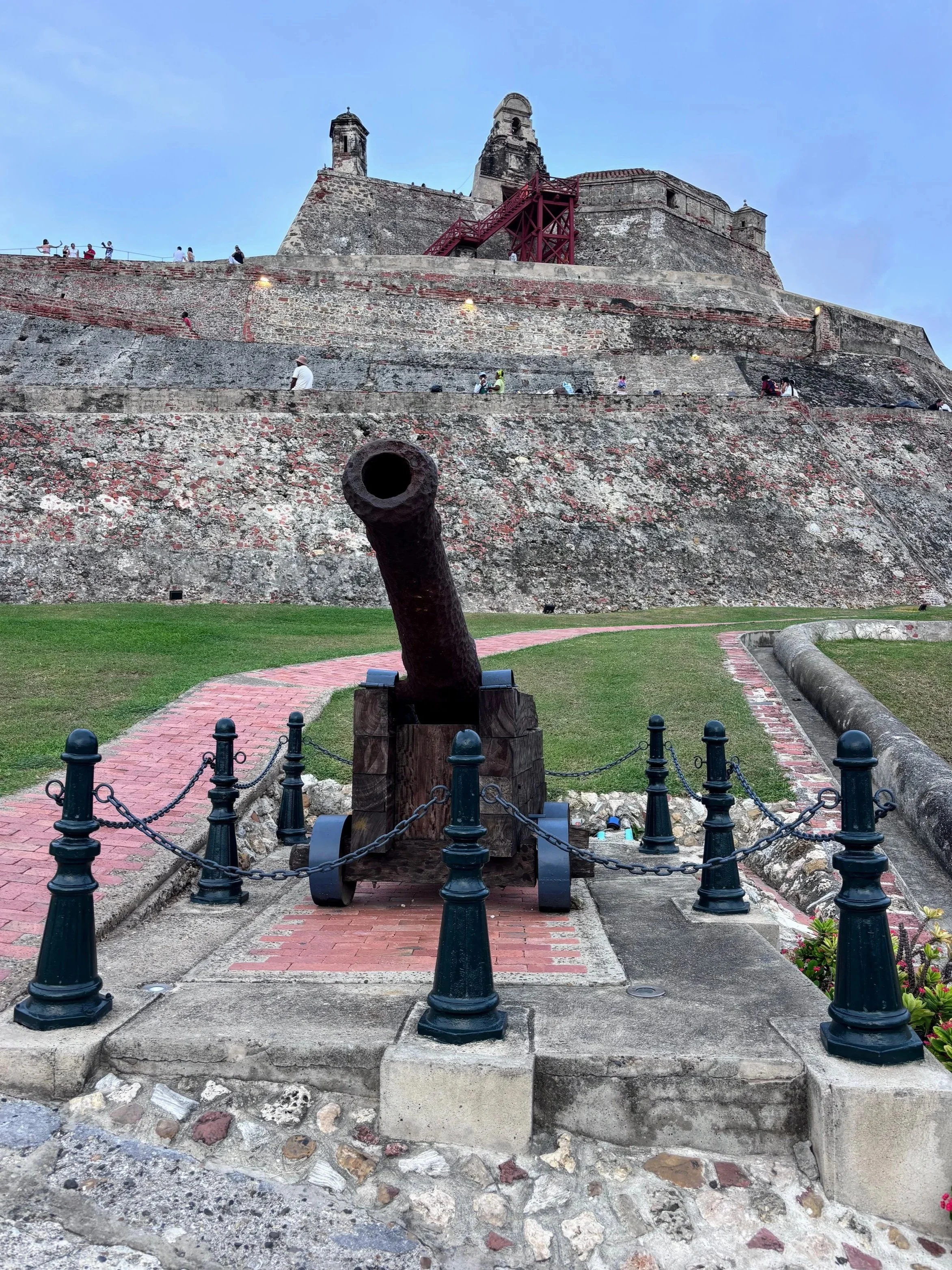
To be frank, museums are not Cartagena's forte. But this fortress is worth a visit. It was built by African slaves in the 16th and 17th centuries, as part of the city’s defenses against land and sea attacks by the British, the French and the pirates. It’s an impressive structure a short walk from the walled city and offers panoramic views over both historic and modern parts of Cartagena.

7. Inspiration of Gabriel García Márquez
The writer was born in the Caribbean region, some 250km from Cartagena, and lived in the city for two years in the late 1940’s. Reading his novels in the original language will be one of my next projects when I return home.
In fact, I already bought a copy of Del amor y otros demonios, which was inspired by a very bizarre story. As a young reporter, Márquez was sent to cover the emptying of the underground crypts at the former Santa Clara convent in Cartagena. During the excavations, the workers discovered a young girl’s skeleton with a copper-colored mane of over 22 meters. The church officer told Márquez that the girl’s hair had continued to grow after her death. She had been locked away after being bitten by a rabid dog and suspected of demonic possession. The ex-convent has since then been converted into a luxury hotel, and the entry point to the crypt is inside the hotel’s bar.
Even if life took Gabriel García Márquez away from Caribbean Colombia, he maintained strong ties with Cartagena until the end. He bought a home near the Santa Clara Convent; apparently, the house is still owned by his children. Strangely enough, Márquez's ashes are divided, with one part resting in Cartagena and the remaining portion in Mexico City where he lived for decades.
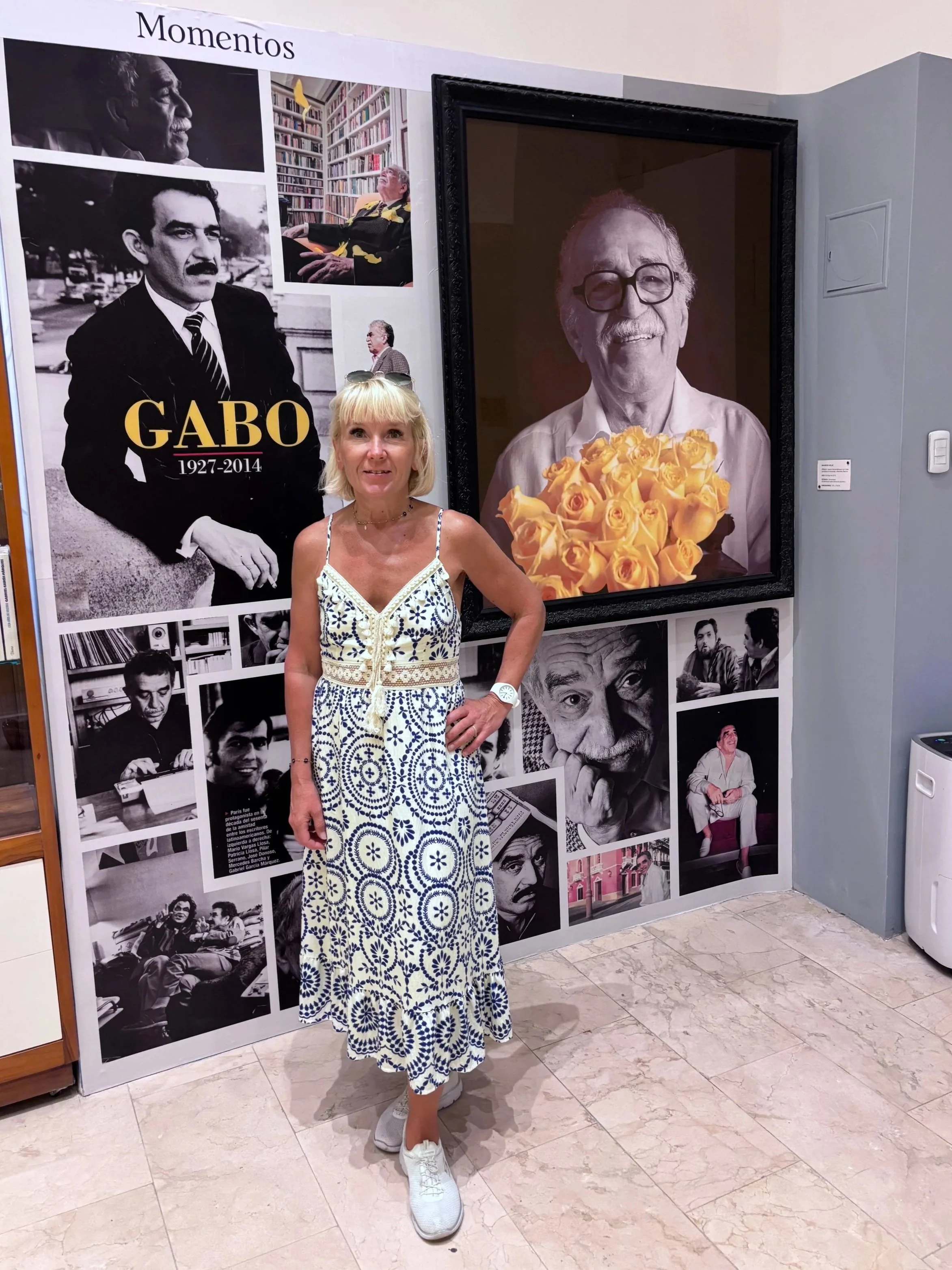
As soon as I return home, I will start reading his novels in the original version.

Gabriel García Márquez’s resting place in Cartagena - for one half of his ashes, to be precise.
8. Islas de las Rosario
The Rosario Islands form an archipelago off the coast of Colombia, a 45-minute speed boat ride from Cartagena. It is one of the most important coral reefs of the Colombian coast and therefore holds the protective status of a National Natural Park.
Las Islas de las Rosario were featured in my previous blog post.
9. Centro Catalina Spanish School
Today was the last day of my five weeks at Centro Catalina, and I’m experiencing strong emotions. Happiness and delight because the last weeks have been a tremendous experience, a learning path that exceeded my expectations. Sadness, because I’ve loved it so much and now it’s over.
But, as the old saying goes: you have to leave in order to come back. I will be back.
So I’m not saying adiós but ¡hasta luego!
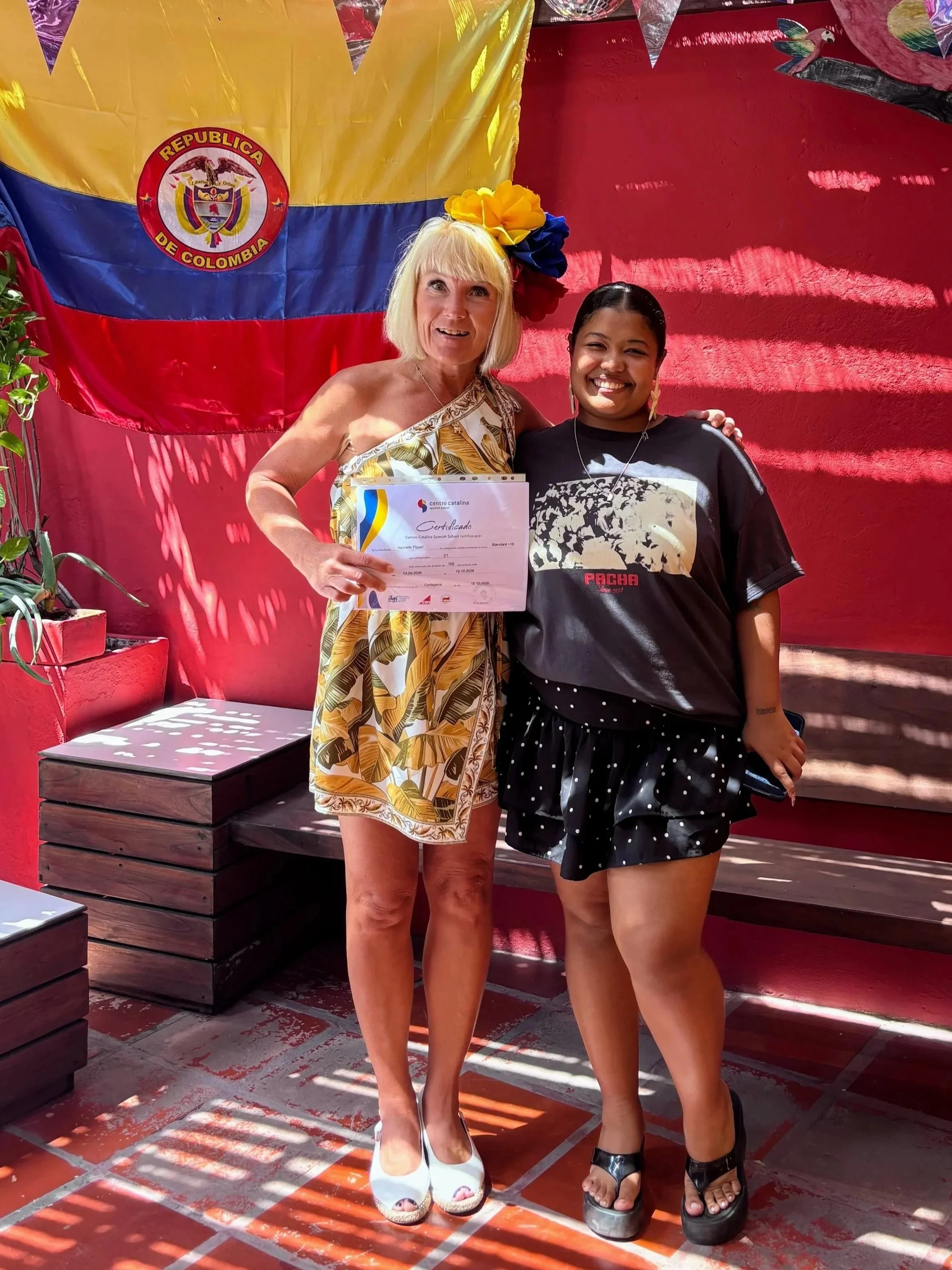
With my excellent “profe” Paula at the diploma ceremony.

With another super-profe, Javier.
*****
This list excludes the modern Bocagrande neighborhood. Not because I disliked it, on the contrary. I left it out deliberately because that’s where I’ll be staying for the last leg of my trip and I’ll be better able to write about it in a week’s time.
*****
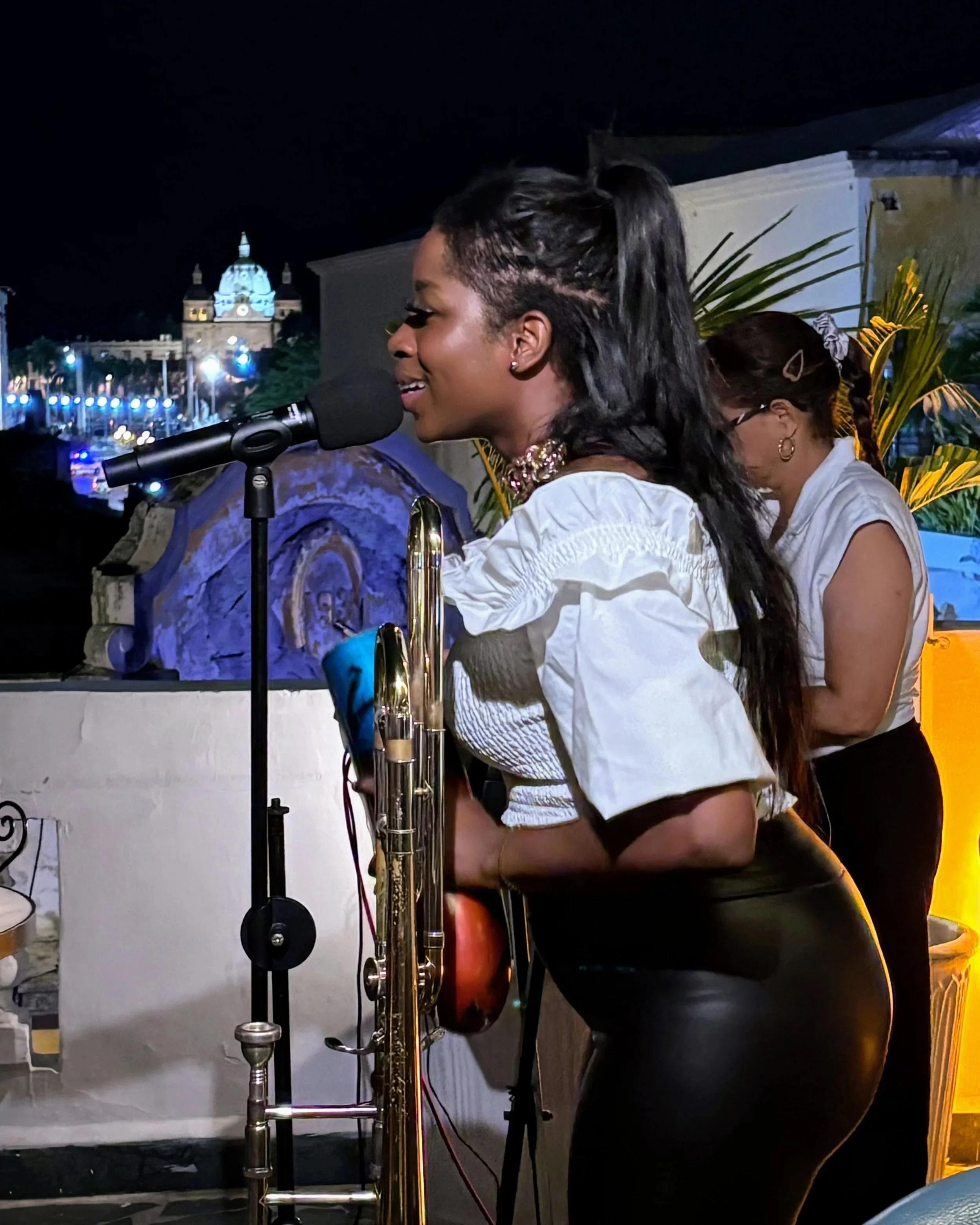
Salsa singer at Café Havana.
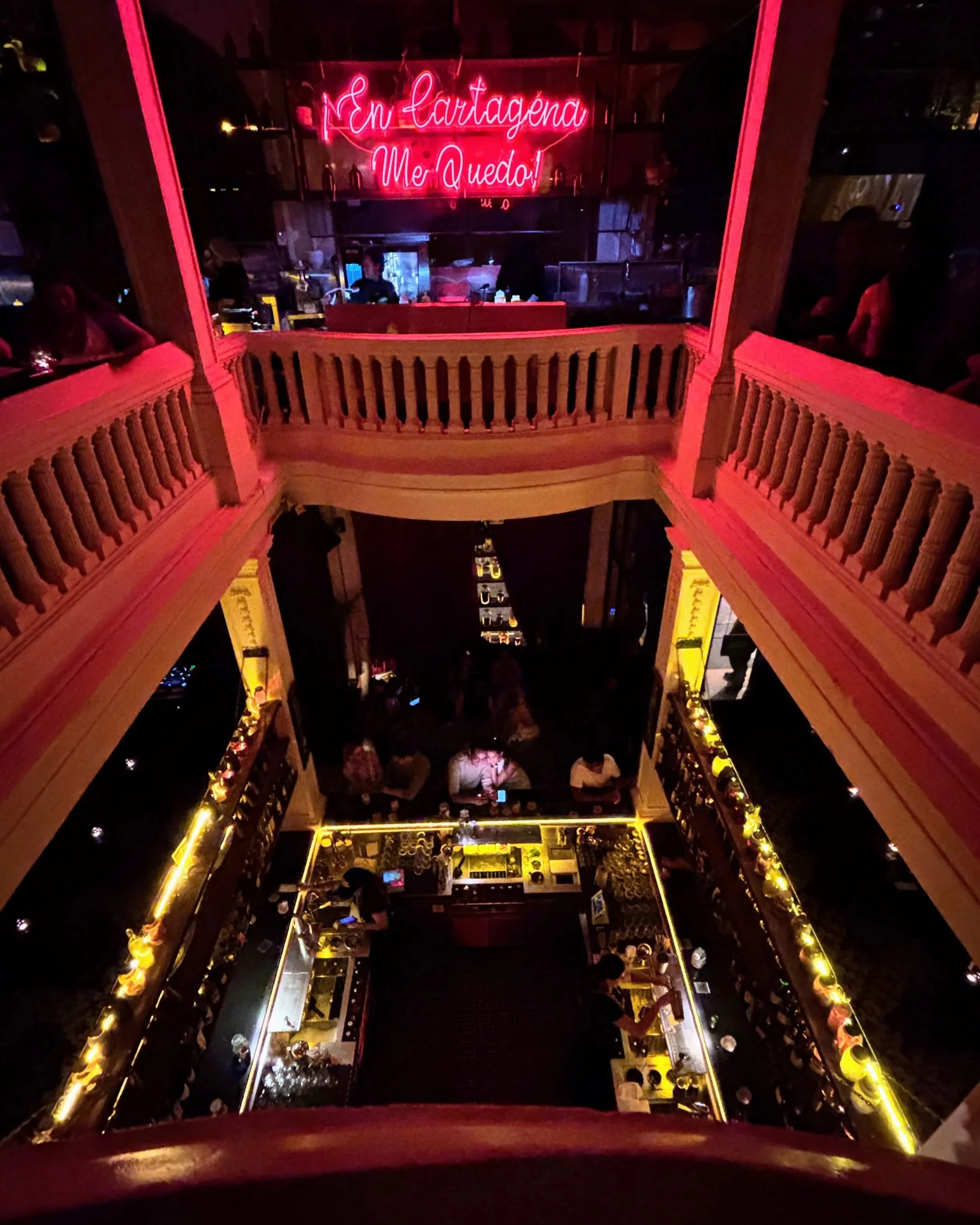
At the Alquimico bar.
My absolute favorite restaurants and bars in Cartagena:
Candé - this was our favorite restaurant when we visited Cartagena together with Umberto, and it still is my number one. Excellent Caribbean cuisine, elegant ambiance and attentive service.
Buena Vida Marisqueria - Candé’s sister restaurant. Excellent fish and seafood. I love dining on the rooftop terrace.
La Mulata - my lunch favorite, a block away from the school. Amazing seafood rice, among many other dishes! And super-friendly service.
Cevicheria - divinely good ceviches.
San Valentin - a fun restaurant where local people go to celebrate birthdays and anniversaries. The food is very good, the service is friendly and live music adds to the party atmosphere.
Café Havana - a fantastic venue to listen to live salsa music.
Alquimico - A famous bar that’s featured in different lists of the world’s best bars. Lives up to its reputation.
El Coro Lounge Bar at Sofitel Legend Santa Clara. Absolutely impeccable service and a beautifully restored space. The crypt that inspired Gabriel García Márquez in the basement here.
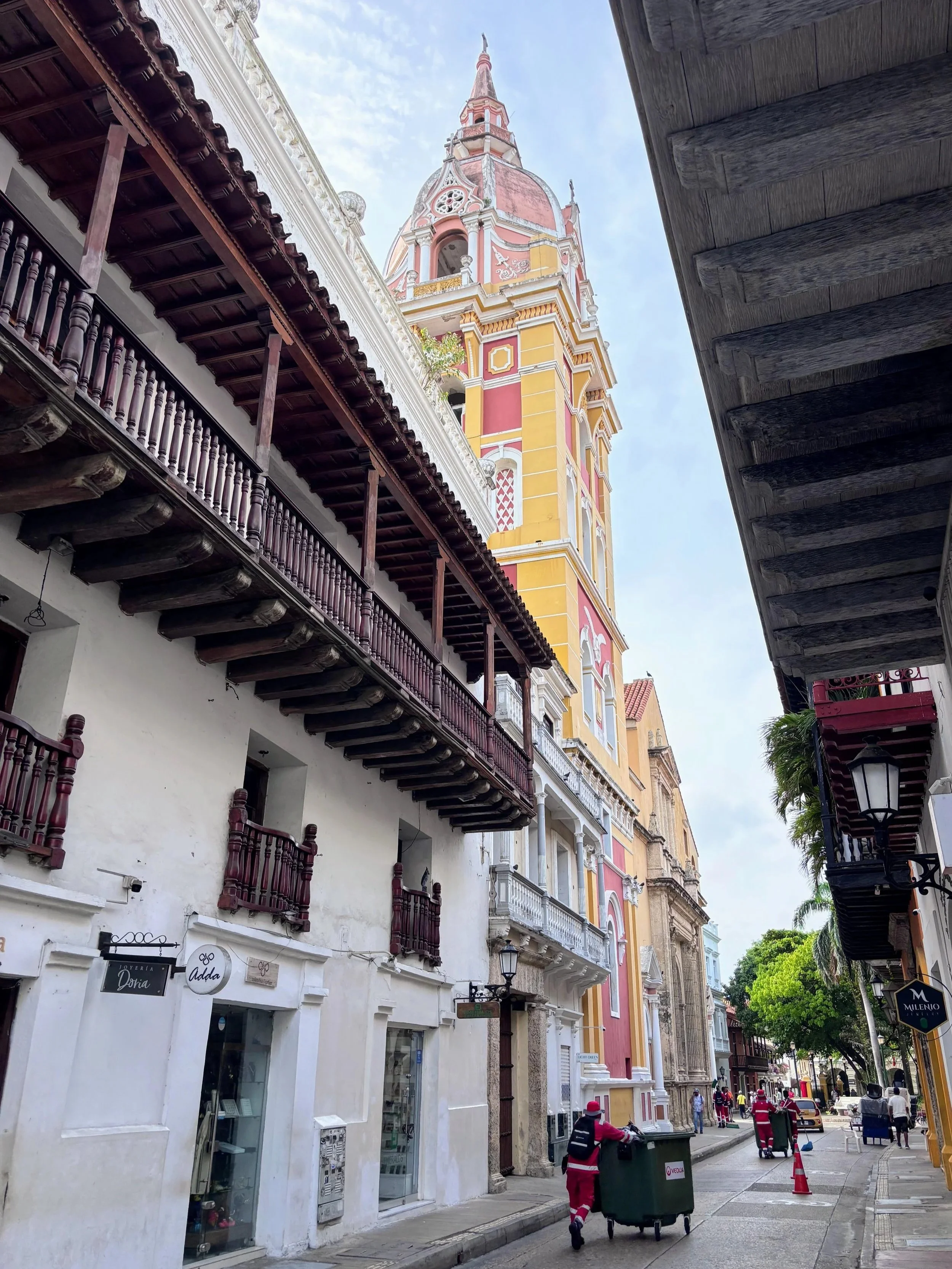
Catedral de Santa Catalina de Alejandría, a Cartagena landmark.
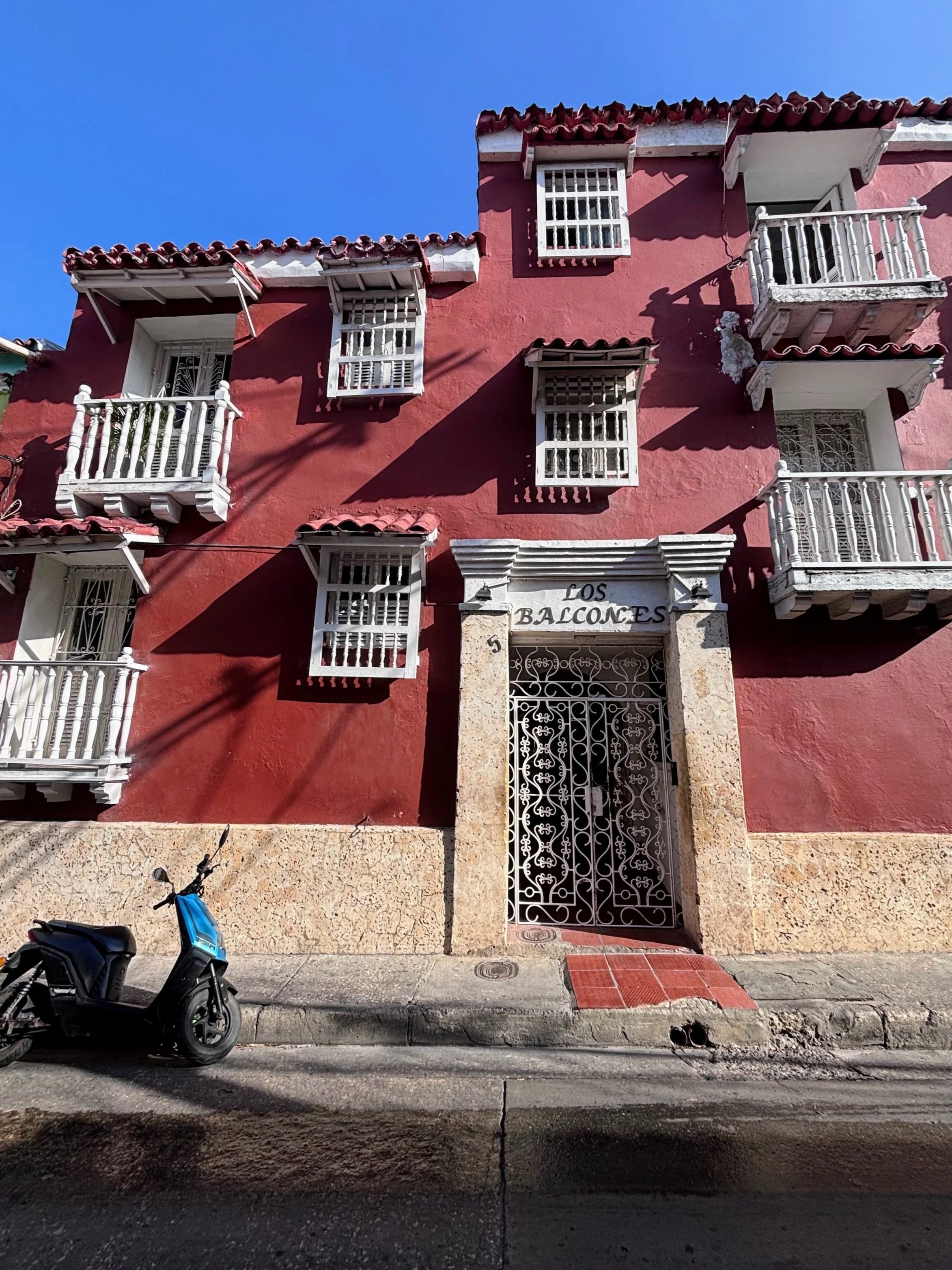
Los Balcones, my apartment building.