The Spirit of Transformation - Medellín
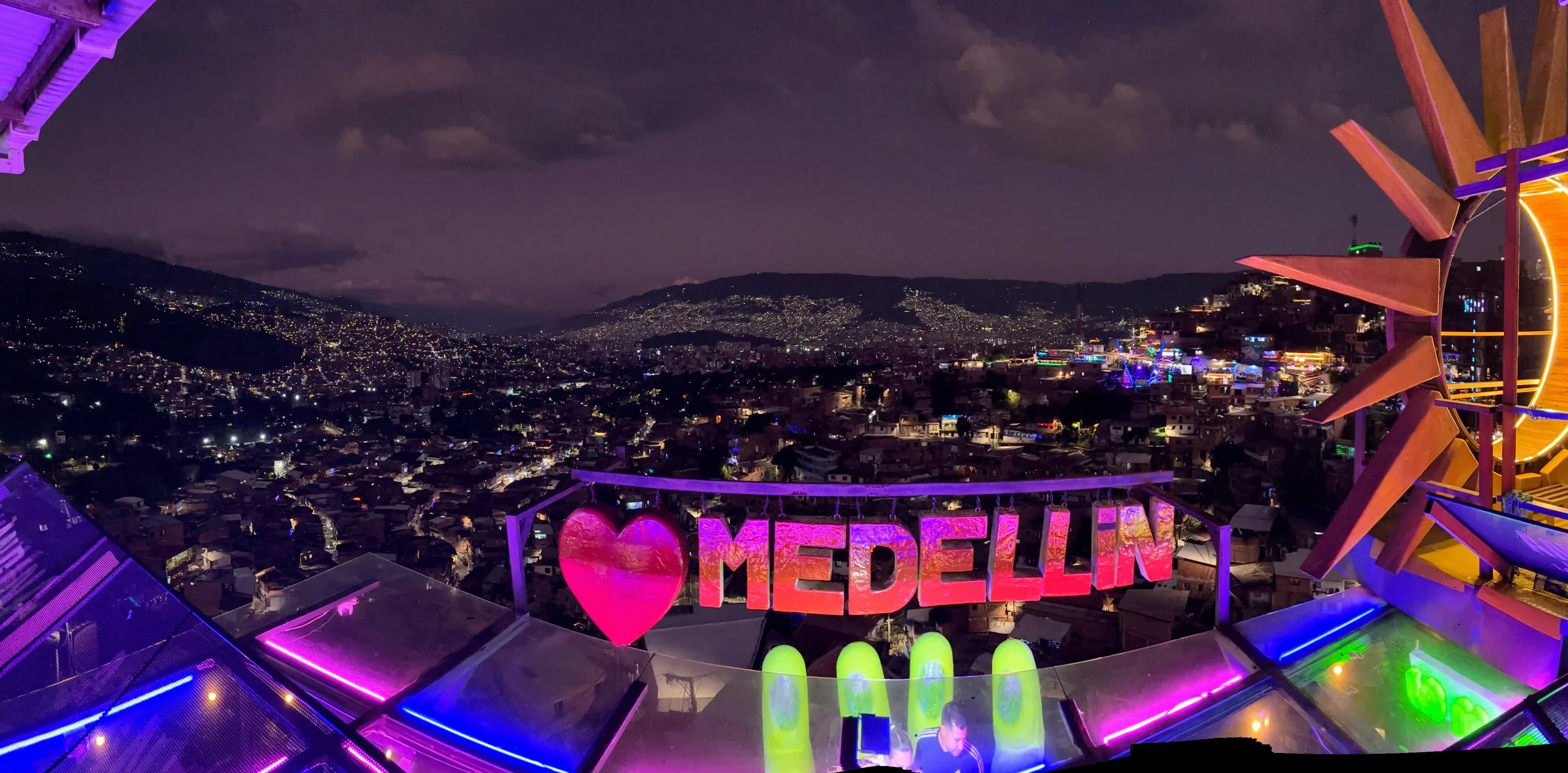
Panoramic view from a hilltop bar in Comuna 13.
What words come to mind when you hear the name “Medellín”? If you haven’t been to Colombia, the likelihood is, you associate it with words like “dangerous, violence, drugs”. Until recently, so did I. Now, after visiting the city first time, my key words are different:
“transformation, urban development, innovation, street art, green, eternal spring”.
Honestly speaking, Medellín never was on my personal “100 places to see before I die” list. I assumed it would be dangerous and wouldn’t offer much to see and do. One conversation in the first days of 2025 changed this. We met a friendly American couple, digital nomads who changed location every two-three months. They had stayed in Medellín a few months earlier and were raving about it. I got curious, started researching, and realized my perceptions were based on outdated information. A few days later, I booked flights to Colombia.
The first surprises in the city of eternal spring
We landed in Medellín on a brief flight from Bogotá and immediately felt the air had changed. The Colombian capital is located on a high plateau in the Eastern Cordillera of the Andes, at an average altitude of over 2,600m, and therefore remains relatively cool all year around. Medellín, at around 1,500m of altitude, has a mild tropical highland climate, featuring constant, pleasant temperatures throughout the year.
When I organize our trips, I do enough research to know the basics about a new city, the best areas to stay and what to avoid. But I don’t over-research, nor do I look at over-saturated, filtered photos on social media. I want to keep an open mind and leave space for surprise. I had read about the city’s reputation for ever-lasting spring, not considering it refers to “spring” in the Central American sense of the word. Daytime temperatures of 27-28°C dropped to around 18°C at night, which even for us in Italy is more like summer than spring. A lovely surprise!
The second positive surprise hit us driving into the city. Medellín was so green! The taxi drove miles and miles on tree-lined streets, which not only were pretty but made the air feel fresher. Researching the topic online, I then discovered that in 2016, Medellín had implemented a “Green Corridors”project to confront air pollution and heat. The project involved planting over 8,300 trees and 350,000 shrubs along 30 shade-providing corridors in the urban area. Thanks to the initiative, temperatures have dropped by up to 3°C on major routes.
The third surprise awaited us at the hotel, Novelty Suites in the modern El Poblado neighborhood. We were given a spacious suite with a balcony, and the view across the city to the surrounding hill slope Comunas was nothing short of spectacular. At night, I wondered where all those thousands of twinkling lights were coming from. What is life like over there?
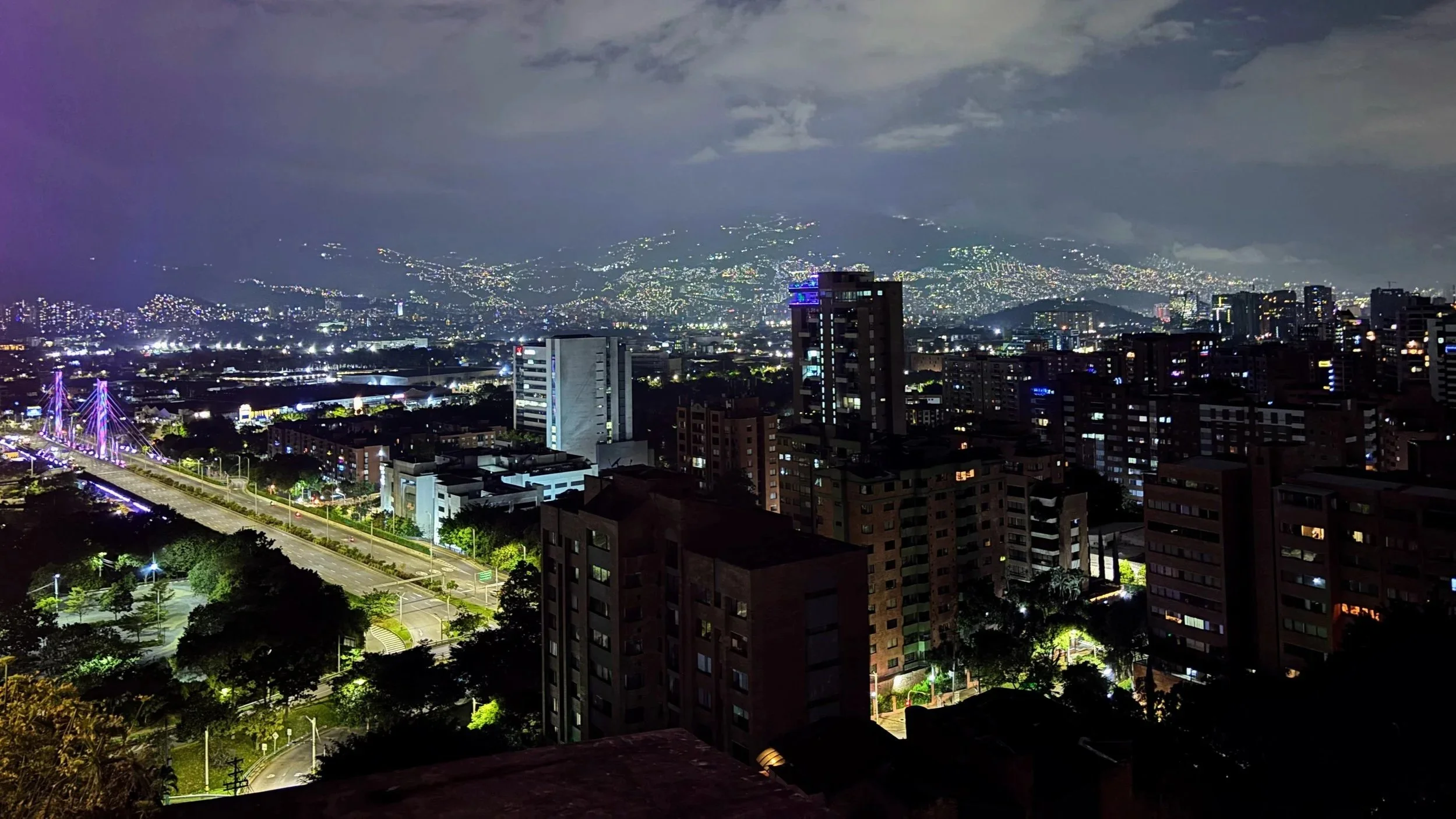
View from our hotel room balcony across to the comunas on hill slopes.
Complicated History
Medellín has a complicated history. In the last decades of the last century, the city became infamous as a center for international drug trafficking. The urban population had multiplied in the 1950’s and 60’s as farmers fled to cities, fleeing political violence in rural areas. Medellín’s valley slopes became overpopulated with slums. The marginalized populations provided fertile recruitment ground for drug cartels, guerrillas and paramilitary groups which filled the vacuum in the lack of strong Government presence. It is fair to say that until the early 2000’s, Medellin was one of the most dangerous and murderous cities in the world.
From Fear to Hope
In 2002, the Colombian military forces conducted operations in the hillside slums in order to regain some control over the city. These offensives were highly controversial, resulting also in civilian casualties and disappearances. Operation Orion, a two-day military offensive in October 2002 targeted the Comuna 13 neighborhood, and was the largest urban military operation in Colombia’s history. Polarizing as they were, the operations got paramilitary groups to the negotiating table with the national government. 2004 was therefore a fortuitous moment for Medellín’s new progressive mayor Sergio Fajardo to come into office. His social urbanism strategy proved highly successful in helping the city turn around. During his mandate, Fajardo’s administration invested heavily in infrastructure and education in the most marginalized areas, and promoted civic engagement to restore trust in government. The city embarked on a long path from violence and fear towards hope and opportunity.
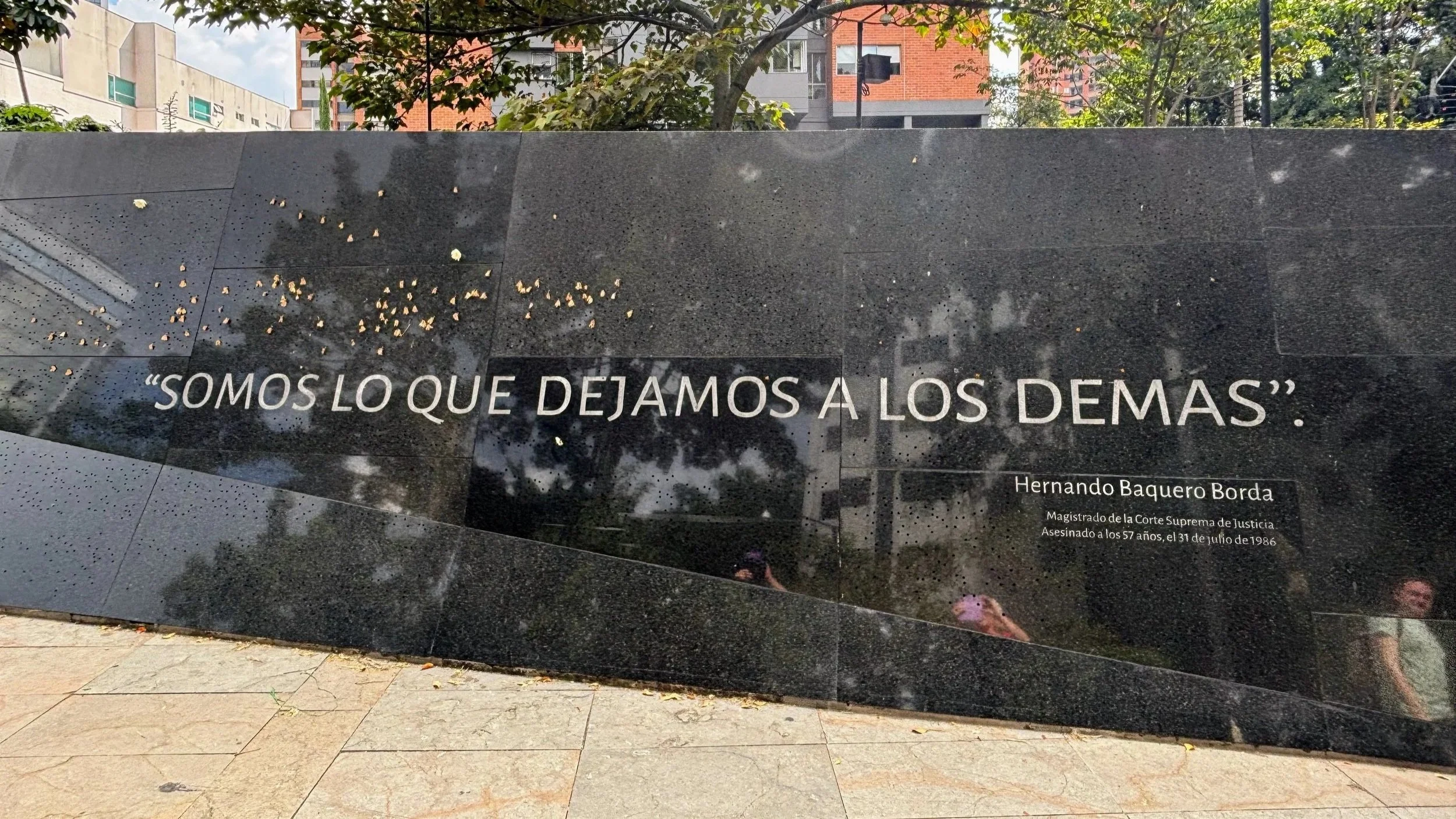
The Parque Memorial monument is dedicated to the victims of Pablo Escobar and narco trafficking. The 70-meter long wall features 46,612 holes, each respecting the memory of a life lost during the years of violence. This place made me cry.
Comuna 13 - Mind-blowing Experience
Visiting Comuna 13 was the biggest surprise of our stay, and definitely one of most memorable moments during all of our travels. We took a half-day guided walking tour in this famous neighborhood. Our guide, born and raised in the comuna, was too young to remember the 2002 military operations, but was very knowledgeable and could answer all of our questions with facts and insight.
It’s difficult to describe what the neighborhood was like, and photos fail to capture its essence. A few months have now passed, but I can still feel the energy of Comuna 13 in my body. If I close my eyes, I can see the steep alleyways between terracotta-colored brick buildings. Precipitous escalators, psychedelic statues, vendors selling street food. Colorful street art, kids performing reggaeton at top volume, inviting you to join the groove. Smiling friendly people. At nightfall, an unforgettable view from a hilltop bar where the tour ended. I now have an initial idea of what life is like on this side of the city, where the lights twinkle at night.
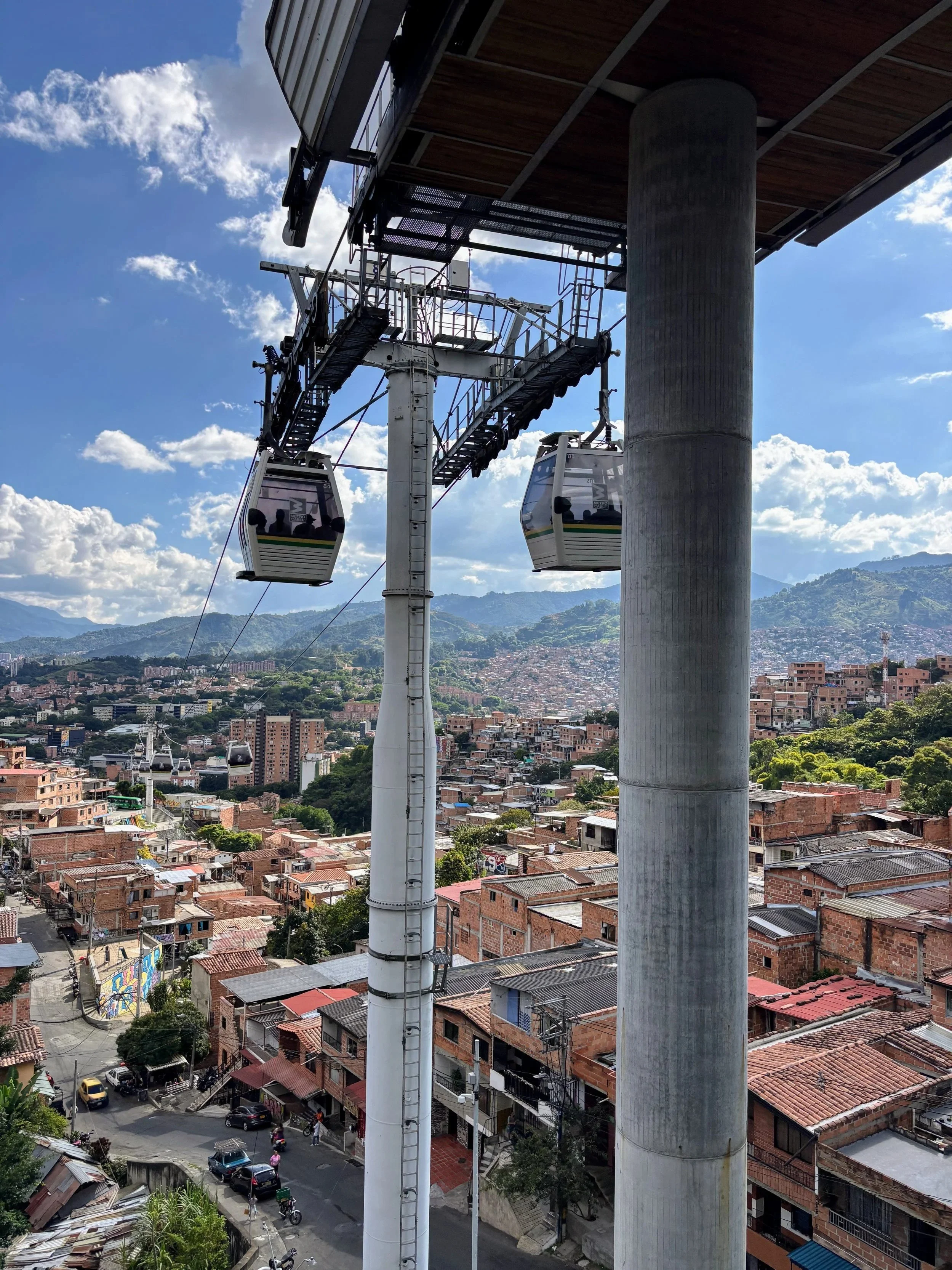
Metrocable, a gondola lift system, complements the Medellin Metro and was designed to reach some of the city's informal hillside settlements.
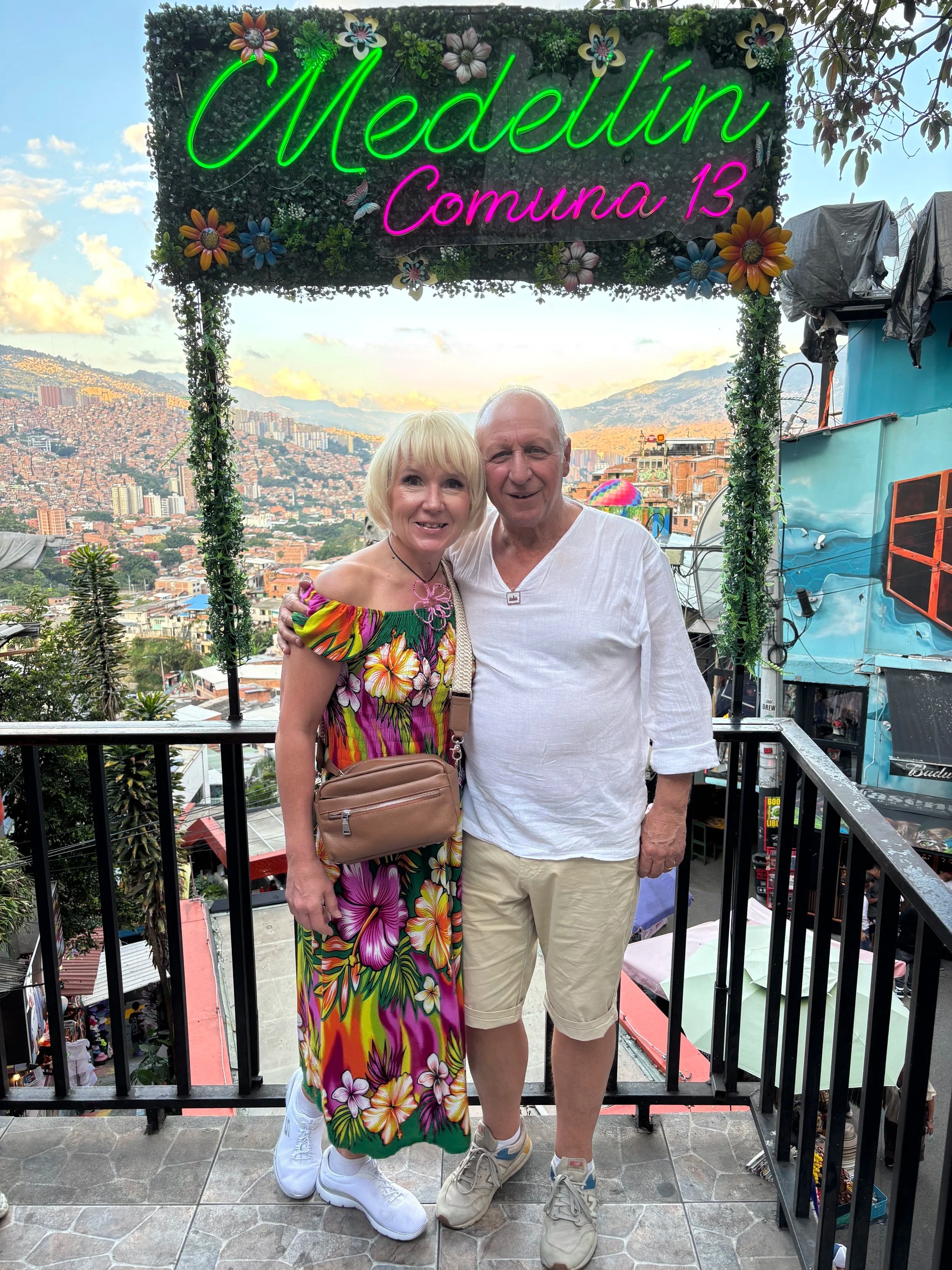
Umberto & I enjoying the Comuna 13 walking tour.
We fell in love with Medellín …
Our stay was too short, but long enough to fall in love with the city. Just like everywhere else in Colombia, we found Colombians extremely warm, friendly and welcoming, positively proud of their neighborhood, city and country. Of course there still are big unresolved problems, we have not closed our eyes and ears to reality. But we found Medellin’s reputation as an extremely dangerous city outdated and exaggerated. Stick to the areas indicated as safe for tourists and you’ll be fine. Just like in any big city, you need to be careful, not stupid, and not take unnecessary risks.
In brief: we were impressed by Colombia’s number two city, with a metropolitan area of around 4 million inhabitants, and an important center of business, science, technology and innovation. We loved the people, energy, momentum, food, hospitality, and the blissful climate.… and were inspired the spirit of transformation!
… and were inspired by the spirit of transformation!
Personally, the thing that most inspired me was the unbelievable transformation that Medellín has gone through. Even if I’ve now discovered a little bit about it in theory, many more questions come to mind and I’d like to learn more.
How is it even possible to cease violence, and turn fear and mistrust into collaboration? How can you turn adversity into alliance, isolation into a sense of community? How can you transform an extremely dangerous city into one that attracts tourists, digital nomads, businesses and investment? How do you transform a place with seemingly almost no potential into a valley of opportunity?
For me, Medellín’s transformation story - starting with Mayor Fajardo’s mandate - is not only an example of remarkable urban development but an inspiring case study for anybody who wants to drive positive change. Break from tradition and try a radically different different strategy. Build trust with frank and coherent communication, as well as your own reputation. Be present and accessible at street level, don’t only hang out with the elite. Don’t try to do it alone but gather together a coalition of committed and capable people with different skills and experience. Use a consultative process to agree on the most burning issues and the development plan. Get people to sign agreements to faithfully execute the project together. Communicate openly about progress and results, as well as setbacks and challenges.
This is my initial, rudimentary understanding. I want to dig deeper, understand better, speak to people, ask questions and listen. And learn that beautiful Colombian accent!
Hasta luego, parce!
I’ve already booked my flights to return to Colombia and cannot wait. In the meantime, Umbe and I will keep watching Colombian telenovelas and get all emotional every time we recognize places on the screen.
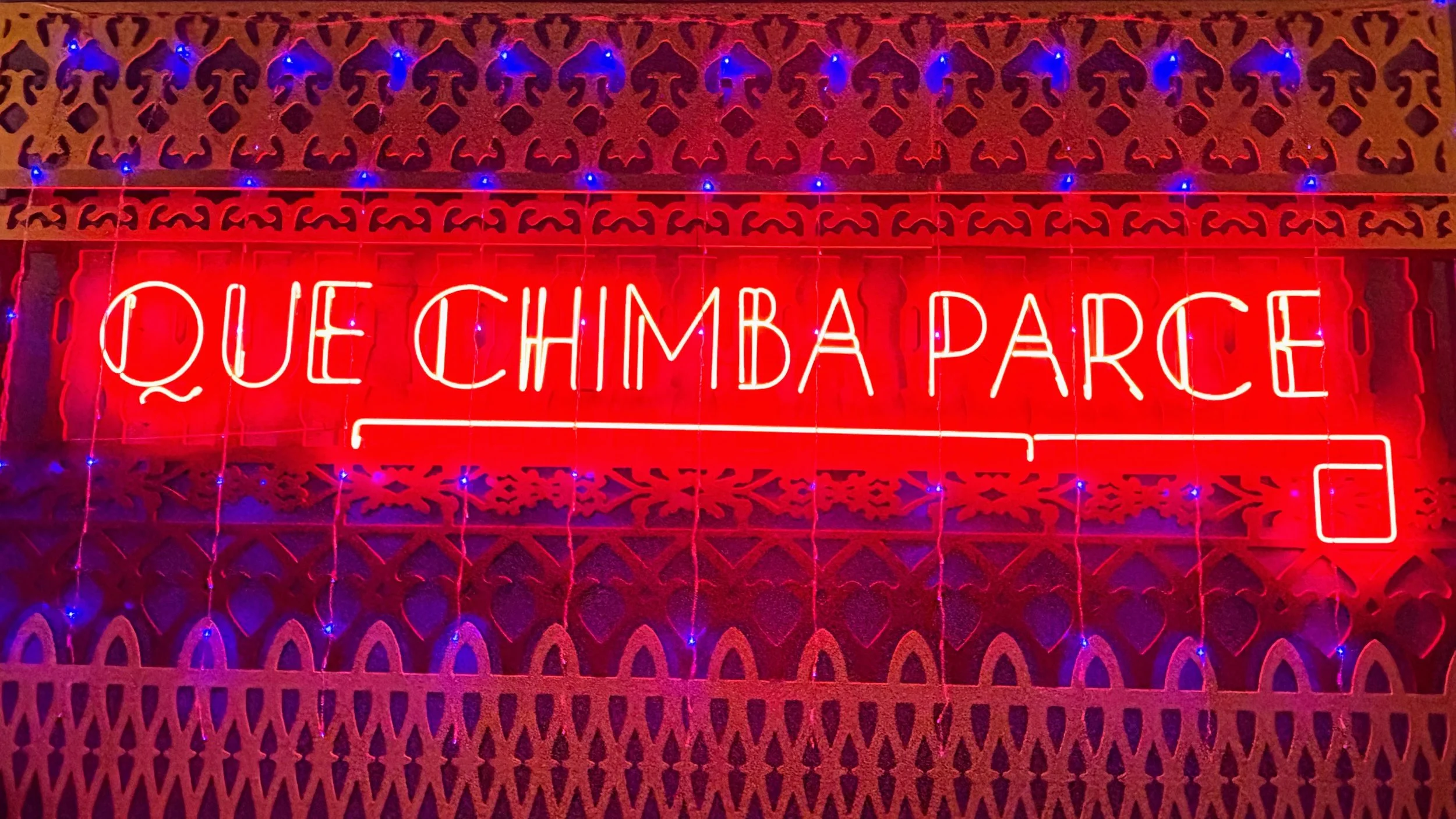
A popular slang expression in Medellín, translates roughly as "how cool/awesome, man/dude".