The Importance of Being Lucky - Kampong Phluk
Kampong Phluk, Cambodia
A moment ago, I was checking my LinkedIn feed and one post caught my eye. Somebody was praising their boss, a successful tech entrepreneur, for being a self-made man who had started from zero and created something amazing. Those words triggered a powerful memories from eighteen months ago.
It was the last afternoon of 2024.
We were in Siem Reap, Cambodia. Our tuktuk driver had taken us to see the floating villages of Kampong Phluk, and we were on our way back to town. The country road was narrow, full of potholes, and our wonky vehicle raised thick dust in the air. Umberto and I were sitting in the back, observing in awe some of the strangest modes of transportation we’ve ever seen. It’s impressive what you can fit on a small moped, even a five-meter metal pole.
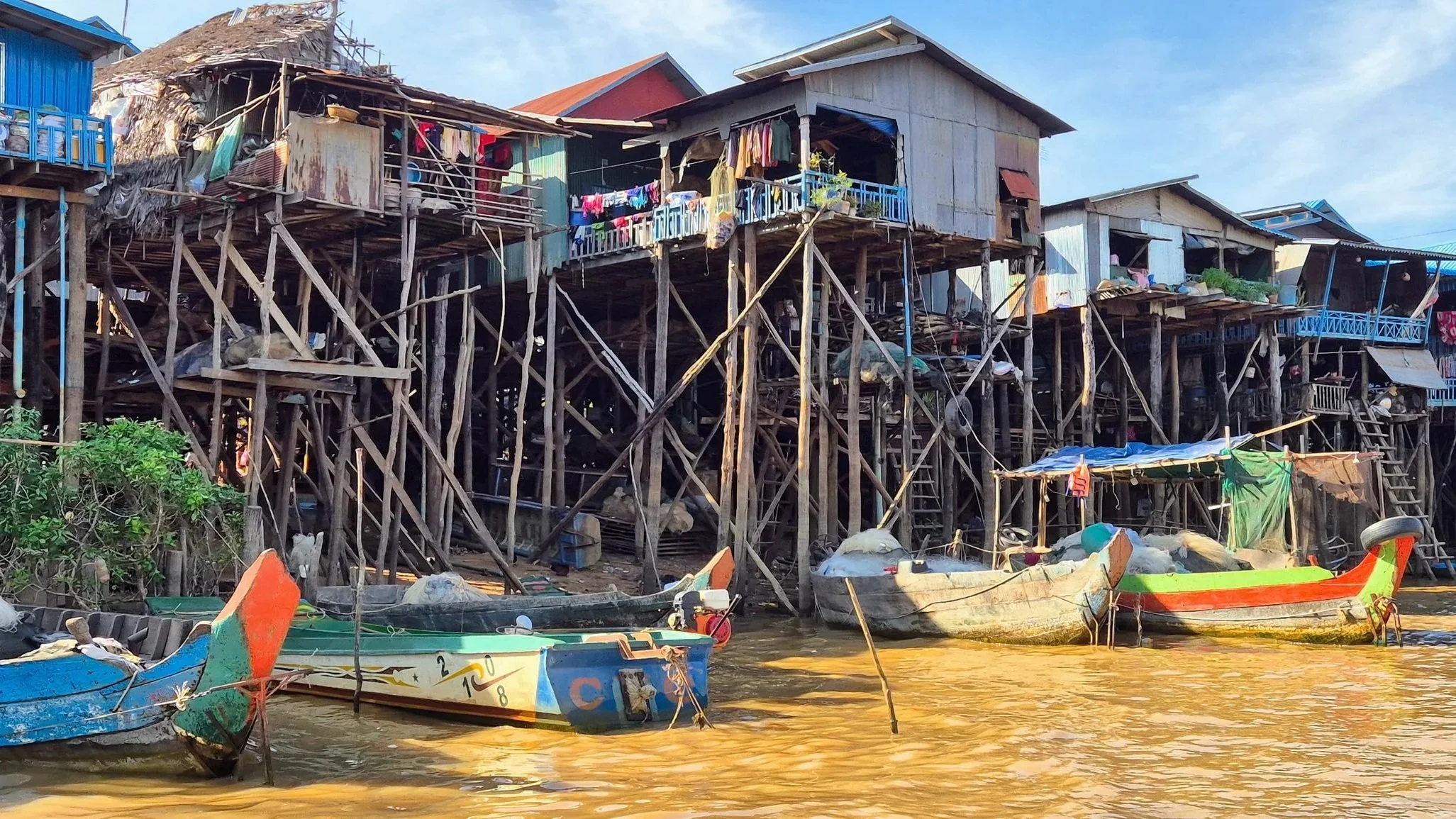
The day’s excursion had been mindblowing. Kampong Phluk is a commune an hour’s tuktuk drive from Siem Reap, famous for three fishing villages built on stilts and flooded mangrove forests. The houses have been constructed on poles between 6 and 10 meters in height, in order to accommodate the changes in water levels between the dry and rainy season.
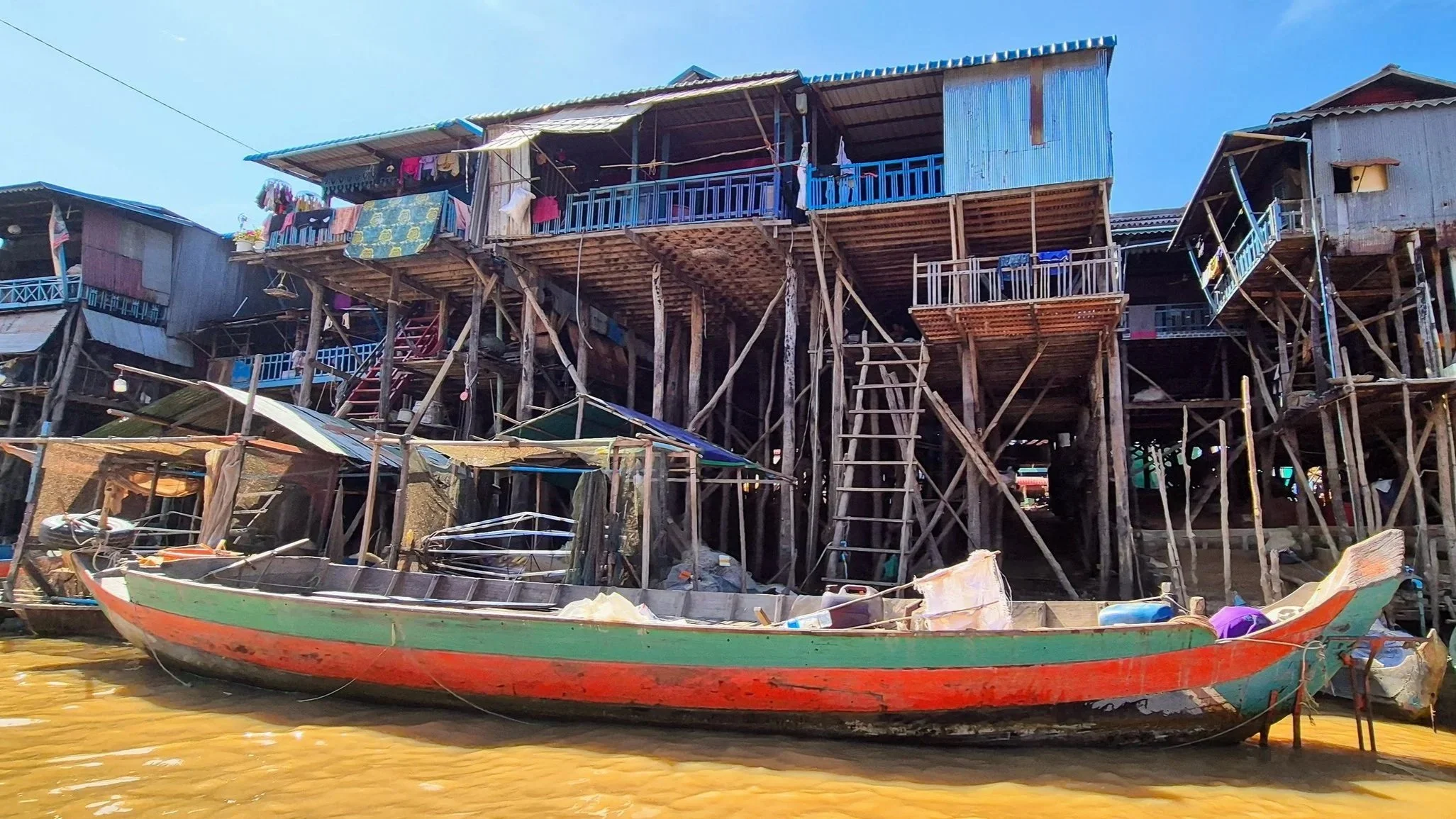
We took a boat down the river and observed the strange-looking dwellings, high up above, as it was the dry season. Passing by so close to people’s homes made me feel awkward. I understood that tourism is an important source of income for the villages, especially during the dry season when fishing is not possible. But still, I felt almost like an intruder.
Before arriving at Tonlé Sap Lake, the skipper dropped us on a platform surrounded by dozens of colorful little boats. We took the nearest one, and a fragile-looking elderly lady started paddling us through the flooded mangrove forest. She navigated the boat with impressive precision. I imagined how everything would look during the rainy season, when the water is almost up to the floors of the houses and the trees are under water. As fascinating as the experience was, I felt uncomfortable again. Here we were, two big and strong people being transported by a tiny old woman. I should have been the one paddling!

The last leg of the excursion was a ride on the lake. If I hadn’t known it was a lake I would have mistaken it for the sea. Tonlé Sap, often translated as ‘great lake’ is part of the Mekong river system, and the largest freshwater lake in Southeast Asia. Luckily, the skipper of this blue boat was a strong young man, so my conscience could take a rest.
Our friend, the tuktuk driver
After the boat excursion, we found our tuktuk driver waiting for us at the village’s little port. He had become like a friend during our days in Siem Reap.
We met him on our first evening in town. We were looking for a ride back to the hotel after a flavorful khmer dinner. The street was crowded and earsplittingly noisy, with each bar blasting music at a higher volume than the neighbor. In the middle of the cacophony, a number of tuktuks swarmed around us, pushing their services. We decided to walk to the next block to find a calmer spot and that’s where our driver saw us. He behaved in an extremely courteous manner, so we hopped on. Luckily, the first impression proved to be accurate and he become our designated driver for the entire visit.
Thanks our friend’s excellent English, we could have real, deep conversations. He taught me a lot about Cambodia and made me appreciate this wonderful country even more.
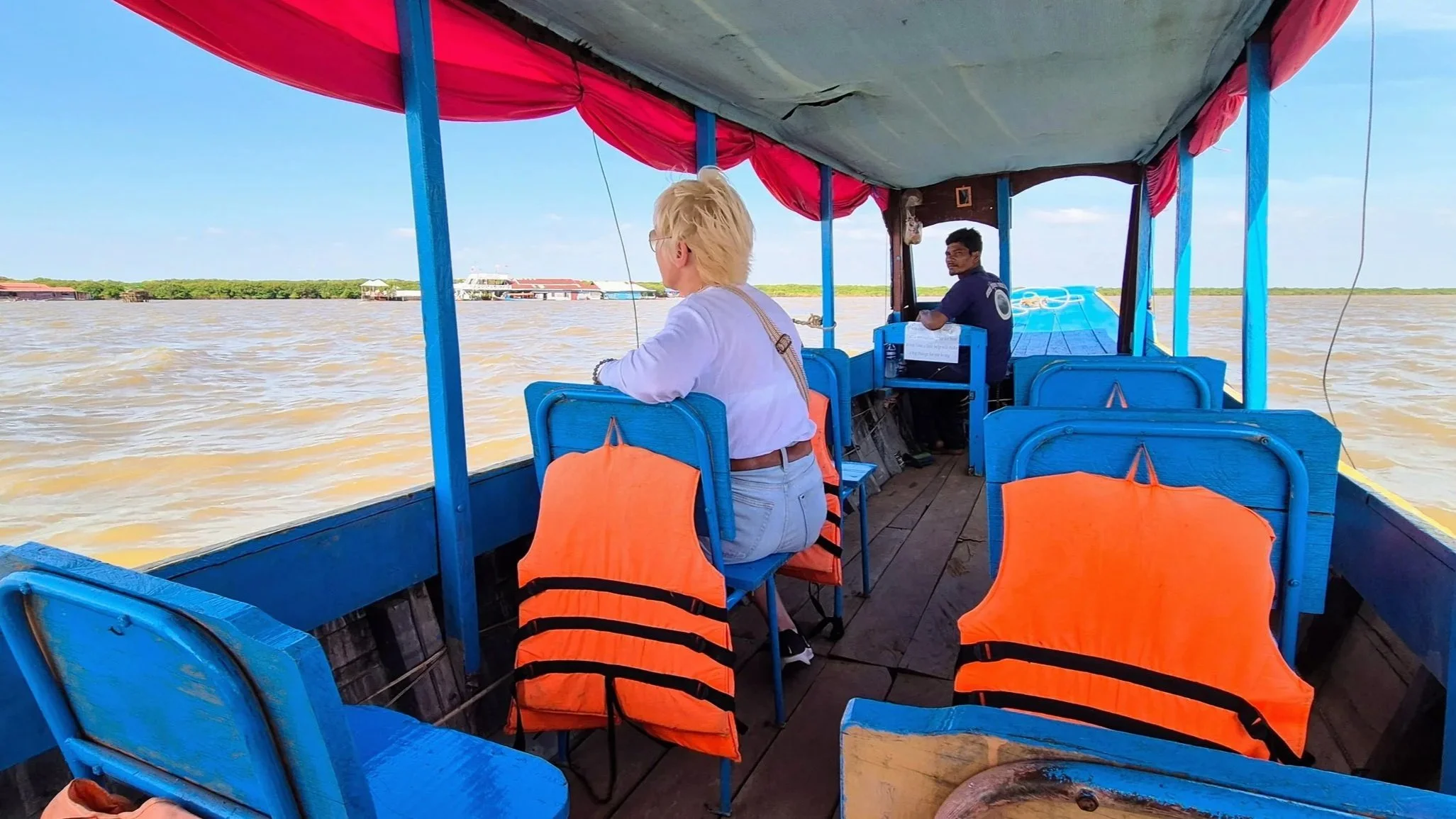
Tonlé Sap is a massive lake.
Stop! Fishermen in sight!
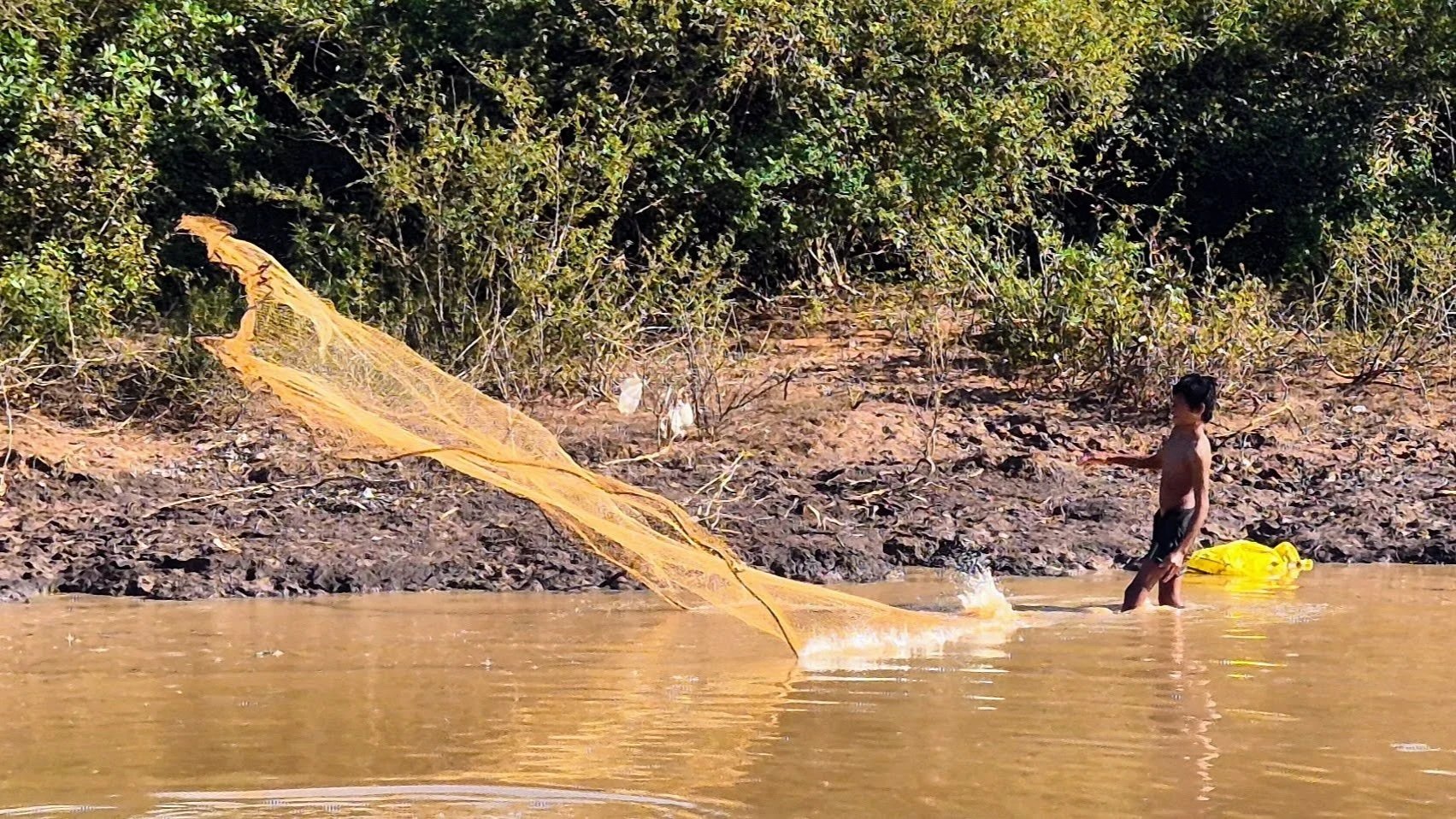
All of a sudden, Umberto made a gesture to stop the tuktuk. He had spotted men and young boys fishing down on the river and wanted a closer look. I knew why. This was a reminder of his own childhood, catching shellfish on the Adriatic shores and selling them to restaurants. Fishermen in action tend to make him feel nostalgic.
Only now, the conditions were far from ideal for fishing. The river’s water was extremely low and looked more like mud. That didn’t stop Umberto. He walked down to the river bank to observe. In the meantime, I stayed in the shade of the tuktuk, chatting with our driver.
He offered me a bottle of fresh water which he kept in an ice box underneath the passenger bench. Then, knowing it was our last day in town, he asked me where we would be going next. I explained our forthcoming itinerary in Thailand and Malaysia while he listened attentively. In the end, he looked at me with his kind eyes and said:
“Madam, you are very lucky.”
No rancor. No envy. No accusation. No complaint. Just a neutral statement. The truth.
I remained speechless for a moment. Then, I looked back at him and said:
“You are correct. I am very lucky. Thank you for reminding me.”
A few minutes later, Umberto returned, raving about what he had seen down at the river. He had taken dozens of photos and wanted to show them to us right away.
This is a lesson I will never forget.
I remained silent for the rest of the drive. I saved our Cambodian friend’s words deep in my heart.
So often, we talk about how hard we work. We admire people who “have started from zero” and are “self-made”. I, too, have used those words many times. Carelessly, thoughtlessly, in first world entitlement style.
The truth is, I don’t know what it’s like to work all day and night, and still struggle to survive and bring food on the table. I don’t know on my own skin what working really hard means. In the scale of things, the jobs that I had were quite nice, actually. And yet, I would often complain.
I don’t know poverty. I don’t know hunger. I don’t know oppression. I was not born in a country where a quarter of the population was exterminated by genocide. I don’t know any of that for one simple reason: because I was lucky.
I happened to be born in a country where all children get an education, for free. Rich and poor, boys and girls. Out of pure luck, I was born in a free country, where we were able and encouraged to pursue opportunities and become almost anything we wanted.
People like me did not start from zero. We stand on the shoulders of previous generations.
As for the self-made (wo)man concept, well, that is another misconception. Behind every successful career or business, there are people who believed in you, supported you, opened doors for you - and customers who bought whatever it is you’re selling. Success does not exist in isolation. And, just like everything else in life, success requires luck. Being in the right place at the right time.
Conversely, sometimes bad things happen. Your business can fail or you can lose your job, no matter how hard-working you are. Sometimes these things happen just because you were unlucky.
I’m not saying we should just quit trying and let Lady Luck throw the dice. What I mean is, we need to look at our achievements with a little more humility and gratitude and recognize how lucky we have been. And have more compassion for ourselves and others when things go wrong.
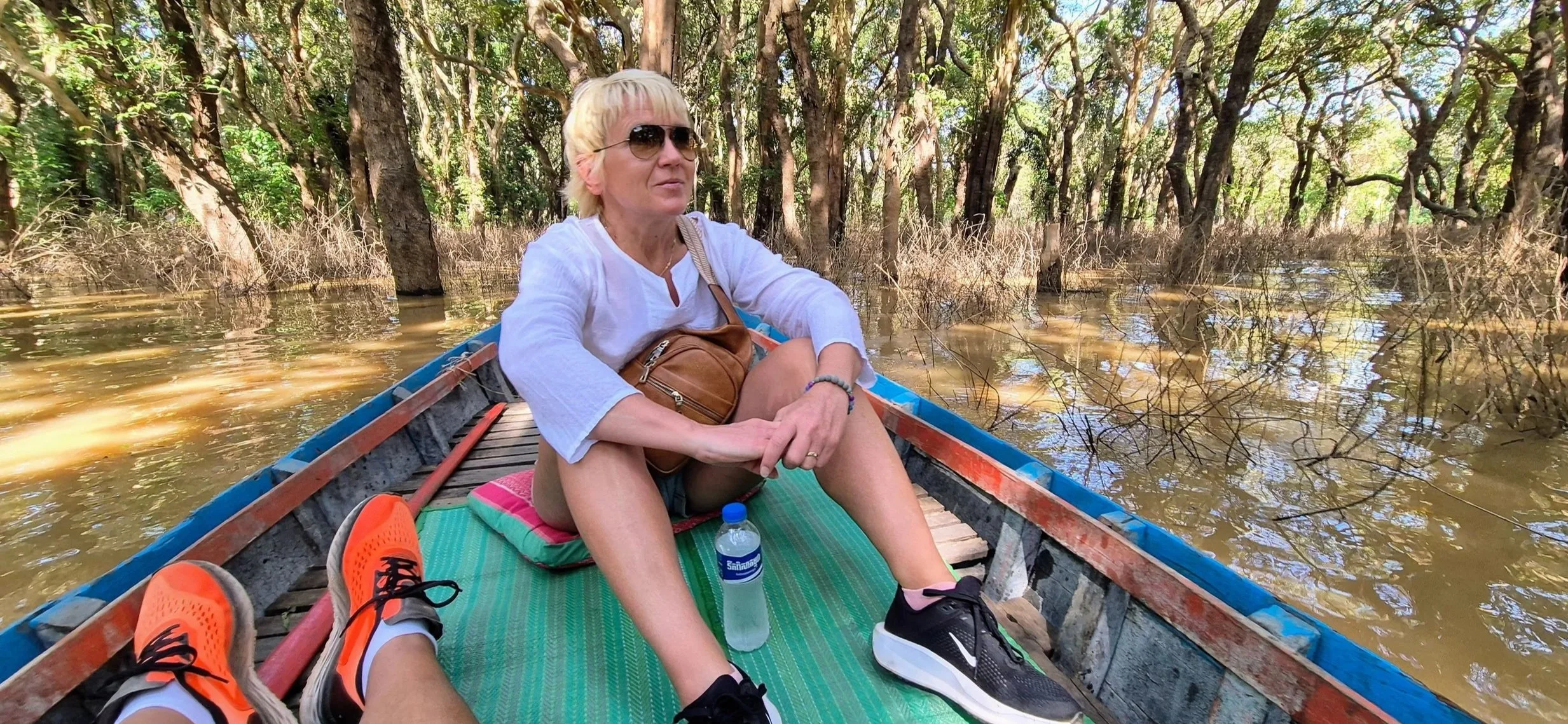
In the flooded mangrove forest. In the rainy season, the water level is several meters higher.
Sending a message through the Universe
Later that night, in the first minutes of 2025, we watched the fireworks light up the Cambodian sky. When Umberto gave me a New Year’s kiss I remembered our friend’s words again. I realized there was an additional aspect of luck I had not given a thought.
I have been lucky in love. Very lucky.
Now, I’m typing away on our sunny terrace, enjoying a cup of espresso and listening to a choir of birds in the neighboring orange garden. Writing this piece makes me relive those beautiful Cambodian days in my head. Driving around Siam Reap in a tuktuk, the conversations, the extraordinary kindness of people. And, of course the Angkor temples! (That was another unforgettable experience, and merits a dedicated post later on.)
I’m thinking about our driver friend and press my palms together in a lotus-like manner, fingertips at the level of my mouth, and bow my head slightly. Just the way he taught us, the traditional Cambodian greeting.
This lucky Madam on the other side of the world is wishing him lots of luck and good health. I’m sure the Universe will deliver the message.
*****

The Angkor Palace resort’s New Year celebrations were fabulous.
We stayed - and celebrated New Year’s in style - at the Angor Palace Resort & Spa which is located a bit outside the Siam Reap city center, an easy tuktuk ride from the restaurant streets.
I loved the resort’s traditional design with high ceilings, light and air, and plenty of dark wood surfaces and furniture. The resort was impeccably clean and felt like an oasis with lush gardens and a lovely pool area. The breakfast buffet was heavenly. For us fitness lovers, there was a small but functional gym.
Above all, we loved the kind and courteous service, including the hotel management. If we ever go back to Siem Reap I will book here again.
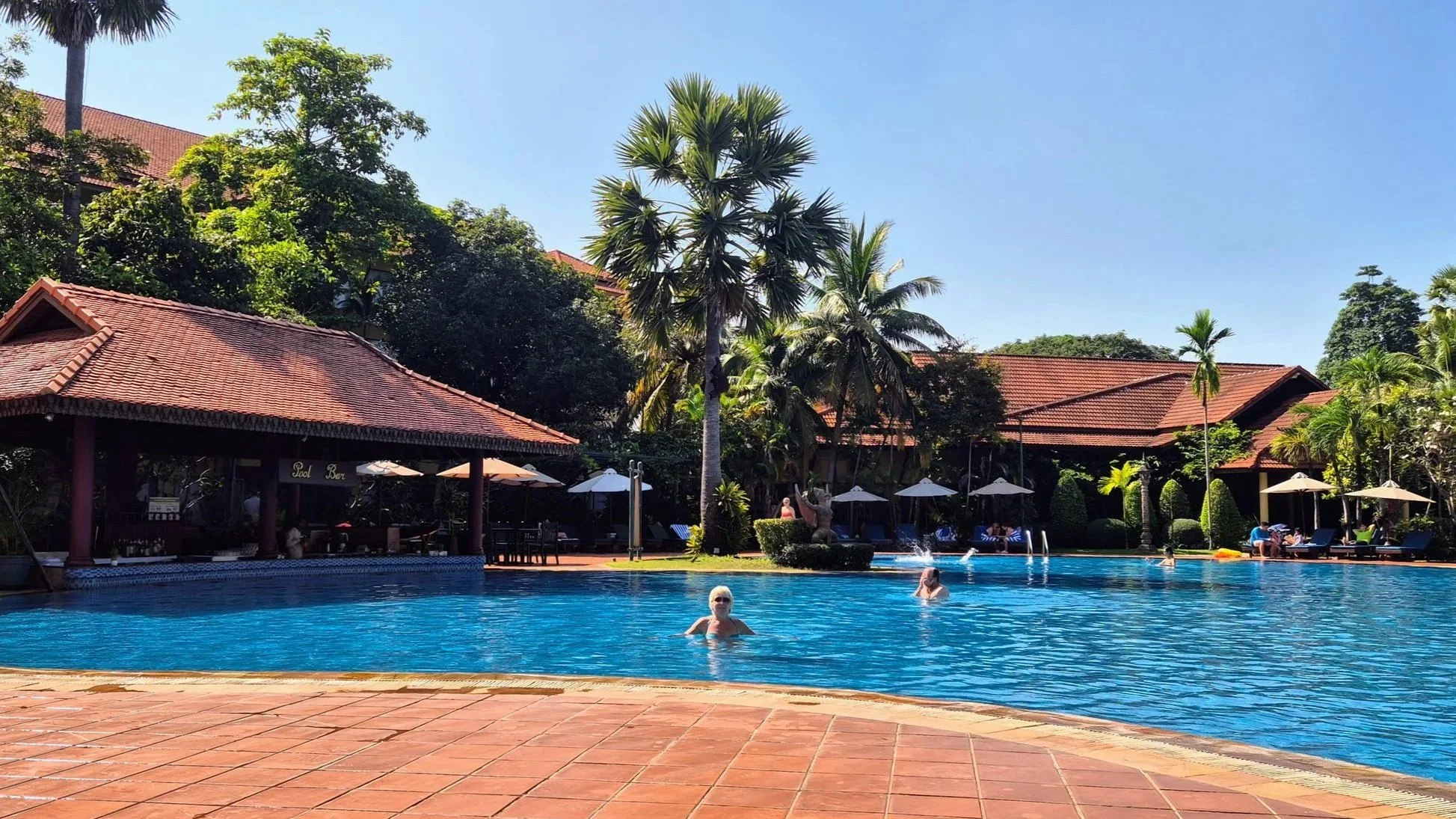
The Angkor Palace Resort had a lovely pool area in the garden.